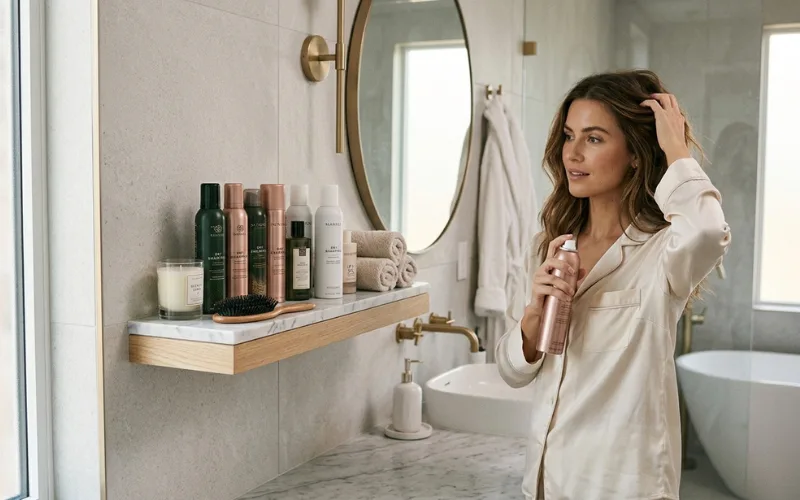
My bathroom cabinet has a dry shampoo problem. Last time I counted, there were nine cans and three jars in there, plus two more in my gym bag and one in my desk drawer at work. Over the past two years I’ve gone through somewhere around 30 different formulas trying to find the ones worth keeping.
Most of them weren’t. Some left my hair feeling like I’d dusted it with baking flour. One smelled so aggressively floral that a coworker across the room asked me what perfume I was wearing. I threw that one out the same week.
These ten stayed. They’re the ones I keep rebuying, the ones I grab first on mornings when my hair needs help and I don’t have time to wash it.
Quick Answer
The best dry shampoo overall is Living Proof Perfect Hair Day for all-around performance on every hair type. For drugstore, Batiste Original remains unbeatable at under $9. For clean and non-toxic formulas, Klorane Nettle and Acure dry shampoo lead the pack. For dark hair without white residue, Moroccanoil Dark Tones or Amika Perk Up are the strongest picks. For powder format, Klorane Non-Aerosol is the best I’ve tried.
What is the number one recommended dry shampoo?
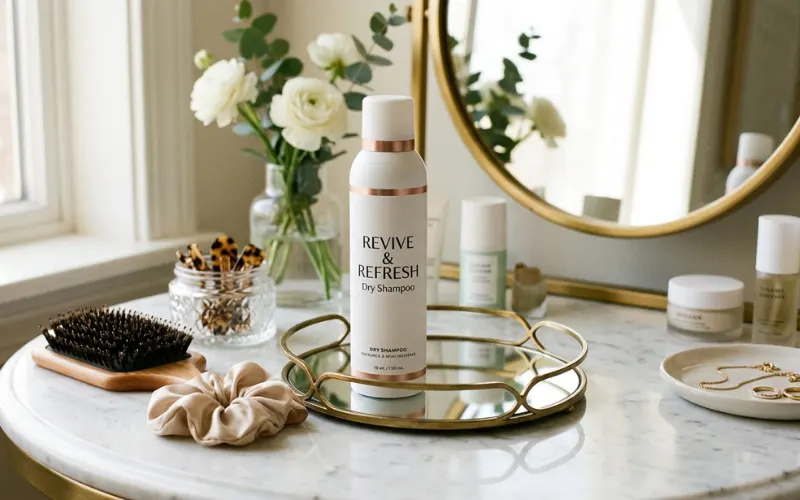
If I could only own one, it’d be Living Proof Perfect Hair Day.
I know that’s not a creative answer. It shows up on every “best of” list for a reason, though. The formula uses something called OFPMA technology that lifts oil away from the strand instead of just sitting on top and absorbing it the way starch-based sprays do. Your hair feels actually clean afterward. Not “less greasy.” Clean.
No white cast on dark hair. Scent that’s there but doesn’t take over the room. Volume without crunch. I’ve been through four full bottles since last year and I don’t see myself stopping.
The price hurts. About $28 to $32 depending on where you buy it. But I used to go through budget cans twice as fast because I needed more product per application to get the same result. The math worked out closer than I expected.
The rest of my shortlist
Batiste Original
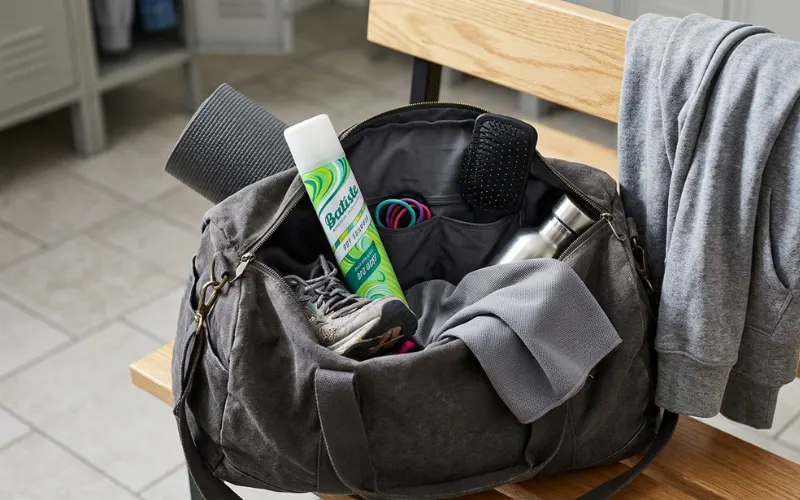
Under $9. Uses rice starch. Works. Has worked for years. Will probably still work when we’re all retired.
Here’s the thing about Batiste though. If you have dark hair and you don’t massage it in for a solid 30 to 40 seconds, you’re going to look like you have grey roots. That complaint is in every review online and it’s valid. The formula absolutely leaves white residue. The trick is working it in longer than feels necessary and then brushing through.
The scent has changed over the years. I liked the original version from 2019 better than what they’re selling now. The current formula is fine. It smells like “clean” in a generic, slightly soapy way. Not offensive but not anything I’d choose.
I keep a can in my gym bag because I don’t care if it gets banged around, lost, or stolen. At $9 I’ll just buy another one.
Amika Perk Up
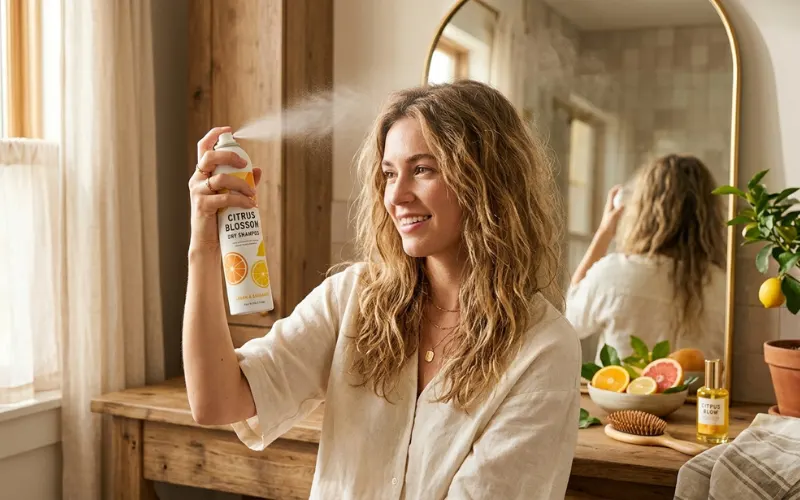
Best smell of anything on this list and I will stand by that. Citrusy, warm, like walking past a really nice candle store. Talc-free, which matters if you’ve been following the ingredient safety conversation around dry shampoos at all.
Sprays clear. No white residue. Performance falls solidly in the middle between Batiste and Living Proof, and so does the price at about $26 to $30. I reach for it on days when I want my hair to smell nice without actually layering perfume.
Klorane Nettle
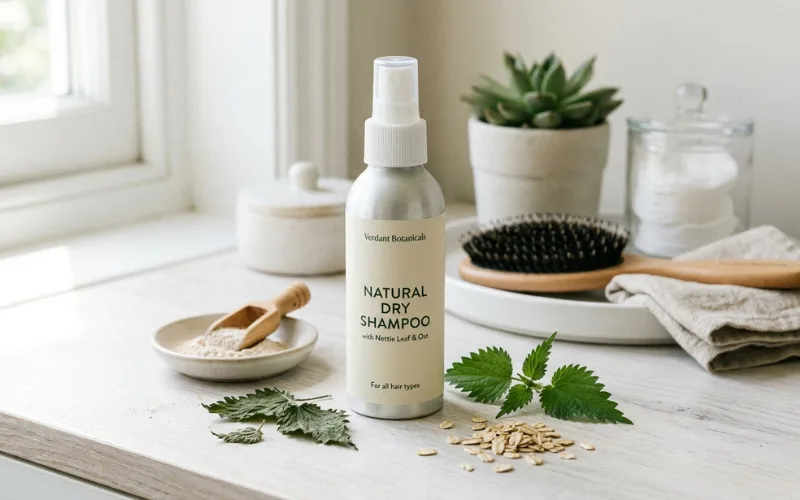
This one converted me from someone who only bought aerosol dry shampoos to someone willing to try other formats. The spray comes out as a fine, controlled mist rather than the aggressive blast you get from most cans. Makes it way easier to distribute evenly. I’ve had too many experiences with other brands where I accidentally dumped half the product onto one spot because the nozzle was basically a fire hose.
About $20. Nettle extract and oat starch. Short ingredient list. If you care about clean formulas but don’t want to pay Living Proof prices, this is where I’d point you.
If your hair also gets oily between washes, I wrote a separate guide on the best shampoo for oily hair that covers the wash-day side of things. Dry shampoo handles the in-between days.
Moroccanoil Dark Tones
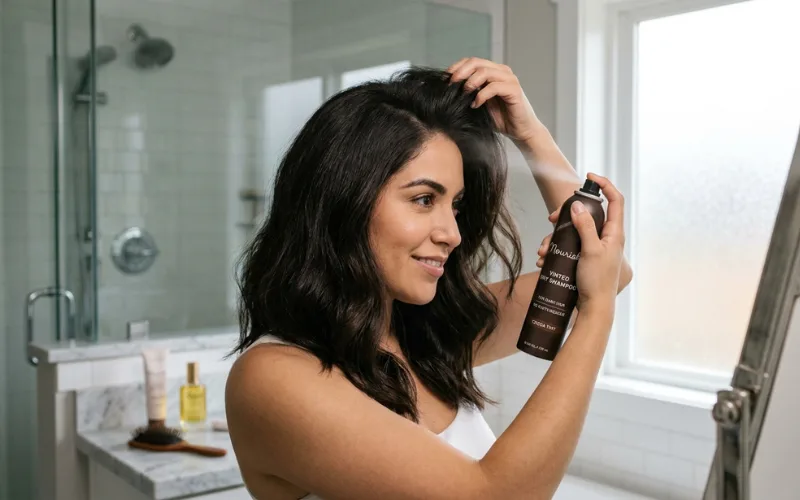
I bought this after years of being annoyed at white residue on my dark brown hair. Poured out a full paragraph of frustration about Batiste’s white cast two sections ago, so you know this was a long time coming.
Moroccanoil Dark Tones is tinted. It blends into dark hair on contact. No white, no grey, no chalky look. There’s a small amount of argan oil in the formula, which sounds weird for a product meant to absorb oil, but the amount is tiny and it keeps the hair from feeling dried out.
About $28. If white residue is the reason you stopped using dry shampoo, this fixes that specific problem completely.
Olaplex No.4D
I’ll admit I was skeptical about this one. Olaplex is known for bond-building repair treatments, and a dry shampoo felt like a brand extension that didn’t need to exist. Bought it anyway because I’m apparently incapable of walking past a new hair product without buying it.
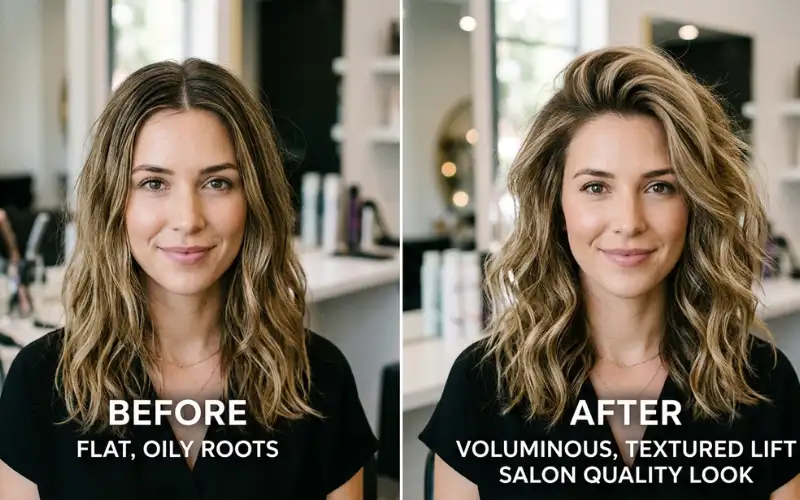
It’s actually the best volume-boosting dry shampoo I own. Roots feel weightless and lifted after using it, which is different from other formulas that absorb oil but leave hair feeling flat or coated.
Whether the “bond-building technology” in a spray-on product does anything meaningful for hair structure, I genuinely don’t know. What I do know is my hair looks fuller on days I use this versus days I use Batiste. About $30.
Acure Dry Shampoo
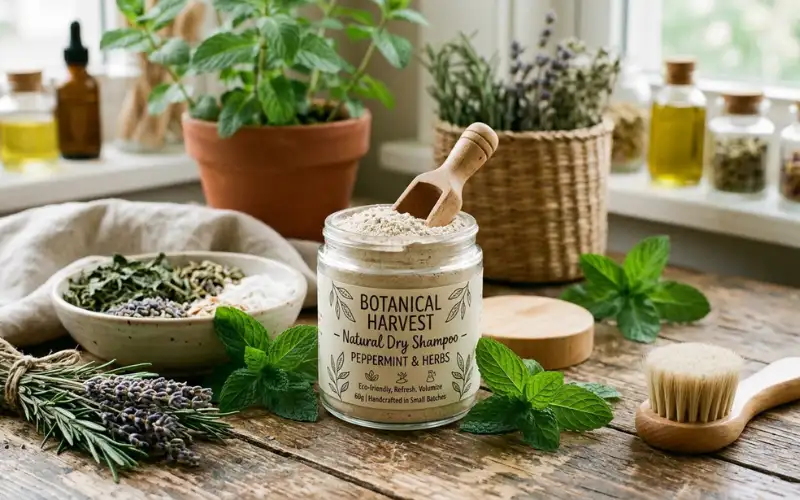
This is the one I hand to friends who ask “what’s the cleanest dry shampoo that actually works?” It’s a powder. Organic arrowroot, peppermint, rosemary. No aerosol, no synthetic fragrance, no talc, no silicones. About $10.
Application is different from spray cans. You shake powder into your hands or onto a big makeup brush and work it into your roots manually. Takes longer than spraying. The peppermint gives your scalp a tingly feeling that I personally like but a friend of mine found “weird and distracting.”
Not the grab-and-go option for a rushed morning. But if ingredients matter to you more than convenience, I haven’t found anything cleaner at this price.
Klorane Non-Aerosol Powder
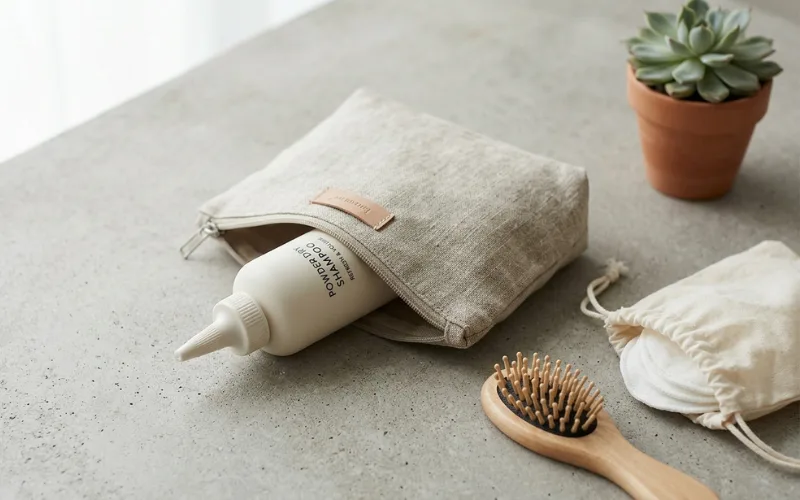
My favorite powder dry shampoo because of the applicator. It’s a squeeze bottle with a pointed tip that directs the powder exactly where you want it. Every other powder I’ve tried involved shaking product out and hoping for the best. This one gives you precision.
Oat starch base. Fits in a purse. No pressurized can to worry about on flights or in a hot car. About $22.
Briogeo Scalp Revival
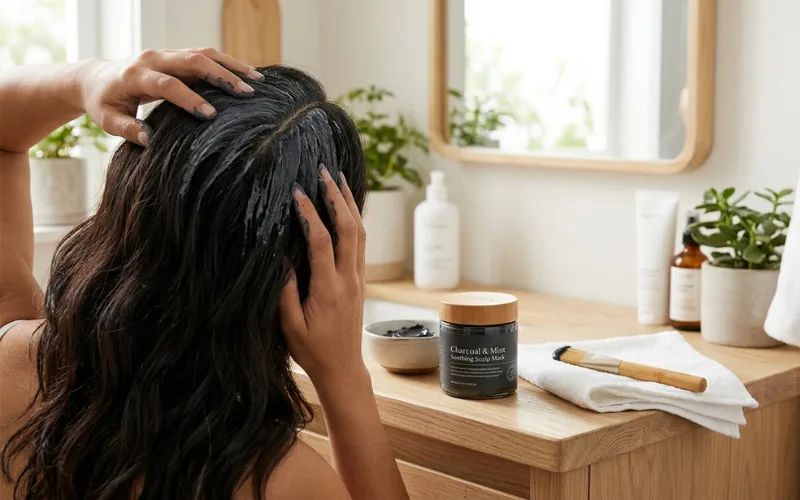
I added this after a stretch where my scalp was irritated and itchy, probably from overusing a heavily fragranced dry shampoo three days in a row (lesson learned). The charcoal in Briogeo’s formula absorbs oil while actively soothing the scalp. My irritation calmed down within a few uses.
If dry shampoos tend to make your scalp itchier instead of better, this one was formulated with that exact problem in mind. About $24.
Dove Refresh + Care
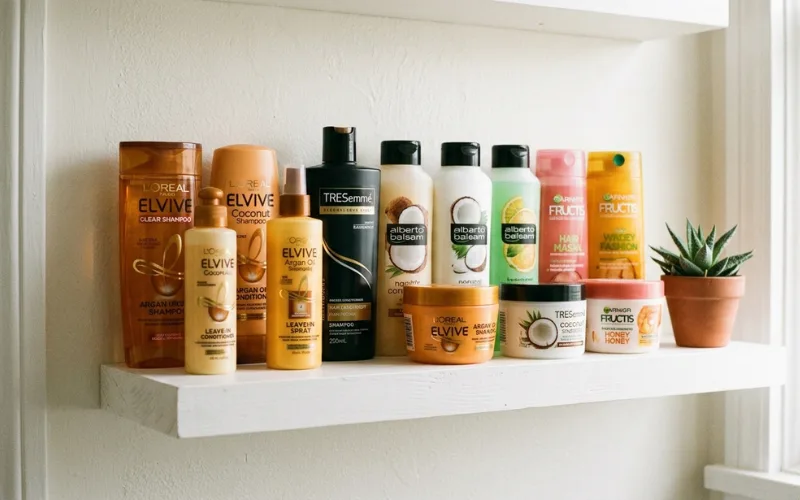
The other drugstore option that earned a spot. About $6 to $8. What makes it different from Batiste is a conditioning element that leaves hair softer after use rather than dry and crunchy.
The tradeoff is less oil absorption power. Dove works fine for day-two hair. It won’t rescue day-four hair the way Batiste or Living Proof can. I use it on lighter oily days when I just need a bit of freshness without the heavy-duty oil stripping.
Which brand is best for dry shampoo?
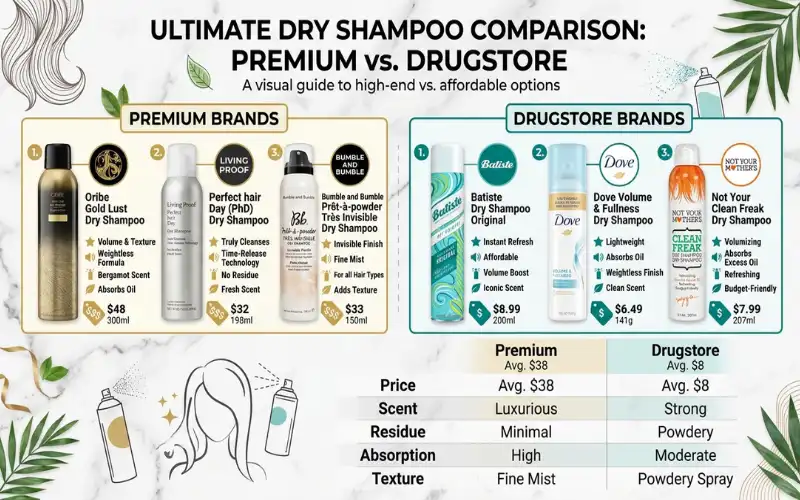
There isn’t one brand that wins across every category.
Living Proof makes the best overall performer. Klorane gives you the cleanest ingredients at a mid-range price. Batiste still owns the budget space. Moroccanoil solved the dark-hair residue problem. Olaplex leads on volume.
If you’re buying your first dry shampoo and don’t want to overthink it, start with Batiste. Figure out if you even like the format. If you do, upgrade from there based on what bugs you about the cheap version.
What’s the safest dry shampoo to use?
In 2022, independent testing found benzene contamination in several aerosol dry shampoo brands. Benzene is a known carcinogen. The contamination came from the manufacturing process, not from any listed ingredient, which is why it caught everyone off guard.
Most brands have reformulated since then. But if safety is your top concern, stick with formulas that have the shortest ingredient lists and skip aerosol entirely.
Acure and Klorane Nettle are the two I feel most confident recommending from a safety perspective. Powder formats like Acure eliminate the aerosol propellant question completely. If you want an aerosol that’s talc-free, Amika and Olaplex both fit.
The “does dry shampoo cause cancer” question is specifically about benzene contamination, not about dry shampoo as a product category. The contamination was a manufacturing failure. The product type itself isn’t the problem.
What shampoo is good for chemo hair loss?
This question shows up in dry shampoo searches, and the answer is genuinely different from everything else on this page.
During chemo, scalps become extremely sensitive. Standard dry shampoos with fragrances and aerosol propellants can irritate skin that’s already compromised. If you want a dry option during treatment, use an unscented powder formula or plain arrowroot powder applied with a soft brush.
For actual washing, sulfate-free and fragrance-free options like Vanicream or Free & Clear are the safest bets. But this is really a conversation for your oncology team. They know your specific treatment protocol and which products are safe for your situation. A beauty article shouldn’t be the last word on this.
How to actually get the most out of dry shampoo?
Hold the can 10 to 12 inches from your head. Most people hold it way too close, which dumps product onto one area instead of distributing it.
Spray in short bursts along your part line, crown, and temples. Those are where oil concentrates first.
Now here’s the step almost everyone skips. Let the product sit for 30 seconds before touching your hair. The starch or powder needs contact time to absorb oil. If you start rubbing immediately, you’re spreading it around before it’s done working.
After 30 seconds, massage into the scalp with your fingertips. Flip your head upside down and shake. Brush through.
One tip that changed my routine more than any product: use dry shampoo at night. Spray it in before bed. While you sleep, it spends 8 hours absorbing oil instead of the 30 seconds you give it in the morning. You wake up with hair that already feels fresh. I started doing this about a year ago and my mornings got noticeably easier.
When dry shampoo stops being helpful?
I love this stuff. I use it three or four days a week. But there’s a line.
More than two consecutive days without an actual wash and you start getting product buildup on the scalp. That buildup can clog follicles, irritate the skin, and over time potentially contribute to thinning. Your scalp needs real cleansing. Dry shampoo extends the gap between washes. It doesn’t eliminate the need for them.
If you’re reaching for it every single day, the real issue might be overactive sebum production, which is something a clarifying shampoo or a better overall hair and skincare approach can address at the root.
Read Next: Best Shampoo for Oily Hair: 12 Picks That Actually Control Grease
BeautyLiesTruth publishes hair and personal color guidance built on primary research. Color claims are tested by draping under controlled daylight, and every figure is traced to a published source rather than to another blog.