
I’ve been styling locs for going on eight years now. The question I get most from new clients is some version of “I want locs but I don’t know which kind.”
Which is fair. When people say “locs” they could mean about a dozen genuinely different things. The version you pick determines how your hair looks, how long installation takes, how much maintenance you’ll deal with, and whether you can take them out next month or whether you’re committed for years.
This is everything I wish someone had explained to me before my first client asked me to start her locs. Every type, how they’re started, what they cost, and which hair textures they work best on.
Quick Answer
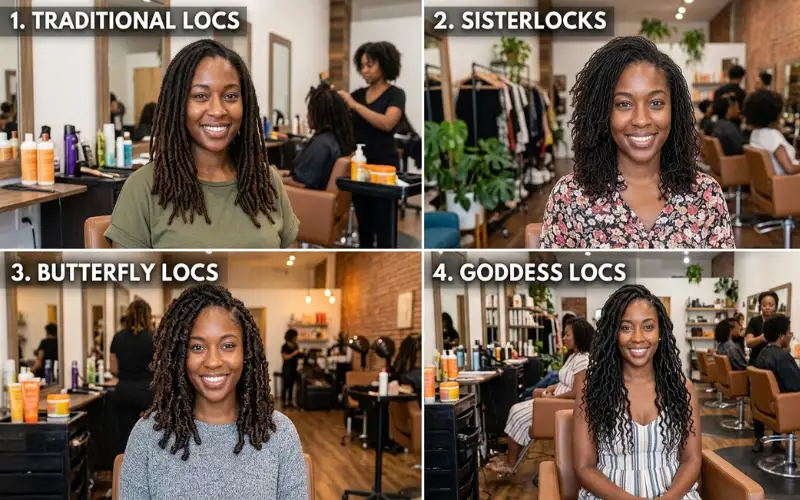
The main different types of locs include traditional locs, sisterlocks, microlocs, freeform locs, faux locs, soft locs, butterfly locs, goddess locs, interlocked locs, wicks, comb coil locs, and two-strand twist locs. Each type varies in size, starting technique, maintenance needs, and permanence. Traditional locs, sisterlocks, and freeform locs are permanent. Faux locs, soft locs, butterfly locs, and goddess locs are temporary protective styles using extensions.
Are there different types of locs?
Yes. Way more than most people realize.
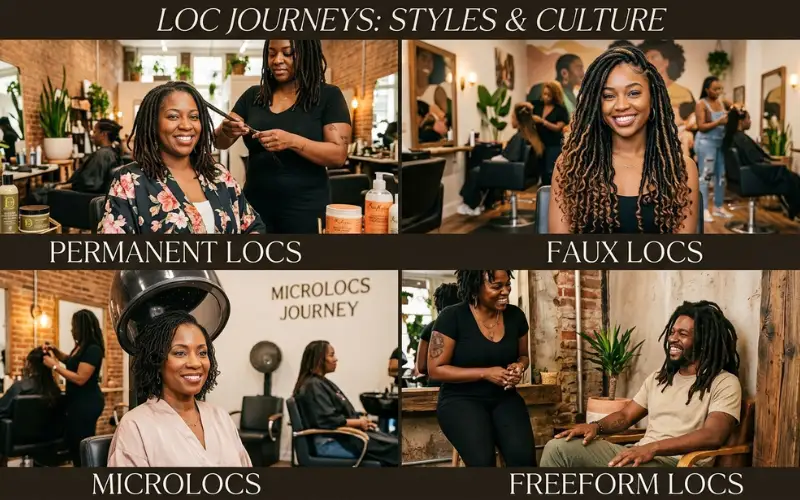
The word “locs” covers everything from permanent rope-like strands formed over months of natural locking, all the way to temporary protective styles using synthetic hair that come out in 6 to 8 weeks. Completely different commitments, budgets, and maintenance routines.
I split them into three groups when talking to clients:
- Permanent locs – your real hair locks over time
- Semi-permanent methods – real hair with specific techniques that speed up locking
- Temporary/protective styles – extensions that look like locs but come out after a few weeks
That framing usually helps people figure out what they actually want before we get into specifics.
Permanent locs
Traditional locs
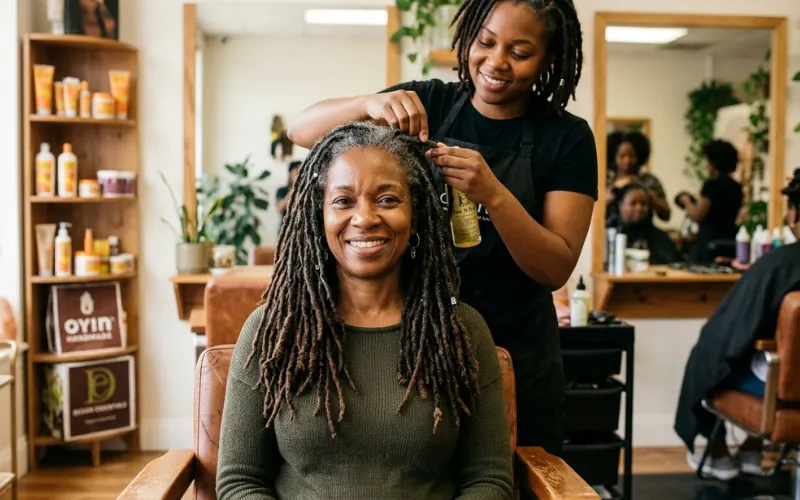
The original. Your natural hair is sectioned and then coiled, twisted, or braided to begin the locking process. Over the next 12 to 24 months, the hair mats and fuses into solid rope-like strands.
I love working with traditional locs because no two sets look exactly the same. The size depends on your sections. The texture depends on your hair type. The shape shifts over time as they mature through the “budding” stage (when locs get lumpy and uneven) into fully mature locs that feel dense and solid.
Starting methods include palm rolling, finger coils, backcombing, and braiding. I cover those in detail further down. For more on how these are worn, check out my dreadlock styles guide.
Sisterlocks
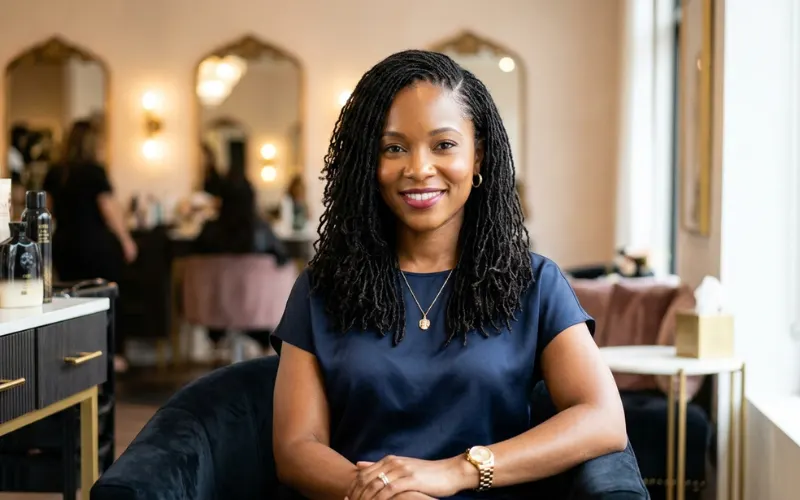
Tiny. Uniform. Precise.
Sisterlocks are created using a patented interlocking method with a specialized tool. They have to be installed by a certified Sisterlocks consultant. The certification exists because the technique requires specific training to get right.
Here’s what to expect:
- Installation time: 12 to 36 hours across two or three sessions
- Initial cost: $500 to $1,000+
- Retightening: Every 4 to 6 weeks at $100 to $200 per visit
- Loc size: Pencil-thin or smaller
Why go through all that? Versatility. Sisterlocks are small enough to wear in updos, ponytails, twists, braids. Some of my clients curl theirs. Others flat-iron them occasionally.
The tradeoff is cost, time, and fragility. They’re delicate compared to traditional locs, especially during the first year. Rough handling or the wrong products can cause slippage.
Microlocs
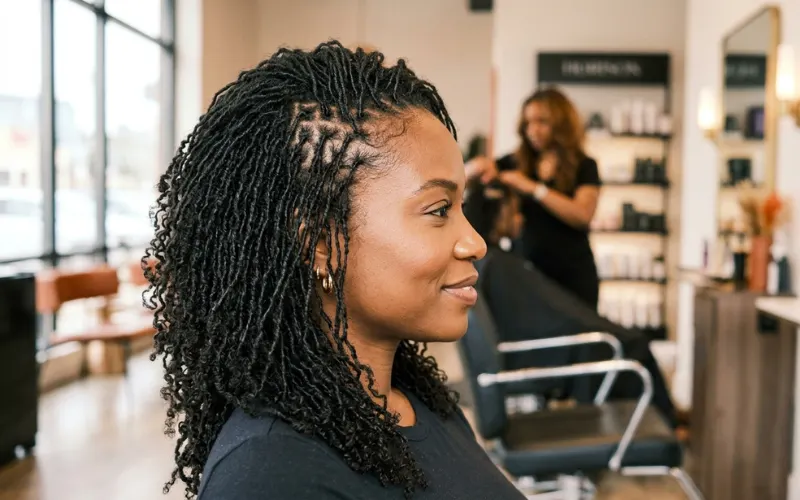
Think of microlocs as the DIY cousin of Sisterlocks. Similarly small locs, but you don’t need a certified consultant. You can start microlocs with two-strand twists, interlocking, or coils, and maintain them yourself.
Up close, they tend to be slightly less uniform than Sisterlocks because they’re not created with the same precision tooling. Some people care about that difference. Others genuinely don’t.
Cost is significantly lower:
- Salon installation: $150 to $400
- Home start: Price of a latch hook tool and your time
- No certification required: for the stylist
Freeform locs

Stop combing. Stop detangling. Let your hair do what it wants.
That’s freeform locs. I have a handful of clients with them and every single set looks completely different. Some formed thick clumps. Some stayed wispy. Some congoed (merged together) into massive sections. The whole point is you don’t control the outcome.
There’s also a middle ground called semi-freeform. You separate sections periodically to prevent everything from merging into one giant mat, but you don’t palm-roll or retighten. The internal locking happens naturally.
Freeform locs are the lowest maintenance option on this entire list. They’re also the least predictable. If you need uniformity, this isn’t your style.
Wicks (Congo locs)

Wicks are thick, chunky locs created by combining multiple smaller locs together. The result is a small number of very large strands, sometimes as few as 4 to 8 on the entire head.
This style got popular through hip-hop culture (Kodak Black wore them prominently). Bold look. Creating wicks from existing locs takes time because you’re merging and binding locs together with rubber bands or wrapping, then letting them fuse.
I don’t install wicks often because most of my clients prefer more versatile styles. But when someone comes in wanting that specific aesthetic, they know exactly what they want.
Interlocked locs
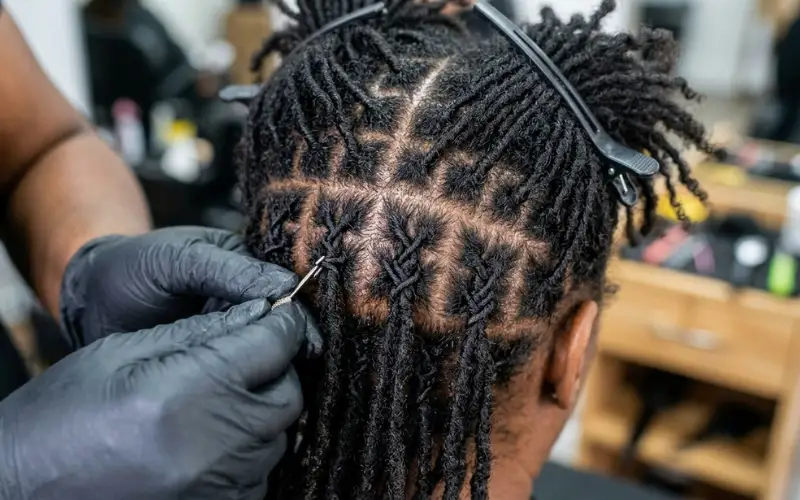
Interlocking is both a starting method and a maintenance technique. The hair is threaded through itself at the root using a latch hook tool, creating a firm hold from the very first session.
What makes interlocked locs different from palm-rolled traditional locs is the base texture. Interlocked roots have a criss-cross pattern. Palm-rolled roots look smoother and rounder.
I recommend interlocking for:
- Swimmers and frequent gym-goers
- People whose locs get wet regularly
- Anyone who needs a tighter hold during the early stages
- Clients with looser curl patterns that don’t hold coils well
The downside is overtightening. Interlocking too frequently puts tension on the roots that can cause thinning or traction alopecia. Every 6 to 8 weeks is the safe interval.
Temporary and protective loc styles
Faux locs
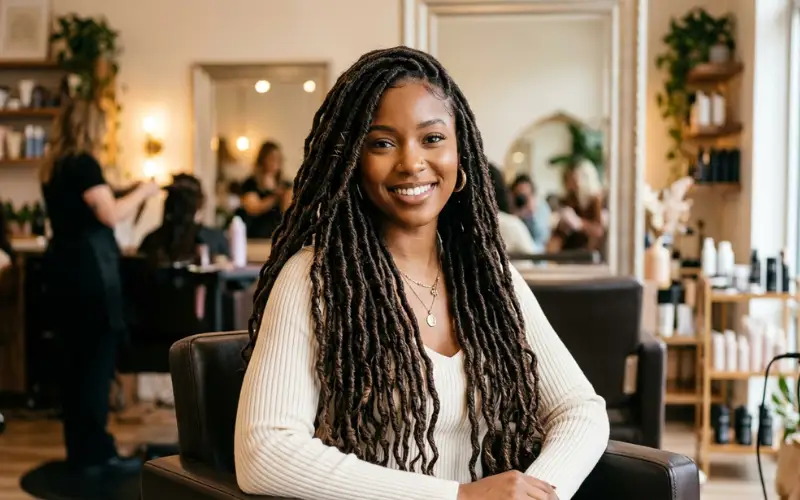
Faux locs use synthetic or human hair extensions wrapped around your natural hair to mimic real locs. Your hair is braided or twisted first, then extension hair gets wrapped around each braid.
At a glance:
- Installation: 4 to 8 hours
- Duration: 6 to 8 weeks max
- Cost: $150 to $350 at a salon
I install faux locs more than almost any other temporary style. They give you the loc look without the 1 to 2 year commitment of growing real ones, and they protect your natural hair underneath.
One warning though. Heavy faux locs pull on your edges. I’ve seen clients come back with thinning hairlines from wearing them too long or too tight. Six weeks max. Seriously.
Soft locs

Soft locs are faux locs made with lighter, more flexible wrapping hair (usually spring twist or passion twist hair instead of stiffer Marley hair). The result feels less rigid and moves more naturally.
This style has been all over social media for the past three years and I understand why. They look real enough to fool most people and they’re comfortable enough to sleep in without feeling like cables on your head.
Same timeframe as faux locs (6 to 8 weeks). Similar cost. The difference is texture and weight. If faux locs felt too heavy or stiff, soft locs might be your answer.
Butterfly locs
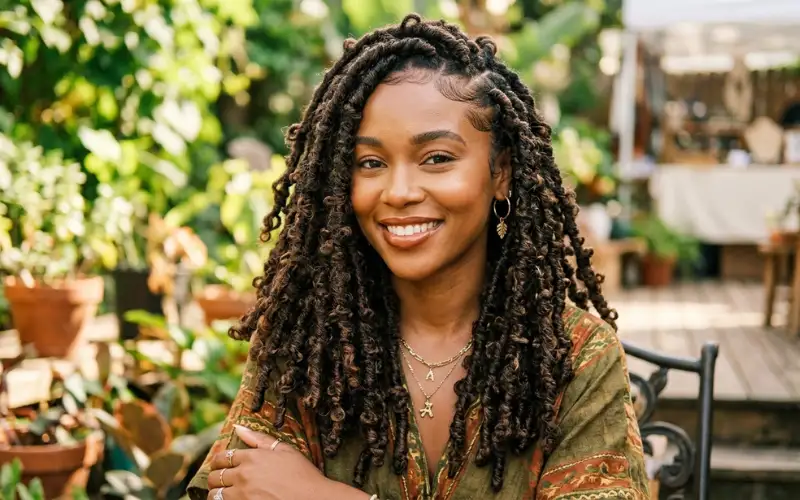
Butterfly locs use water wave braiding hair to create locs with small loops on both sides of each strand. Those loops are the signature. Without them, it’s a regular faux loc.
I wrap these differently than standard faux locs. The key is leaving intentional loops while wrapping rather than pulling everything tight. New stylists often struggle with butterfly locs for the first few installations because the technique has a learning curve.
- Installation: 5 to 9 hours
- Duration: 6 to 8 weeks
- Cost: $200 to $400 (extra time involved)
Goddess locs
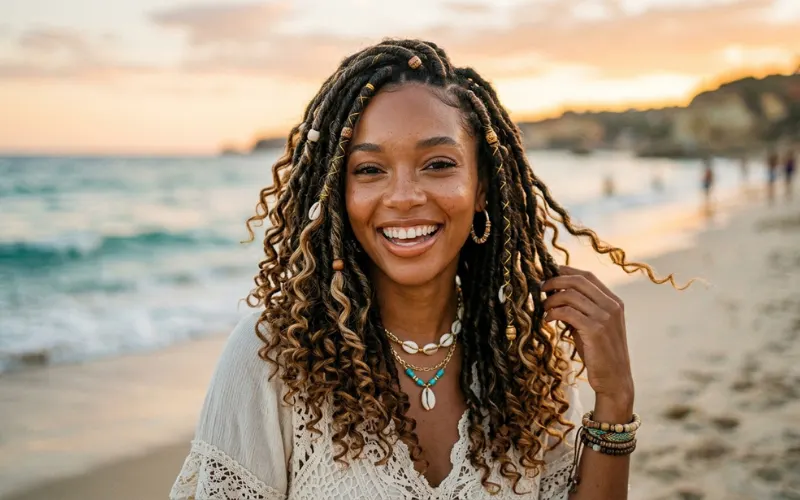
Goddess locs are faux locs with curly or wavy strands left loose at the ends and throughout the body. The loose curls create a boho, undone look.
If someone shows me a Pinterest board full of beachy, bohemian loc styles, this is almost always what they’re looking at. It’s one of the most photogenic styles I install.
Gorgeous in photos. Less gorgeous when the loose curls start tangling after two weeks, which they will. Managing goddess locs carefully without ruining the style is maintenance that clients don’t expect going in.
Starting techniques compared
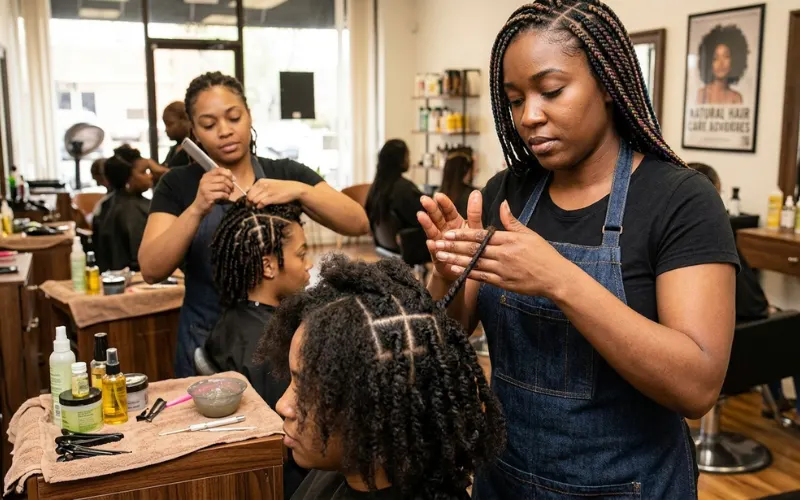
This part actually determines how your permanent locs will look and feel for years. Pick the wrong method for your hair texture and you’ll spend the first year fighting your locs instead of enjoying them.
| Method | Best hair types | Loc appearance | Hold strength | Maintenance |
| Palm rolling | 4A, 4B, 4C | Round, smooth | Moderate | Re-roll every 4-6 weeks |
| Comb coils | 4A, 4B, 4C (tighter coils) | Neat, cylindrical | Low initially | Fragile first 3 months |
| Two-strand twists | 3C, 4A, 4B, 4C | Fuller, textured | Good | Re-twist every 4-6 weeks |
| Interlocking | All hair types | Firm, criss-cross base | Very strong | Every 6-8 weeks |
| Backcombing | 2C, 3A, 3B (looser textures) | Slightly rough initially | Strong | Less frequent |
| Braids | 3C, 4A, 4B, 4C | Braid pattern visible early | Strong | Low after initial set |
| Freeform | All types | Unpredictable, organic | N/A | Almost none |
Quick recommendations by hair type:
- 4B or 4C hair: Palm rolling and comb coils are the smoothest path
- All type 4 textures: Two-strand twists give a fuller look and work broadly
- Looser curl patterns (3A-3C): Interlocking holds better than coils for these textures
- Wavy or straighter hair (2B-3A): Backcombing creates the initial knots that hold while hair mats
If you’re curious how curl patterns affect styling more broadly, I wrote about that in my curly hairstyles guide.
The loc journey: what to expect by stage
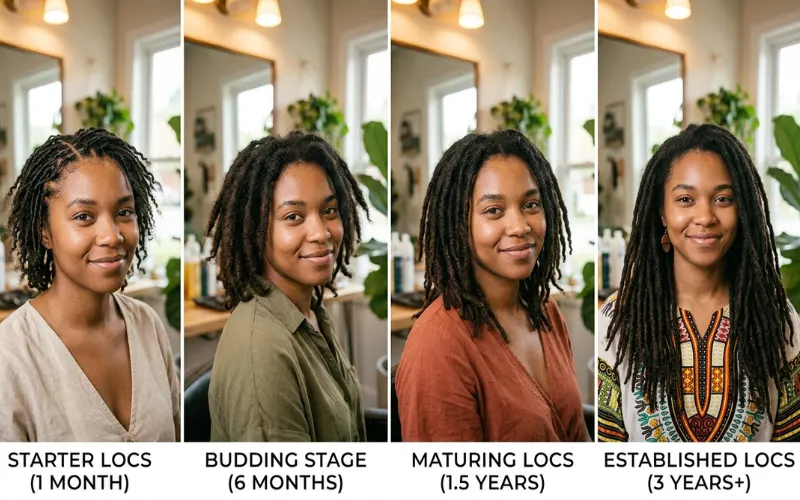
Your locs don’t look the same at month 2 as they do at month 12. Here’s what to expect at each stage:
- Starter stage (month 0-3). Locs look neat because they’re fresh. They also unravel constantly. Most annoying phase. Don’t wash aggressively, don’t touch them constantly. Leave them alone.
- Budding stage (month 3-8). Locs get puffy, lumpy, and generally look their worst. Hair is matting internally but the outside looks messy. I warn every client about this in advance. Nothing went wrong. This is normal.
- Teen stage (month 8-15). Things start tightening and looking like actual locs. Some sections mature faster than others. You can start experimenting with braided styles on your locs around this stage.
- Mature stage (month 15-24+). Fully locked. Dense. Solid. Low maintenance. This is where locs become the easy-care style everyone told you they’d be.
Can bed bugs live in your dreadlocks?
No. Bed bugs live in mattresses and furniture, not hair. They feed on exposed skin at night and retreat to cracks in your bedding. They don’t burrow into locs or lay eggs in hair.
The confusion comes from mixing up bed bugs with head lice. Lice can live in any hair, including locs. If you suspect lice, see a dermatologist. Removing lice from locs requires specific treatment (suffocation-based products like Cetaphil cleanser or dimethicone treatments). Traditional lice combing doesn’t work through locs.
Can I use Nizoral with locs?
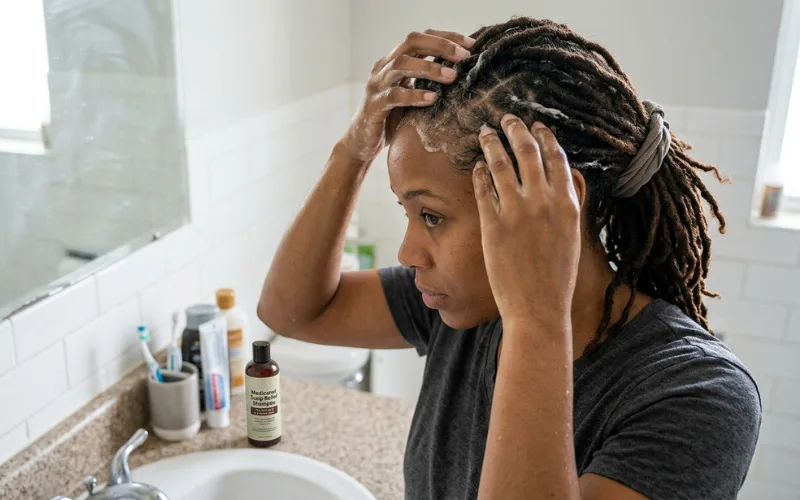
Yes, with some adjustments. Nizoral (ketoconazole shampoo) treats dandruff, seborrheic dermatitis, and fungal scalp conditions. Safe to use on locs if you apply it correctly.
How to use it:
- Dilute a small amount with water in an applicator bottle
- Apply directly to the scalp between locs
- Massage into the scalp, not into the locs themselves
- Rinse completely (leftover product causes buildup)
- Follow up with a moisturizing oil on the scalp
I’ve recommended Nizoral to clients with persistent itch and flaking who weren’t getting results from tea tree oil or apple cider vinegar rinses. Once or twice a week maximum. Don’t overuse it.
How do you sleep with dreadlocks?
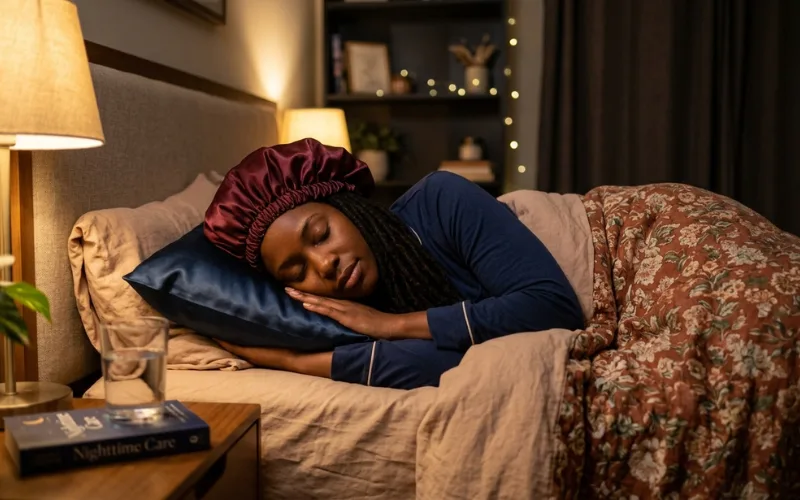
Satin or silk bonnet. Or a satin pillowcase. That answer hasn’t changed in all my years of doing hair.
Cotton pillowcases create friction that dries locs, causes frizz, and can pull on newer locs. Satin or silk eliminates that. Some clients prefer a satin-lined loc sock (a long tube that holds the locs together) instead of a bonnet, especially for waist-length locs.
Sleeping tips by loc stage:
- Starter/budding phase: Sleep on your back for the first few months. Side-sleeping compresses locs on one side and causes uneven locking.
- Shorter locs: Gather loosely on top with a satin scrunchie, cover with bonnet. Don’t pull tight.
- Long locs: Loc sock or oversized bonnet. Avoid rubber bands at the roots overnight.
Tension at the roots every night adds up over months. It can thin your hairline if you’re not careful.
Choosing the right type for your hair
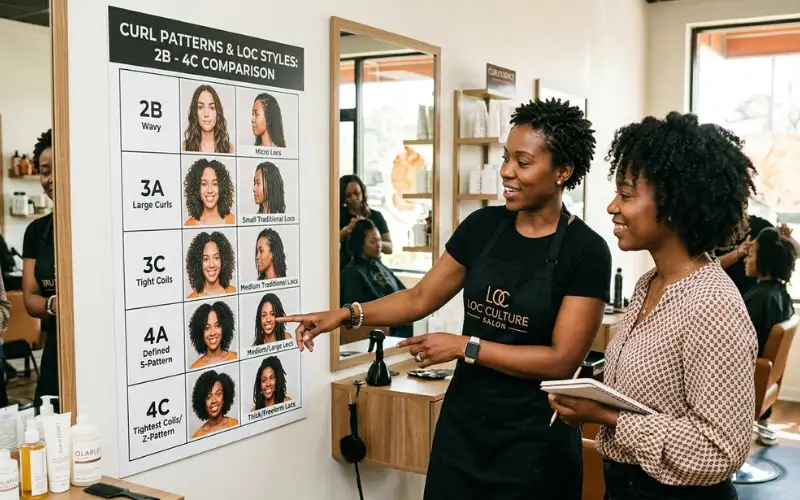
- Type 4C (tight coils, high density): Most options available. Traditional locs, sisterlocks, microlocs, freeform all work. Palm rolling and comb coils give the neatest initial look.
- Type 4A-4B (defined curls to tight coils): Two-strand twists and palm rolling are strongest. Interlocking works well for active lifestyles.
- Type 3A-3C (loose curls to corkscrews): Hair may resist coiling techniques. Interlocking or backcombing holds better because they create initial knots while hair slowly mats.
- Type 2B-2C (wavy): Backcombing or crochet methods work best. Expect the locking journey to take 18 to 30 months rather than 12 to 18.
One last thing. If you have fine or thin hair regardless of curl type, go smaller with your sections. Thin sections loc faster and look fuller than thick sections that end up sparse. And that principle of matching your style to your features applies to choosing haircuts for different face shapes too.\
Read Next: 75+ Crazy Hair Day Ideas: Easy, Last-Minute & Wacky for Every Age

BeautyLiesTruth publishes hair and personal color guidance built on primary research. Color claims are tested by draping under controlled daylight, and every figure is traced to a published source rather than to another blog.