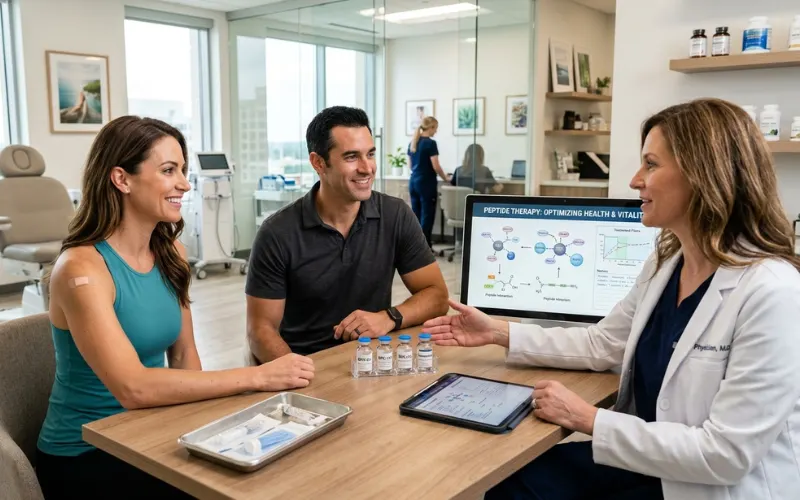
Peptide therapy benefits range from faster muscle recovery and targeted fat loss to improved sleep, stronger immune response, and visible skin repair. However, most articles about peptides either oversell them as miracle cures or bury you in hedging language that says nothing useful. The reality sits somewhere between those extremes, and it’s worth understanding before you commit to a protocol.
Peptide therapy uses short chains of amino acids (typically two to 50 amino acids long) to trigger specific biological responses. Your body already produces thousands of peptides naturally. Insulin is probably the most famous one. Therapeutic peptides are lab-made versions designed to mimic or amplify what your body does on its own, targeting processes like tissue repair, hormone production, and inflammation.
The global peptide therapeutics market hit an estimated $140.86 billion in 2025 according to Grand View Research, with projections reaching $294.58 billion by 2033. Peptides are pulling clinical interest because they tend to cause fewer side effects than traditional drugs and break down into amino acids your body already knows how to recycle.
Skin and Anti-Aging Benefits
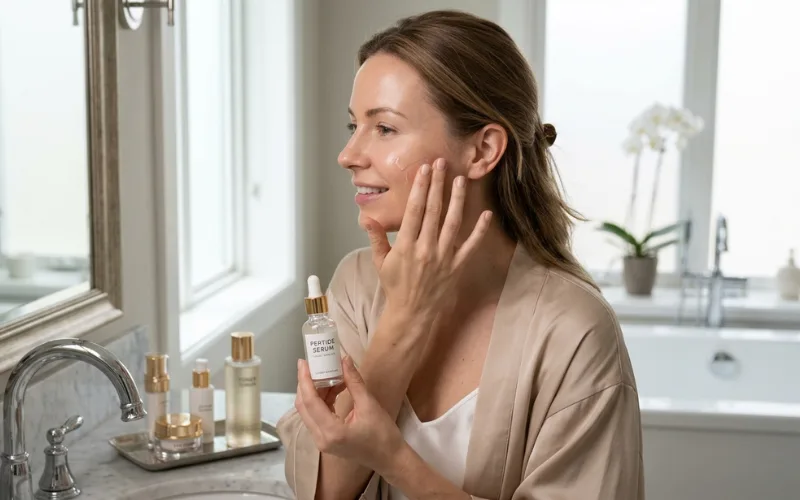
Peptides showed up in skincare before they became a wellness trend, and the skin-related research is actually some of the strongest in the peptide space.
1. Collagen and Elastin Production
Peptides like Matrixyl and copper peptides (GHK-Cu) interact directly with skin fibroblasts, the cells responsible for producing collagen and elastin. A 2025 PMC review on peptides for skin regeneration confirmed that consistent use of peptide-based topicals improved fine lines and skin texture within eight to 12 weeks in multiple studies.
GHK-Cu gets particular attention because it pulls double duty. It stimulates collagen production and acts as an antioxidant. I’ve seen clinics stacking it with BPC-157 and TB-500 for patients who want both skin and tissue repair benefits from a single protocol.
2. Does Peptide Therapy Strengthen Your Skin Barrier?
Topical peptides like palmitoyl pentapeptide-4 support the production of filaggrin and involucrin, two structural proteins that keep your skin barrier intact. For people dealing with eczema, rosacea, or chronic dryness, this matters more than the anti-aging angle. A damaged skin barrier makes everything worse, from sensitivity to premature aging.
How Do Peptides Help with Sports Performance and Recovery?
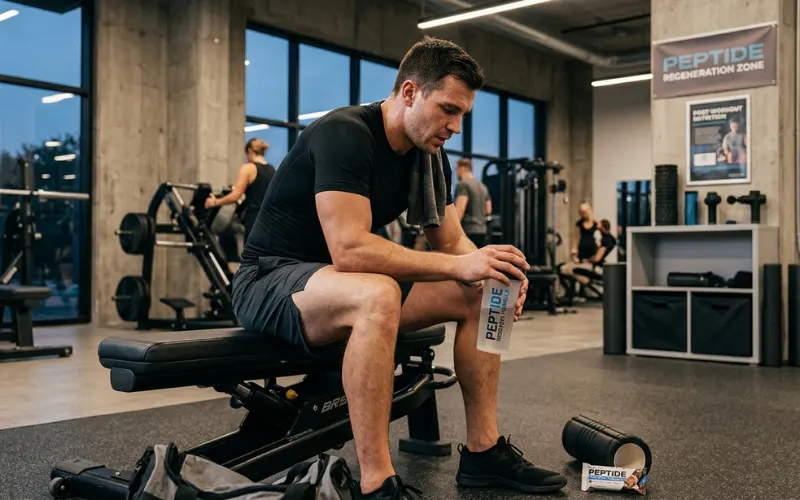
This is where peptide therapy gets the most attention and the most skepticism. The animal data is strong. The human data is limited. Both statements are true simultaneously.
3. Muscle Growth Support
CJC-1295 and Ipamorelin stimulate growth hormone (GH) release, which increases insulin-like growth factor 1 (IGF-1). IGF-1 drives muscle protein synthesis. For aging adults losing muscle mass or people in resistance training programs, these peptides may help preserve or build lean tissue.
Keep in mind that these peptides are banned in most competitive sports, and the muscle growth effect is modest compared to what social media suggests. We’re talking about supporting your training, not replacing it. If someone promises you dramatic muscle gains from peptides alone, they’re overselling things.
4. Post-Workout Tissue Repair
BPC-157 and TB-500 are the two peptides athletes ask about most. BPC-157 promotes angiogenesis (new blood vessel formation) and appears to accelerate tendon, ligament, and muscle repair. TB-500 works on cell migration and actin regulation, helping tissues become more flexible during healing.
A 2026 systematic review in orthopedic research analyzed BPC-157 specifically. Out of 36 studies reviewed, 35 were animal models. Only one small human case series showed pain relief in knee patients. The animal data is consistently promising, but we’re still waiting on large-scale human trials, and anyone telling you otherwise isn’t reading the research.
The better way to think about it is this: BPC-157 and TB-500 aren’t proven failures; they’re unproven successes. The gap between “promising preclinical data” and “FDA-approved therapy” is real, and it matters for how you set expectations.
Medical and Longevity Benefits of Peptide Therapy

Beyond sports performance, peptides are showing up in clinical conversations about immune support, sleep, and hormonal health.
5. How Does Peptide Therapy Support Immune Function?
Thymosin Alpha-1 stimulates T-cell production and activity. T-cells are your body’s targeted defense against pathogens. This peptide has been studied in patients with chronic infections and autoimmune conditions, and some oncologists have explored it as an adjunct during immunotherapy.
For the average wellness patient, the immune support angle is more about recognizing when your body needs help recovering from chronic stress, poor sleep, or overtraining, all of which suppress immune function.
6. Sleep Quality and Mental Clarity

Delta Sleep-Inducing Peptide (DSIP) and Ipamorelin may improve deep sleep architecture by increasing natural growth hormone secretion during sleep stages 3 and 4. Better deep sleep means better memory consolidation, clearer thinking, and improved mood regulation.
DSIP also appears to modulate stress-related neurochemicals. For patients dealing with mood issues tied to chronic stress, this is where the conversation usually starts before moving into more targeted protocols.
7. Hormonal Balance Without Synthetic Replacement
Kisspeptin and Gonadorelin stimulate the release of luteinizing hormone (LH) and follicle-stimulating hormone (FSH). These are the hormones that drive testosterone and estrogen production. For men with low testosterone or women with irregular cycles, peptides like these offer a different approach than jumping straight to synthetic hormone replacement.
The difference matters, as traditional HRT introduces external hormones. Peptides signal your body to produce more of its own. That distinction is why some providers prefer peptides as a first step.
Can Peptides Help with Weight Loss and Nutrition?

The short answer is yes, but the mechanism is more targeted than most people expect.
8. Fat Metabolism
AOD-9604 is a modified fragment of human growth hormone that promotes lipolysis (fat breakdown) without affecting blood sugar or IGF-1 levels. Growth hormone-related treatments often carry metabolic side effects. AOD-9604 appears to sidestep them, which is why it shows up in weight management protocols aimed at stubborn adipose tissue.
9. Does Peptide Therapy Preserve Muscle During Weight Loss?
This is one of the most practical peptide therapy benefits for people on calorie-restricted diets. CJC-1295 and Ipamorelin support IGF-1 release, which helps maintain muscle protein synthesis even when you’re eating at a deficit.
Losing fat while preserving muscle is the difference between looking leaner and just looking smaller. Patients who combine peptide therapy with structured nutrition tend to see better body composition outcomes than those relying on caloric restriction alone.
10. Gut Health and Nutrient Absorption
BPC-157 was originally studied for its gastrointestinal effects. It appears to support repair of intestinal tissue and maintain mucosal integrity. For conditions like ulcers, chronic inflammation, and leaky gut syndrome, BPC-157 is one of the most frequently discussed peptides in integrative medicine circles. A healthy gut lining means better nutrient absorption. Better nutrient absorption means your recovery, energy, and metabolic health all improve downstream.
What Are the Side Effects of Peptide Therapy?
Peptide therapy is generally well-tolerated under medical supervision, but “well-tolerated” doesn’t mean risk-free. Common side effects include:
- Injection site redness or swelling
- Increased appetite (especially with GH-stimulating peptides)
- Water retention during the first few weeks
- Occasional joint discomfort
- Temporary fatigue during the adjustment period.
Less common side effects include hormonal imbalance from improper dosing and insulin resistance from overuse of growth hormone-related peptides.
The biggest risk most people don’t think about isn’t the peptides themselves. Unregulated online vendors and research chemical suppliers have documented purity problems, mislabeling, and contamination. A 2026 FDA review is currently evaluating the compounding status of several popular peptides including BPC-157 and TB-500, with a Pharmacy Compounding Advisory Committee meeting scheduled for July 23 to 24, 2026. Three
questions most people never ask their provider but should are:
- What are the Certificate of Analysis (COA) results for this compounded peptide?
- What does the human clinical evidence show for my specific condition?
- What is the long-term monitoring plan?
Be sure to work with a qualified provider, and skip the gray-market shortcuts. The difference between working with an experienced wellness team and buying unverified peptides online is the difference between a real protocol and a gamble with your health.
What Should You Know About Peptide Therapy in 2026?
The regulatory picture shifted significantly in April 2026 when the FDA removed several peptides (including BPC-157 and TB-500) from Category 2 restrictions. They’re not approved, but they’re no longer explicitly prohibited for compounding either.
The July 2026 PCAC review will determine whether these peptides land on the 503A bulks list for legal compounding under physician oversight. That regulatory gray zone is exactly why working with a licensed peptide therapy provider matters more right now than it ever has.
The single takeaway from everything above: peptide therapy has real, documented benefits. It also has real limits. The research is moving fast, but human clinical data still lags behind the marketing. If you’re considering peptides, start with a provider who tells you what the evidence actually shows for your specific situation, not one who promises results the science hasn’t confirmed yet.
Disclaimer: This article is for informational purposes only and is not a substitute for professional medical advice, diagnosis, or treatment. Peptide therapy should only be pursued under the guidance of a licensed healthcare provider. Individual results vary, and many peptides discussed here are not FDA-approved for the uses described. Always consult your physician before starting any new therapy or wellness protocol.
FAQs
What are the most common side effects of peptide therapy?
The most frequently reported side effects are injection site irritation (redness or mild swelling), water retention during the first two to three weeks, and increased appetite with growth hormone-stimulating peptides. Less common effects include joint discomfort and temporary fatigue. Serious risks like hormonal imbalance or insulin resistance are typically associated with improper dosing or unsupervised use. Working with a licensed provider reduces these risks significantly.
How long does it take for peptide therapy to work?
Most patients notice initial changes within two to four weeks for healing and hormonal support peptides. Skin and performance-related benefits typically appear within four to 12 weeks of consistent use. Individual response varies based on the specific peptide, dosage, and your baseline health. Protocols generally run eight to 12 weeks minimum before outcomes are fully evaluated.
Is BPC-157 FDA-approved?
BPC-157 is not FDA-approved for any medical condition. The FDA removed it from Category 2 restrictions in April 2026, but its compounding status remains under review. A Pharmacy Compounding Advisory Committee meeting scheduled for July 23-24, 2026 will determine whether BPC-157 qualifies for the 503A bulks list. All current clinical use is considered off-label or investigational.
What is the best peptide for fat loss?
AOD-9604 is the most commonly studied peptide for targeted fat metabolism. It promotes lipolysis (fat breakdown) without impacting blood sugar or IGF-1 levels, which makes it a lower-risk option compared to other growth hormone-related treatments. It is typically part of a broader protocol supervised by a provider, not a standalone fat loss solution.
Can peptide therapy replace surgery or physical therapy?
No high-quality clinical evidence supports peptide therapy as a standalone replacement for surgery or physical therapy. Peptides like BPC-157 and TB-500 show promise as adjuncts to standard care based on animal studies and small human pilots. A 2026 systematic review found only one human case series among 36 BPC-157 studies. Peptides may support recovery alongside conventional treatment, not replace it.
How do you find a legitimate peptide therapy provider?
Look for board-certified physicians in functional, integrative, or regenerative medicine who use compounded peptides with Certificates of Analysis (COA) from verified pharmacies. Avoid online vendors selling research-grade peptides without physician oversight. Legitimate providers will explain the evidence base for your specific condition, monitor your progress with lab work, and have a clear long-term plan.
Read Next: Hydration tips: Boost Skin Glow and Overall Wellness
Jessica is a talented hairstylist and a passionate writer specializing in all things related to hairstyles and haircare. With years of experience in the beauty industry, She has honed their skills and developed a deep understanding of the transformative power of hairstyles.