
Free. Anonymous. Scored on your device, not ours.
Autism test
A free screening questionnaire for adults, and for parents answering about a child. It scores six separate areas rather than handing you one number, and it tells you plainly what the result can and cannot mean.
Six areas, one honest answer
Most screeners hand you a single number and leave you to work out what it meant. This one shows you which areas the traits actually sit in, tells you what the result cannot tell you, and gives you something worth writing down before you speak to anybody.
- 12 or 24 questions
- 1 to 4 minutes to finish
- Nothing sent scored on your device
This is a screening questionnaire, not a diagnosis. Only a qualified clinician can diagnose autism. A high result does not confirm it and a low result does not rule it out.
What this test is, and what it is not
Worth reading before the result rather than after it, because the difference between these two lists is the difference between a useful afternoon and a bad week.
What it is
- A structured way to check whether autistic traits show up in your answers, and where they cluster
- Something to take to a GP, a school or an assessment service so the conversation starts further along
- Free, anonymous, and scored entirely on your own device
- Written for adults answering about themselves and for parents answering about a child
What it is not
- A diagnosis. Only a qualified clinician can diagnose autism, and they do it over hours, not minutes
- A way to rule autism out. Plenty of autistic people, especially women and anyone who learned early to mask, score low on short screeners
- A medical record. Nothing you answer is sent anywhere unless you specifically choose to email yourself a copy
- A reason to make a decision on your own. If the result worries you, that is exactly the point at which a person is more use than a web page
How it works
-
Say who you are answering for
Every question is written twice, once for an adult answering about themselves and once for a parent or carer answering about a child. Pick one and the wording changes to match.
-
Choose twelve questions or twenty four
The quick check takes about a minute and pulls two questions from each of the six areas. The full profile gives each area four questions, which is a steadier read and takes about four minutes.
-
Answer honestly rather than carefully
Answer for how things usually are, not for how they were on your best day or your worst one. First instinct is almost always the more accurate one, and there is nobody on the other end of this to impress.
-
Read the six areas, not just the headline
The number at the top is the least interesting part of the result. The breakdown underneath shows which areas the traits actually sit in, and that is the part worth writing down and taking to somebody.
The six areas it measures
Autistic traits are not one thing, and a single total hides that. Somebody who scores heavily on sensory processing and barely at all on routine has a different life from somebody with the reverse, even when the two totals match exactly.
Conversation and connection
How talking with people goes, especially in groups and especially when the talking has no particular point to it.
Reading people
Picking up what somebody means rather than what they said, from their face, their tone and everything they left out.
Senses and surroundings
How much sound, light, texture and smell register, and whether a room can become genuinely hard to stay in.
Routine and change
How much comfort comes from knowing what happens next, and what a cancelled plan costs.
Focus and deep interests
How deep attention goes when something is interesting, how much detail gets noticed, and how hard it is to stop.
Overload and recovery
What too much at once does, how long it takes to come back from it, and what it costs to keep it hidden while it happens.
What it actually looks like
The same underlying trait shows up differently at six and at thirty six, which is a large part of why so many people are only recognised in adulthood. Both columns describe the same six areas.
Conversation and connection
In adults
- Groups are much harder than one to one, and the harder part is the timing rather than the talking
- Small talk feels like a task with rules you were never given
- Conversations go deep quickly or not at all, with very little in between
- People have described you as blunt when you thought you were being clear
In children
- Plays alongside other children rather than with them
- Talks at length about one subject without checking whether anyone is still listening
- Finds turn taking in conversation harder than turn taking in a game
- Gets on better with adults or much younger children than with their own year group
Reading people
In adults
- You work out what somebody meant afterwards, on the walk home
- Sarcasm and hints land late or not at all
- Eye contact is a thing you do deliberately, and doing it makes listening harder
- You have been told you missed something obvious that genuinely was not obvious
In children
- Takes instructions completely literally
- Does not check a parent face for reassurance the way other children do
- Misses the point at which another child has stopped enjoying the game
- Struggles with pretend play that depends on reading somebody else role
Senses and surroundings
In adults
- Specific sounds are not just annoying, they are unbearable
- Supermarkets, open plan offices and busy bars are tiring in a way that is hard to explain
- Clothes get returned over a seam, a label or a fabric
- You notice the hum, the flicker or the smell that nobody else in the room has registered
In children
- Covers ears at hand dryers, alarms, hoovers or applause
- Will only wear a small set of clothes, and cuts labels out
- A very narrow list of foods, usually sorted by texture rather than taste
- Seeks pressure and movement: spinning, crashing, tight hugs, being squashed under cushions
Routine and change
In adults
- A cancelled plan costs the whole evening, not just the plan
- You check the route, the menu and the running order in advance
- Same breakfast, same route, same order, and a bad day when one of them changes
- Spontaneity from other people reads as pressure rather than fun
In children
- Needs to know the plan for the day and asks about it repeatedly
- A change of teacher, route or seat is a genuinely big event
- Lines things up, sorts them, and is upset when the arrangement is disturbed
- Transitions are the flashpoint: leaving the park, coming off the tablet, going up to bed
Focus and deep interests
In adults
- Interests go far deeper than they need to and you know it
- Hours vanish inside something absorbing, meals and messages included
- You catch the error, the pattern or the inconsistency everyone else walked past
- Being interrupted mid task costs far more than the interruption was worth
In children
- One subject dominates for months or years, in real depth
- Extraordinary memory for the details of that subject
- Notices when something in the room has been moved a few centimetres
- Stopping an activity to start the next one causes far more trouble than it should
Overload and recovery
In adults
- A long recovery is needed after socialising, and it is not the same thing as being introverted
- You run a rehearsed version of yourself in public and it is exhausting
- Too much at once means words stop arriving properly
- Repeated movement helps: pacing, fidgeting, rocking, a song on loop
In children
- Holds it together all day at school, then falls apart the moment they get home
- Meltdowns that look like tantrums but do not respond to anything a tantrum responds to
- Goes quiet and still under stress rather than loud, which is why it gets missed
- Flaps, rocks, spins or repeats a movement, particularly when excited or overwhelmed
Five things that get in the way
Often said You would already know by now
Adult diagnosis has grown steadily for two decades, and the people getting diagnosed at forty are not new, they were simply measured against a description written from studies of young boys. If you spent your childhood being called shy, sensitive, difficult or gifted, that is a very common route to finding out late.
Often said Autistic people do not make eye contact or have friends
Plenty do both. What is often true is that one or the other takes conscious effort, or costs something afterwards. The trait is the effort, not the absence.
Often said It looks the same in girls and women
It frequently does not, which is a large part of why they are diagnosed later and less often. Interests that look socially ordinary, and a well practised copy of how other people behave, hide the same underlying traits from the people doing the looking.
Often said A high score means you are autistic
It means you reported a lot of traits that autistic people commonly report. Anxiety, ADHD, trauma and long term burnout all produce overlapping answers. Sorting between those is the job an assessment exists to do.
Often said There is no point getting diagnosed as an adult
What it changes is practical: legal adjustments at work, the right kind of help rather than the wrong kind, and an explanation that fits. Whether that is worth the wait is a real question with a real answer, and it is yours to make rather than ours.
Questions people ask
Can an online test diagnose autism?
No, and any tool that suggests otherwise is selling something. Autism is diagnosed by a qualified clinician through a structured interview, a developmental history going back to early childhood, and usually information from somebody who knew you as a child. That takes hours. What a screener like this one does is check whether the pattern is there strongly enough to be worth someone qualified looking at properly.
How accurate is this autism test?
It is a screening tool, so the honest answer is that it is accurate at the job it does and useless at the job it does not do. It reliably reflects what you told it. It cannot see the traits you have learned to hide, it cannot tell an autistic trait from an anxious one, and it has no way of knowing how you were at four years old. Treat the result as a structured summary of your own answers rather than a verdict.
Is this the AQ-10?
No. The AQ-10 is a specific ten item instrument published in 2012 and it is the one most sites reproduce word for word. The questions here were written for this tool, and they cover six areas with either two or four questions each rather than producing a single number. If you have been asked to complete an AQ-10 specifically, do that one, because a clinician asking for it wants that scale rather than this one.
How long does it take?
The quick check is twelve questions and takes about a minute. The full profile is twenty four questions and takes about four. Both give you the same six area breakdown, the full version just gives each area twice as many chances to show itself, which makes the result steadier.
Can I use this for my child?
Yes. Choose "my child" at the start and every question rewrites itself for a parent or carer answering about a child of roughly four to fifteen. The areas and the scoring are identical, the wording is not, because "I find small talk difficult" is not a question anybody can answer about their seven year old.
What score means autism?
None of them, and that is not a dodge. This tool reports how many of these traits you described and which areas they sit in, because that is the only thing a self report questionnaire can honestly report. A high result means the pattern is worth investigating. A low result means this particular explanation looks less likely, not that nothing is going on.
Why does it ask how long this has been going on?
Because it changes what the result means. Autistic traits are lifelong. They can go completely unnoticed for forty years, particularly in people who learned early to blend in, but they do not begin in adulthood. If the difficulties genuinely started recently, something else is more likely to explain them, and that is worth knowing rather than glossing over.
What is masking, and does it affect my result?
Masking is the effort of running a rehearsed version of yourself so that you come across the way people expect. It affects the result a great deal, because somebody who has masked for thirty years often answers these questions about the version they built rather than the one underneath. If you found yourself thinking "well, not any more, because I taught myself not to", answer for the effort it takes rather than the outcome you manage.
What is the difference between autism and ADHD?
They overlap enough that a lot of people have both, and enough that a short questionnaire cannot separate them. Very broadly, difficulty with sudden change and a need for predictability lean autistic, while difficulty sustaining attention on something that is not interesting leans ADHD. Deep absorption in a subject, sensory sensitivity and social exhaustion show up in both. This is one of the main reasons a real assessment is worth the wait.
Are my answers stored or shared?
Your individual answers never leave your device. The whole test is scored in your browser, which is also why the result appears immediately rather than after a loading spinner. Nothing is sent anywhere unless you actively choose to email yourself a copy, and even then it is the summary that travels rather than the answers.
I got a low result but I still think I am autistic. What now?
Trust that over the questionnaire. Short screeners miss people, and they miss the same people repeatedly: women, anyone diagnosed with anxiety first, and anyone who got very good at appearing fine. If the question has stayed with you for a while, it is worth asking a professional regardless of what a twelve question test on a website said.
Is it free, and do I need to sign up?
Free, and there is no account. You can take it as many times as you like, and nothing about it is gated behind an email address.
This is a screening questionnaire, not a diagnosis. Only a qualified clinician can diagnose autism. A high result does not confirm it and a low result does not rule it out.
Autism Test By Beautyliestruth
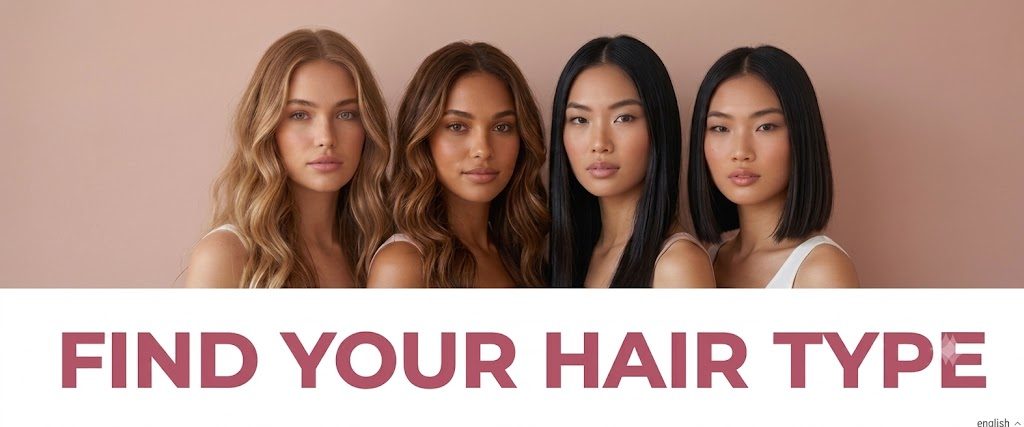
Find your curl type in two minutes, then find out why porosity matters more than the number.
Love Language Calculator: What’s My Hair Type, Really?
Nine questions and you’ll have four answers, not one: your curl pattern, how thick each strand is, how much hair you have, and how thirsty it is. That last one is porosity, and it’s the one that decides whether a product works on you or sits on top of your head doing nothing.
Most quizzes hand you a number like 2b and stop there, which is why so many people know their type and still buy the wrong shampoo. Nothing is gated. You’ll get the whole result without giving me an email address.
What your four answers actually mean
Curl pattern is the number everyone quotes. It runs from 1 for straight to 4 for tightly coiled, with a, b and c for how tight the pattern is within each family. It’s the least useful of your four answers, and I’ll come back to why.
Texture is how thick one strand is. Fine, medium or coarse. This is the word most people use wrong: they say texture when they mean curl pattern. Someone can have very curly hair made of very fine strands, which behaves nothing like curly hair made of coarse ones.
Density is how many strands you have per square inch of scalp. Fine hair can be dense, coarse hair can be sparse. Density decides how much product you need and whether layers will make you look bigger or flatter.
Porosity is how easily water gets in and out. Low porosity hair repels water and takes forever to dry. High porosity soaks it up and loses it just as fast, usually because the cuticle has been opened by bleach, heat or age.
The hair type chart, 1 to 4
| Type | What it looks like | Usual complaint |
|---|---|---|
| 1a | Poker straight, fine, very shiny | Goes flat by lunchtime |
| 1b | Straight with a bit of body | Holds nothing |
| 1c | Straight with a slight bend underneath | Kinks in humidity |
| 2a | Loose S shapes, mostly at the ends | Waves drop out by noon |
| 2b | Defined S shapes from mid-length | Frizz on top, waves underneath |
| 2c | Strong waves, a few loose curls | Can’t tell if it’s wavy or curly |
| 3a | Big loose spirals, about a wine cork | Loses definition when brushed |
| 3b | Springy curls, about a marker pen | Dryness and volume at the roots |
| 3c | Tight corkscrews, about a pencil | Shrinkage and tangling |
| 4a | Small springy coils with visible curl | Dryness, needs constant moisture |
| 4b | Sharp Z shaped bends | Fragile at the bends, breaks easily |
| 4c | Tight zigzag with little visible pattern | Shrinkage of 70% or more |
Worth knowing where this came from. The scale is Andre Walker’s, built in the nineties for a hairdressing context. The 3c and 4c categories weren’t in his original version. They were added later by the natural hair community online because the original didn’t describe enough people, and the scale has been criticised ever since for reading like a ranking when it’s meant to be a description. It’s a rough map. Use it to talk about your hair, not to rank it.
Why porosity matters more than your curl number
Here’s the part most quizzes skip. Two people can both be 3b and need completely opposite products.
Low porosity hair has a cuticle that lies flat. Water beads on it, conditioner sits on the surface, and if you pile on rich creams you get greasy roots and hair that still feels dry underneath. What works is heat and dilution. Warm the product between your palms, apply to hair that’s genuinely wet rather than towel dried, and wash more often than you think you should.
High porosity hair has a cuticle full of gaps. It drinks anything you give it and loses it within the hour. This is what colour, bleach and daily heat do. What works is layering and sealing: a leave-in, then a cream, then an oil on top to hold it in, and protein every few weeks to patch the gaps.
If you only change one thing after this quiz, change it based on porosity. I’ve watched clients spend years buying for their curl number and getting nowhere, then fix it in three washes once they knew which way their cuticle was sitting.
Testing your hair at home, and one test to ignore
The strand test, for texture. Pull one shed hair and roll it between your finger and thumb. If you can barely feel it, fine. If it feels like a piece of cotton thread, medium. If you can feel it clearly and it has some stiffness, coarse.
The parting test, for density. Part your hair down the middle in front of a mirror. Lots of scalp showing means low density, almost none means high. Back it up with a ponytail: under 5cm around is low, 5 to 8cm is medium, over 10cm is high.
The drop test, for porosity. On clean dry hair with nothing in it, put a drop of water on a section and watch. Sitting on top for a while means low porosity, sinking in slowly means medium, disappearing instantly means high. Drying time tells you the same story. Hours means low, very fast means high.
The one to ignore: the glass of water test, where you drop a shed hair in and see whether it floats or sinks. It’s everywhere online and it doesn’t work. Whether a hair floats depends on trapped air, surface tension and whatever product residue is on it, so the same hair can float one day and sink the next. If you’ve had a confusing result from it, that’s why.
Hair type vs hair texture vs porosity
Three words, used interchangeably, meaning three different things.
Hair type is the curl pattern. The number. Hair texture is the width of one strand. Fine, medium, coarse. Porosity is how the cuticle behaves with water.
You need all three to choose products sensibly, and the quiz above gives you all three plus density. If someone asks what your hair type is, they usually want the number. If someone is trying to sell you a product based only on that number, they’re guessing.
If you’re a man reading this
The system is the same, your hair is not doing anything different, and short hair just makes it harder to see. Two adjustments.
Curl pattern shows up less at short lengths, so judge it from the longest section you have, usually the top. If everything is under three centimetres, look at how it behaved the last time you grew it out.
Density matters more than curl pattern for you, because it drives what a barber can actually do with the shape. Skip question 5 in the quiz if you can’t make a ponytail. The result still works without it.
If your hair is type 4
The typing system was not built with you in mind, which is why so much of it fits badly. Two things worth saying plainly.
Shrinkage is not damage. Type 4 hair can lose 70% or more of its visible length when it dries and still be perfectly healthy. Length checks on stretched hair, not dry hair.
Your fragile points are the bends, not the ends. Every sharp turn in the strand is a place where it can snap, which is why detangling on soaking wet hair with slip is not a preference, it’s the whole game.
I’m a colourist, and colour on textured hair is a specialism I’d send you to a specialist for rather than pretend otherwise. [Link to a textured hair specialist, or say who you refer to.]
What to do with your result this week
Don’t rebuild your whole routine. Change one thing and see what happens over three or four washes.
Low porosity: apply everything to wetter hair than you think, and warm it in your hands first. High porosity: add an oil or a sealing cream as the last step, over the leave-in rather than instead of it. Fine strands: move conditioner off the roots entirely. Coarse strands: you can carry more weight than the label suggests, use more than the recommended amount. High density: section your hair before applying anything, or half of it never gets touched.
