
What is my style?
You were part way through last time.
Your style profile
Eight styles. The quiz names your two.
Your style Your closest second Classic
You dress for the long run. Clean lines, good fabric, nothing that dates by Tuesday.
- Hair
- A blunt lob or a one length cut with weight left at the ends. Colour close to your own, half a shade richer. Smooth, never stiff.
- Beauty
- Skin first. A satin base, groomed brows, a soft berry lip.
- Wardrobe anchors
- A navy blazer, straight leg trousers, a white shirt that actually fits.
Your style Your closest second Minimalist
Less, but better. You own fewer things and you wear all of them.
- Hair
- A precise cut that grows out cleanly. Long layers or a sharp bob. Single tone colour, glossed, with no visible highlight pattern.
- Beauty
- Bare skin, one coat of mascara, balm on the lip. Groomed, not made up.
- Wardrobe anchors
- A grey knit, a straight trouser, one very good coat.
Your style Your closest second Romantic
Soft edges, movement, and a bit of prettiness you refuse to apologise for.
- Hair
- Length with layers that curl in on themselves. Warm colour, honey or soft chestnut, blended so it never reads as stripes. Air dried texture.
- Beauty
- Dewy skin, a flushed cheek, a rose lip you top up all day.
- Wardrobe anchors
- A tea dress, a cardigan worn off one shoulder, a ballet flat.
Your style Your closest second Boho
You dress like you have been somewhere and picked things up along the way. Relaxed, layered, a little sun warmed.
- Hair
- Long and undone, cut for texture rather than shape. Warm caramel through the mid lengths. Salt spray, and put the straighteners down.
- Beauty
- Bronzed skin, brown liner smudged in, a nude lip.
- Wardrobe anchors
- A suede jacket, a floor length skirt, a boot with a stacked heel.
Your style Your closest second Edgy
You like a hard edge. Contrast, structure, and something in the outfit that pushes back.
- Hair
- A shape with a decision in it: a blunt bob, a heavy fringe, a shaved side. Cool toned colour, or one bold panel.
- Beauty
- Matte skin, a smoked out eye, brows left strong. The lip stays quiet.
- Wardrobe anchors
- A leather jacket, a black boot, one piece with hardware on it.
Your style Your closest second Glamorous
You dress to be looked at, and you are fine with that. Polish, shine, a bit of drama.
- Hair
- Big shape. Layers cut for bounce, a deep side part, colour lifted around the face. Blow dry it or curl it, never leave it flat.
- Beauty
- A full base, a sculpted cheek, a lash. Red lip when it earns its place.
- Wardrobe anchors
- A slip dress, a heel that changes how you walk, real gold at the ear.
Your style Your closest second Streetwear
Comfort and proportion, worn on purpose. You know what dropped this month and you are not precious about any of it.
- Hair
- Something that survives a hood: a mid length cut, a slick bun, or a strong short shape. Colour bold or left completely alone.
- Beauty
- Clean skin, a gloss, a graphic liner when you fancy it.
- Wardrobe anchors
- A wide trouser, a trainer you rotate, an oversized jacket.
Your style Your closest second Eclectic
Nothing matches and it all works. You collect rather than shop, and you trust your own eye over anyone else.
- Hair
- Colour is where you play: a bright panel, a fringe, a shade nobody expects. The cut can stay simple and let the colour talk.
- Beauty
- One thing loud, the rest quiet. A coloured liner, or a lip in an odd shade.
- Wardrobe anchors
- A vintage coat, a print you found abroad, a shoe with an opinion.
Style Quiz By Beautyliestruth
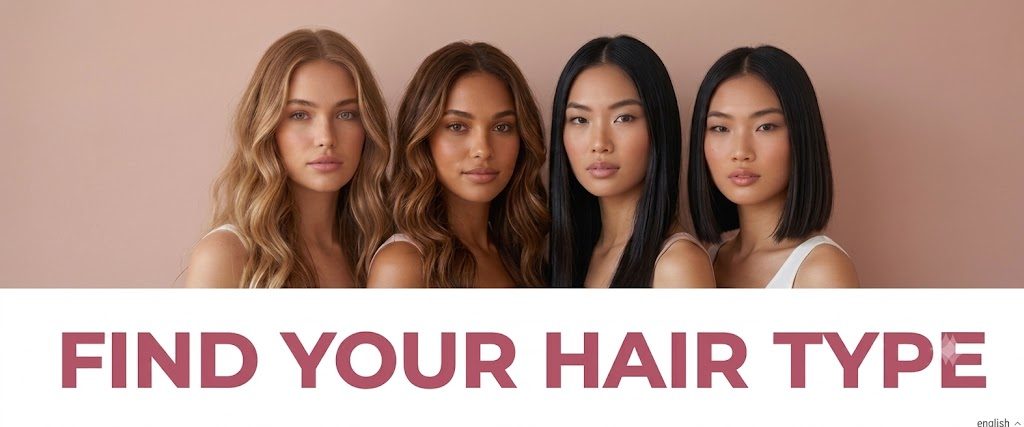
Find your curl type in two minutes, then find out why porosity matters more than the number.
Love Language Calculator: What’s My Hair Type, Really?
Nine questions and you’ll have four answers, not one: your curl pattern, how thick each strand is, how much hair you have, and how thirsty it is. That last one is porosity, and it’s the one that decides whether a product works on you or sits on top of your head doing nothing.
Most quizzes hand you a number like 2b and stop there, which is why so many people know their type and still buy the wrong shampoo. Nothing is gated. You’ll get the whole result without giving me an email address.
What your four answers actually mean
Curl pattern is the number everyone quotes. It runs from 1 for straight to 4 for tightly coiled, with a, b and c for how tight the pattern is within each family. It’s the least useful of your four answers, and I’ll come back to why.
Texture is how thick one strand is. Fine, medium or coarse. This is the word most people use wrong: they say texture when they mean curl pattern. Someone can have very curly hair made of very fine strands, which behaves nothing like curly hair made of coarse ones.
Density is how many strands you have per square inch of scalp. Fine hair can be dense, coarse hair can be sparse. Density decides how much product you need and whether layers will make you look bigger or flatter.
Porosity is how easily water gets in and out. Low porosity hair repels water and takes forever to dry. High porosity soaks it up and loses it just as fast, usually because the cuticle has been opened by bleach, heat or age.
The hair type chart, 1 to 4
| Type | What it looks like | Usual complaint |
|---|---|---|
| 1a | Poker straight, fine, very shiny | Goes flat by lunchtime |
| 1b | Straight with a bit of body | Holds nothing |
| 1c | Straight with a slight bend underneath | Kinks in humidity |
| 2a | Loose S shapes, mostly at the ends | Waves drop out by noon |
| 2b | Defined S shapes from mid-length | Frizz on top, waves underneath |
| 2c | Strong waves, a few loose curls | Can’t tell if it’s wavy or curly |
| 3a | Big loose spirals, about a wine cork | Loses definition when brushed |
| 3b | Springy curls, about a marker pen | Dryness and volume at the roots |
| 3c | Tight corkscrews, about a pencil | Shrinkage and tangling |
| 4a | Small springy coils with visible curl | Dryness, needs constant moisture |
| 4b | Sharp Z shaped bends | Fragile at the bends, breaks easily |
| 4c | Tight zigzag with little visible pattern | Shrinkage of 70% or more |
Worth knowing where this came from. The scale is Andre Walker’s, built in the nineties for a hairdressing context. The 3c and 4c categories weren’t in his original version. They were added later by the natural hair community online because the original didn’t describe enough people, and the scale has been criticised ever since for reading like a ranking when it’s meant to be a description. It’s a rough map. Use it to talk about your hair, not to rank it.
Why porosity matters more than your curl number
Here’s the part most quizzes skip. Two people can both be 3b and need completely opposite products.
Low porosity hair has a cuticle that lies flat. Water beads on it, conditioner sits on the surface, and if you pile on rich creams you get greasy roots and hair that still feels dry underneath. What works is heat and dilution. Warm the product between your palms, apply to hair that’s genuinely wet rather than towel dried, and wash more often than you think you should.
High porosity hair has a cuticle full of gaps. It drinks anything you give it and loses it within the hour. This is what colour, bleach and daily heat do. What works is layering and sealing: a leave-in, then a cream, then an oil on top to hold it in, and protein every few weeks to patch the gaps.
If you only change one thing after this quiz, change it based on porosity. I’ve watched clients spend years buying for their curl number and getting nowhere, then fix it in three washes once they knew which way their cuticle was sitting.
Testing your hair at home, and one test to ignore
The strand test, for texture. Pull one shed hair and roll it between your finger and thumb. If you can barely feel it, fine. If it feels like a piece of cotton thread, medium. If you can feel it clearly and it has some stiffness, coarse.
The parting test, for density. Part your hair down the middle in front of a mirror. Lots of scalp showing means low density, almost none means high. Back it up with a ponytail: under 5cm around is low, 5 to 8cm is medium, over 10cm is high.
The drop test, for porosity. On clean dry hair with nothing in it, put a drop of water on a section and watch. Sitting on top for a while means low porosity, sinking in slowly means medium, disappearing instantly means high. Drying time tells you the same story. Hours means low, very fast means high.
The one to ignore: the glass of water test, where you drop a shed hair in and see whether it floats or sinks. It’s everywhere online and it doesn’t work. Whether a hair floats depends on trapped air, surface tension and whatever product residue is on it, so the same hair can float one day and sink the next. If you’ve had a confusing result from it, that’s why.
Hair type vs hair texture vs porosity
Three words, used interchangeably, meaning three different things.
Hair type is the curl pattern. The number. Hair texture is the width of one strand. Fine, medium, coarse. Porosity is how the cuticle behaves with water.
You need all three to choose products sensibly, and the quiz above gives you all three plus density. If someone asks what your hair type is, they usually want the number. If someone is trying to sell you a product based only on that number, they’re guessing.
If you’re a man reading this
The system is the same, your hair is not doing anything different, and short hair just makes it harder to see. Two adjustments.
Curl pattern shows up less at short lengths, so judge it from the longest section you have, usually the top. If everything is under three centimetres, look at how it behaved the last time you grew it out.
Density matters more than curl pattern for you, because it drives what a barber can actually do with the shape. Skip question 5 in the quiz if you can’t make a ponytail. The result still works without it.
If your hair is type 4
The typing system was not built with you in mind, which is why so much of it fits badly. Two things worth saying plainly.
Shrinkage is not damage. Type 4 hair can lose 70% or more of its visible length when it dries and still be perfectly healthy. Length checks on stretched hair, not dry hair.
Your fragile points are the bends, not the ends. Every sharp turn in the strand is a place where it can snap, which is why detangling on soaking wet hair with slip is not a preference, it’s the whole game.
I’m a colourist, and colour on textured hair is a specialism I’d send you to a specialist for rather than pretend otherwise. [Link to a textured hair specialist, or say who you refer to.]
What to do with your result this week
Don’t rebuild your whole routine. Change one thing and see what happens over three or four washes.
Low porosity: apply everything to wetter hair than you think, and warm it in your hands first. High porosity: add an oil or a sealing cream as the last step, over the leave-in rather than instead of it. Fine strands: move conditioner off the roots entirely. Coarse strands: you can carry more weight than the label suggests, use more than the recommended amount. High density: section your hair before applying anything, or half of it never gets touched.
