
Skin color names are descriptive labels, not an official system. The most widely used are porcelain, alabaster, ivory, fair, light beige, beige, sand, honey, golden, almond, olive, tan, caramel, amber, bronze, chestnut, mahogany, umber, chocolate, cocoa, mocha, espresso and ebony. They run from the lightest visible depth to the deepest, and every one of them overlaps with its neighbours.
No authority decides where beige ends and tan begins. Cosmetics brands, illustrators, novelists and dermatologists all use different vocabularies for the same complexion. What follows is the full list with representative hex codes, mapped against the two formal scales that do have fixed definitions.
Once you know your depth, find out what colors suit you or take the free color season quiz.
What Are the Different Colors of Skin Called?
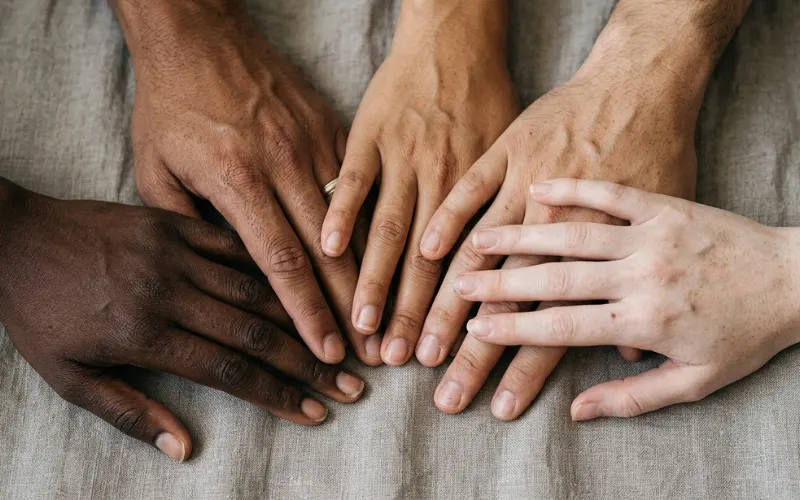
Skin colors are described in two parts: depth, meaning how light or deep the complexion is, and undertone, meaning the color direction beneath the surface, which is warm, cool, neutral or olive. A complete name states both. “Medium warm caramel” carries information. “Caramel” alone does not.
Everyday names describe depth only. That is why two people can share a shade name and look nothing alike in the same foundation.
Skin Color Names Chart With Hex Codes
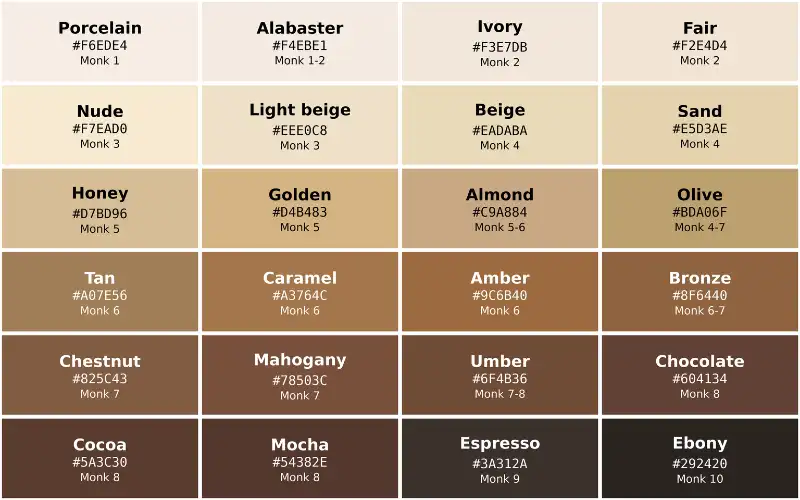
The hex values below are representative reference points, not official definitions. The Monk column maps each name to Google’s ten-shade scale, which does have fixed values.
| Name | Depth band | Common undertone | Representative hex | Monk shade |
|---|---|---|---|---|
| Porcelain | Very fair | Cool or neutral | #f6ede4 |
1 |
| Alabaster | Very fair | Neutral | #f4ebe1 |
1 to 2 |
| Ivory | Fair | Warm or neutral | #f3e7db |
2 |
| Fair | Fair | Any | #f2e4d4 |
2 |
| Nude | Fair to light | Neutral | #f7ead0 |
3 |
| Light beige | Light | Any | #eee0c8 |
3 |
| Beige | Light to medium | Neutral warm | #eadaba |
4 |
| Sand | Light-medium | Neutral warm | #e5d3ae |
4 |
| Honey | Medium | Warm golden | #d7bd96 |
5 |
| Golden | Medium | Warm | #d4b483 |
5 |
| Almond | Medium | Neutral or golden | #c9a884 |
5 to 6 |
| Olive | Light to deep | Green-grey cast | #bda06f |
4 to 7 |
| Tan | Medium-deep | Warm | #a07e56 |
6 |
| Caramel | Medium-deep | Golden warm | #a3764c |
6 |
| Amber | Medium-deep | Orange-gold | #9c6b40 |
6 |
| Bronze | Deep | Warm metallic | #8f6440 |
6 to 7 |
| Chestnut | Deep | Red-brown | #825c43 |
7 |
| Mahogany | Deep | Deep red-brown | #78503c |
7 |
| Umber | Deep | Neutral brown | #6f4b36 |
7 to 8 |
| Chocolate | Deep | Neutral warm | #604134 |
8 |
| Cocoa | Deep | Neutral or warm | #5a3c30 |
8 |
| Mocha | Deep | Cool brown | #54382e |
8 |
| Espresso | Very deep | Neutral or red | #3a312a |
9 |
| Ebony | Very deep | Cool or neutral | #292420 |
10 |
Treat the hex column as a starting point for design work, not a measurement of anyone’s skin. Screen calibration, ambient light and camera white balance all shift how a swatch renders.
What Are the 5 Basic Skin Tones?
The five broad depth bands are fair, light, medium, tan and deep. Some charts add a sixth, very deep, and some split light into light and light-medium. These bands describe visible depth only and carry no information about undertone.
Nearly every foundation range on the market is built on some version of this five-band structure, then subdivided by undertone within each band.
What Is the Actual Name for Skin Color?
The technical term is constitutive pigmentation, meaning the genetically determined baseline color of skin without sun exposure. The temporary darkening produced by UV is called facultative pigmentation. Together they describe what a shade name is loosely pointing at.
Skin color itself is produced by molecules called chromophores. Dermatology literature published through the National Institutes of Health identifies the principal ones as melanin, haemoglobin, bilirubin and beta-carotene. Melanin drives depth, haemoglobin drives pink and red casts, and carotene contributes yellow-orange. Every shade name on this page is an informal description of one combination of those four.
What Are the Medical Names for Skin Color?
Two formal scales are in active use, and they measure different things.
The Fitzpatrick scale classifies six phototypes by how skin responds to UV exposure rather than by color. Reference material published by the National Center for Biotechnology Information records Type III as the most common phototype in the United States at 48%, with Types I and II together at 35%.
| Phototype | Sun response |
|---|---|
| I | Always burns, never tans |
| II | Burns easily, tans minimally |
| III | Burns moderately, tans gradually |
| IV | Burns minimally, tans well |
| V | Rarely burns, tans profusely |
| VI | Never burns, deeply pigmented |
The Monk Skin Tone Scale classifies ten shades by color. It was developed by Harvard sociologist Dr. Ellis Monk and released openly by Google in 2022, after computer vision researchers found the Fitzpatrick scale under-represented deeper skin. Each shade has a fixed hex value, which is why it is the more useful reference for design, photography and cosmetics.
| Monk | Hex | Monk | Hex |
|---|---|---|---|
| 1 | #f6ede4 |
6 | #a07e56 |
| 2 | #f3e7db |
7 | #825c43 |
| 3 | #f7ead0 |
8 | #604134 |
| 4 | #eadaba |
9 | #3a312a |
| 5 | #d7bd96 |
10 | #292420 |
A common error is treating Fitzpatrick as a color scale. It is not. Two people at Type III can sit several Monk shades apart, and a Type VI can be warm or cool.
What Is the Rarest Skin Color?
The rarest is the near-complete absence of pigment caused by albinism, a group of inherited conditions affecting melanin production. Prevalence data from the National Center for Biotechnology Information puts oculocutaneous albinism type 2 at roughly 1 in 36,000 in the United States and type 1 at about 1 in 40,000 worldwide.
A 2023 systematic review in Investigative Ophthalmology and Visual Science found the figure varies enormously by region, averaging 1 in 4,264 across four African countries against roughly 1 in 12,000 in three European countries. The review also noted that only 26 of 193 countries have produced prevalence figures at all, so global estimates carry wide margins.
Outside pathological conditions, no natural skin color is meaningfully rare. Pigmentation varies continuously, and the apparent rarity of any given shade depends entirely on which population is being counted.
Light and Fair Skin Tone Names
Porcelain describes the lightest visible depth, usually with a cool or neutral cast. Alabaster sits alongside it and reads slightly softer and less saturated. In practice, brands use the two almost interchangeably.
Ivory covers fair to light and is the least consistent name in cosmetics, appearing in warm, cool and neutral versions across different ranges. Fair and light are depth terms rather than shade names, which makes them more reliable precisely because they claim less. Nude and light beige sit at the deeper end of this band and can carry any undertone.
Medium and Tan Skin Tone Names
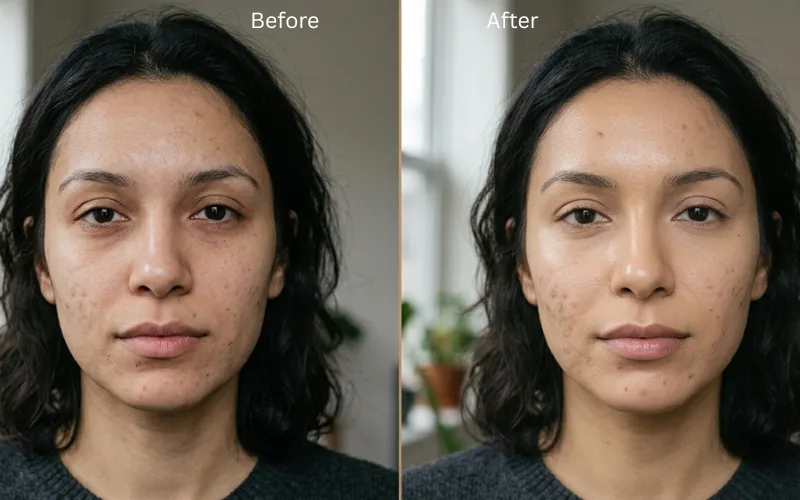
This band contains the heaviest naming overlap of the three, and the order of names is not stable between brands.
Beige and sand cover light-medium to medium with a neutral to warm cast. Honey and golden describe medium depth with a clear warm direction. Almond sits at medium to medium-tan, usually neutral or golden, though some ranges place it considerably deeper.
Tan is ambiguous by nature, meaning either a naturally medium-deep complexion or a temporary deepening after sun exposure. Caramel, amber and bronze all describe warm medium-deep browns with wide and overlapping boundaries.
Olive is the exception in this section. It is a color direction rather than a depth, marked by a muted green or grey-green cast, and it occurs from light through to deep. Light cool olive and deep warm olive are both common, which is why “olive equals medium tan” is wrong.
Deep and Dark Skin Tone Names
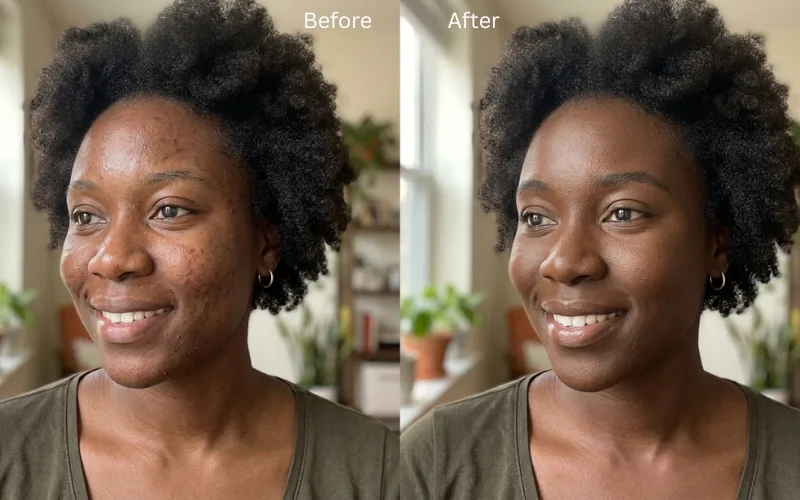
Deep complexions carry as much undertone variation as light ones, and short brown-name lists compress that variation badly.
Chestnut and mahogany describe red-brown directions, with mahogany usually the deeper and more burgundy of the two. Umber is the neutral equivalent. Chocolate, cocoa and mocha all describe deep browns, with mocha typically the coolest.
Espresso covers deep to very deep and may read neutral, cool or red-brown. Ebony describes the deepest visible tones, usually with a neutral or cool direction. Both are worth pairing with an undertone word, since “deep neutral espresso” communicates far more than “espresso.”
Skin Color Names for Writers
Fiction needs different vocabulary from cosmetics, because a shade name in prose carries connotation as well as color. Two conventions are worth knowing.
The first is that food comparisons are unevenly applied. Deep skin is routinely described as chocolate, caramel, coffee or mocha while light skin gets porcelain, ivory and cream, which are materials rather than edibles. Writers of color have criticised this pattern for decades, and the practical fix is consistency: either both or neither.
The second is that depth plus undertone works in prose as well as it does in a foundation aisle. “Warm brown with a reddish cast” is precise, visual and carries no baggage. It also avoids the flatter problem of naming a character’s skin only when that character is not white.
For character reference, the plain vocabulary is fair, light, light-medium, medium, tan, deep and very deep, each of which can take warm, cool, neutral or olive.
Are Skin Color Names Different for Men and Women?
No. Skin color names describe pigmentation, which does not differ by sex in any way that changes the vocabulary. The same depth and undertone terms apply.
The difference is commercial. Foundation ranges are marketed to women and therefore carry far more granular shade names, while men’s grooming products use broad bands or no naming at all. Anyone searching for a men’s shade name can use the same chart above.
How Do You Refer to Someone’s Skin Color?
Use the person’s own wording where you know it, and plain depth-and-undertone language where you do not. “Medium-deep with a warm undertone” is descriptive and neutral. A product-style name assumes a vocabulary the person may not use for themselves.
Skin color names are not race or ethnicity categories. Pigmentation varies widely within every population group, and no shade name identifies ancestry, nationality or culture. The formal scales agree on this point: a 2024 dermatology review indexed on PubMed explicitly cautions against conflating Fitzpatrick phototype with skin color, race or ethnicity.
Watch for value judgements embedded in the vocabulary too. Light is not purer, deep is not more exotic, and warm is not friendlier than cool. These are color directions and nothing more.
Frequently Asked Questions (FAQ’s)
What are the different colors of skin called?
Skin colors are named in two parts: depth and undertone. Depth runs fair, light, medium, tan, deep and very deep. Undertone runs warm, cool, neutral or olive. Common shade names include porcelain, ivory, beige, sand, honey, almond, tan, caramel, bronze, chestnut, cocoa, espresso and ebony.
What is the actual name for skin color?
The technical term is constitutive pigmentation, the genetic baseline color of skin without sun exposure. Temporary UV darkening is called facultative pigmentation. Visible color is produced by chromophores, principally melanin, haemoglobin, bilirubin and beta-carotene.
What are the 5 basic skin tones?
Fair, light, medium, tan and deep. Some charts add very deep as a sixth band or split light into light and light-medium. These describe visible depth only and say nothing about undertone.
What is the rarest skin color?
The near-absence of pigment caused by albinism. NCBI data puts oculocutaneous albinism type 2 at roughly 1 in 36,000 in the United States, though prevalence varies widely by region. Outside inherited conditions, pigmentation varies continuously and no natural shade is meaningfully rare.
How many skin tones are there?
There is no fixed number, because pigmentation is continuous. The two formal scales in use divide it differently: Fitzpatrick has six phototypes based on sun response, and Google’s Monk Skin Tone Scale has ten shades based on color. Cosmetics ranges commonly use between 20 and 50 shades.
Are skin tone names the same across makeup brands?
No. Each brand names and spaces its own range, so the same word can mean a different depth or undertone in another formula. Compare swatches rather than transferring a name between brands.
Does my skin color name change after tanning?
Your depth band may shift, but your undertone does not. A tan alters facultative pigmentation only, so a warm medium complexion stays warm at a deeper depth.
Is there an official list of skin color names?
No. No body governs beauty shade names, and the same word varies between brands, illustration palettes and fiction. The Monk Skin Tone Scale and the Fitzpatrick scale are the closest to standardised references, and neither assigns descriptive names.
BeautyLiesTruth publishes hair and personal color guidance built on primary research. Color claims are tested by draping under controlled daylight, and every figure is traced to a published source rather than to another blog.