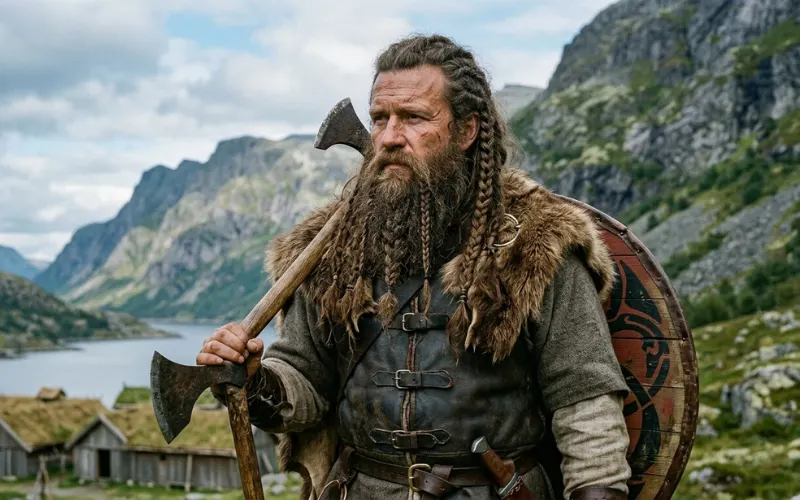
Most articles about viking braids men do one of two things. They show you 50 photos with no context. Or they recycle stuff from the History Channel show without ever mentioning what archaeologists and primary sources actually tell us. This piece does it differently. You’ll get the real historical record (with sources), 25+ braid styles sorted by hair length and face shape, step-by-step instructions for the five most-asked braids, and a section on pairing braids with beards.
Quick answer up front: yes, Viking men wore braids. We have written evidence from the year 1000 AD, archaeological evidence from burial sites in Sweden and Norway, and indirect references from Anglo-Saxon priests who weren’t fans of the trend. The most documented styles are single side braids, double crown braids running back to a tied knot, and the Reklam Halsi (a fringe-and-shaved-back combination that, technically, makes the mullet a Viking haircut).
If you want all 40 non-braid Viking styles like the viking mohawk, undercut, buzz cut, and shaved back with a long top, those are covered in our complete guide to Viking hairstyles for men. This piece is the braids deep dive.
Did Vikings Actually Wear Braids? (The Real History)
Yes, and we have the receipts. Three of them.
1. The Wulfstan letter (c. 1000-1002 AD). Wulfstan, Archbishop of York, wrote a famous letter that included a complaint about young Englishmen “aping the Danes” by wearing their hair “with bared neck and blinded eyes.” Translation: shaved at the back, fringe down to the eyes in front. This is the Reklam Halsi style, and it’s the closest thing we have to a contemporary description of a Viking haircut from someone who was alive when Vikings were Vikings.
2. Aelfric of Eynsham, Anglo-Saxon priest, around the same period. He wrote disapprovingly about men cutting their hair “in the Danish manner,” confirming Wulfstan’s observation. Two independent sources from the period describing the same thing is about as solid as 1,000-year-old hair history gets.
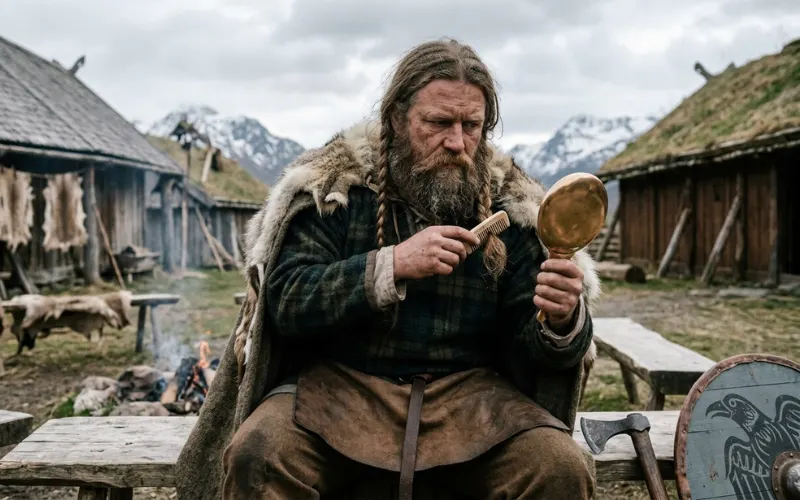
3. Archaeological evidence. The Oseberg ship burial in Norway (c. 834 AD) included combs, hair-cutting shears, tweezers, and ear-cleaning tools. The Birka burial sites in Sweden produced similar grooming kits. We also have a small bronze figurine from the Lejre site in Denmark depicting a man with what appears to be braided or styled hair. Vikings groomed seriously. Hair mattered.
4. Cultural cross-reference. Arab traveler Ibn Fadlan met a group of Rus (Swedish Vikings) in the 920s on the Volga River and wrote that they were “the filthiest of God’s creatures” but specifically noted that they combed their hair daily. He wasn’t a fan, but he confirmed the grooming.
So when you see articles claiming Vikings either had wild matted dreads or perfectly clean modern fade haircuts, both of those are wrong. The real picture is more interesting: practical grooming, deliberate styling, and yes, braids. Especially for men with longer hair, because braids kept hair out of your face during work, fighting, and seafaring.
For everything beyond braids (undercuts, mohawks, top knots, bald looks, all of it), see the 40 Viking haircuts guide for the full picture.
What Did Viking Braids Actually Look Like?
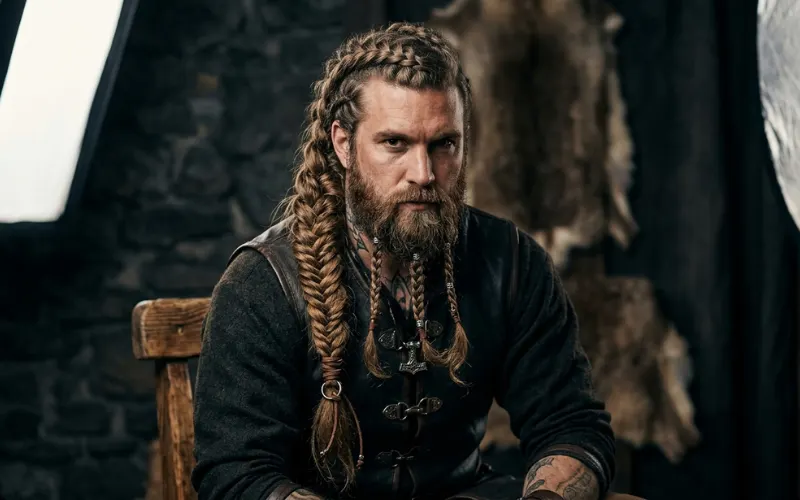
Based on the historical record, archaeological evidence, and contemporary depictions, Viking braids fell into roughly four categories.
Single side braid
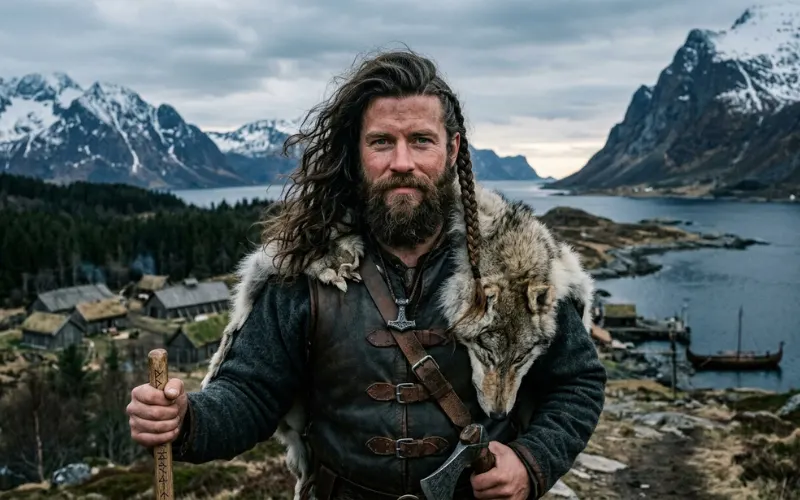
The most common. A single tight braid running from temple to shoulder, often the only braided element with the rest of the hair worn loose or pulled back.
Double or triple crown braids
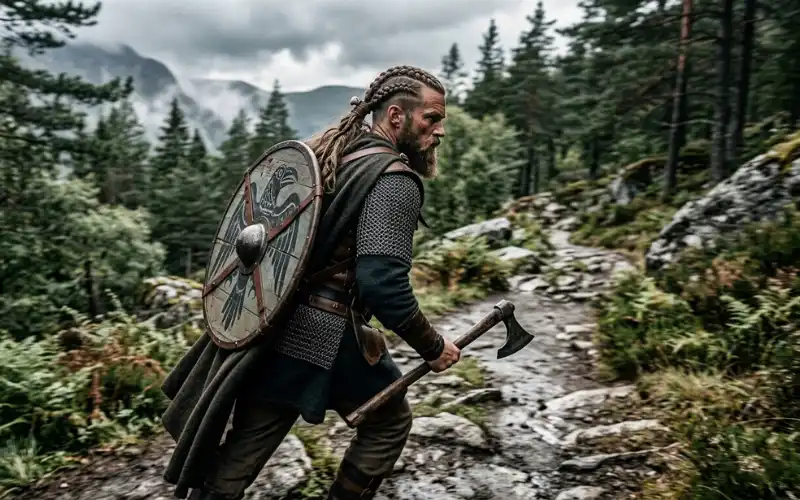
Two or three braids running from the front hairline back across the crown of the head, gathered at the nape into a tail or knot. Practical for keeping hair out of the eyes during fighting or labor.
Forehead-to-back single braid
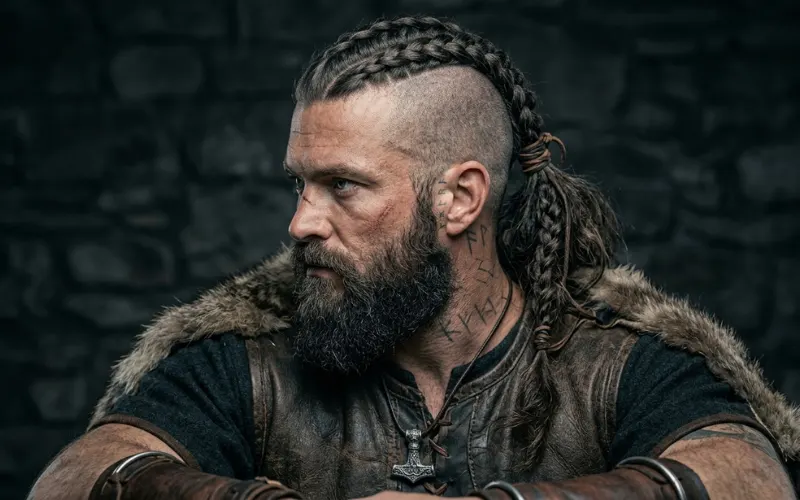
A center braid running from the front hairline straight back, with the sides either loose, shaved (Reklam Halsi style), or also braided in smaller plaits.
Beard braids
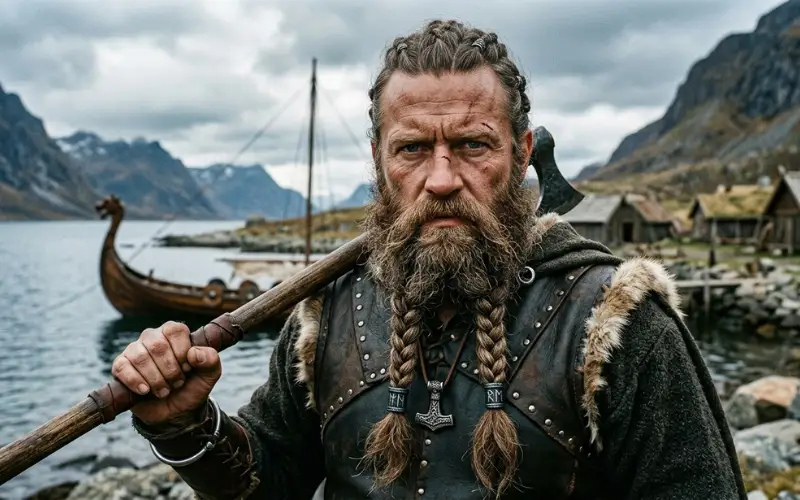
Distinct from hair braids. Often a single braid hanging from the chin or two braids framing the mouth. Beard braids are documented in Norse poetry references.
What we don’t see strong evidence for: full-head cornrows in geometric patterns, dreadlocks as a default style, or the elaborate multi-braid patterns shown on the Vikings TV show. Those are TV creations. Beautiful, but not historical. Speaking of which.
TV Show Accuracy: What Vikings Got Right and Wrong
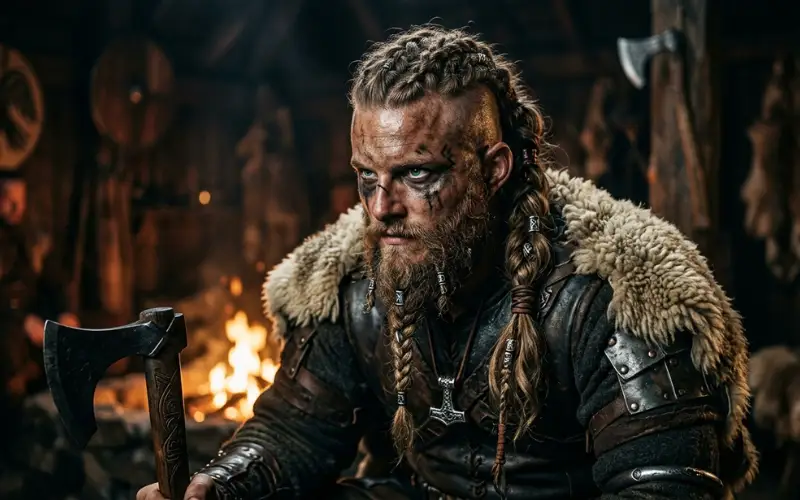
If you searched for viking braids menbecause of Ragnar Lothbrok, Bjorn Ironside, Floki, or Ivar the Boneless, here’s what the show got close to right and what it didn’t.
Got right: The general vibe. Long hair, shaved sides, braids, beard styling, hair as a status symbol. The show’s hairstyling team did real research.
Got artistically loose: The complexity of the braid patterns. Real Viking braids based on the evidence we have were simpler. Usually single or double plaits, not the multi-layered intricate patterns shown on screen. The show stylists added complexity for visual storytelling.
Got fully wrong: Some of Ivar’s later-season styles and a few of Floki’s wilder looks are pure invention. Cool. Not historical.
If you want Ragnar’s hair, you’re looking at a side-shaved, top-long, single-braid-from-the-front style. Bjorn’s is similar but typically with the long top swept back instead of braided forward. Floki’s is essentially a long, single back-braid with a mostly shaved head. Ivar’s late-season look (full shaved head, blue-eye tattoos) was always more of a costume choice than a documented Viking style.
Viking Braids for Short Hair (Men)
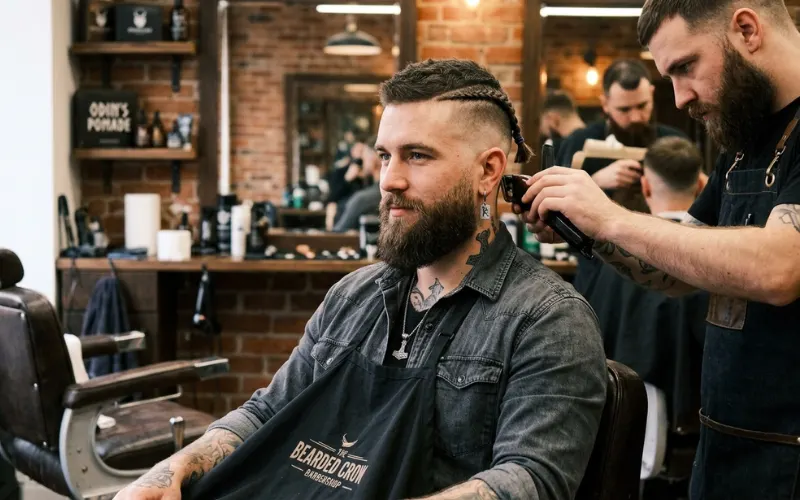
Here’s the honest answer: with truly short hair (buzz cut to ear length), traditional Viking braids aren’t really possible. You need at least 4-6 inches of length to get a workable braid started.
But there are styles that capture the viking braid look on shorter hair.
- Mini side braid with undercut. Just one small temple-to-ear braid on hair that’s 3-4 inches long, paired with shaved or faded sides. Modern but unmistakably Viking-coded.
- Cornrow row Viking style. Two or three tight braids from the front to the crown, requiring at least 3 inches of length. Looks great with a fade.
- Top braid with shaved back. Hair on top long enough to braid, sides and back shaved. Pulls together the Reklam Halsi historical look with modern execution.
- Twisted braid faux-hawk. Twist (not full braid) the top section into a faux-hawk, sides shaved.
- Single short ladder braid. A horizontal ladder-style braid on a 4-inch top section.
If your hair is too short for any of these and you want the Viking aesthetic without growing it out, the viking hairstyles guide has crew cuts, buzz cuts, and shaved styles that work better.
Viking Braids for Medium Hair (Men)
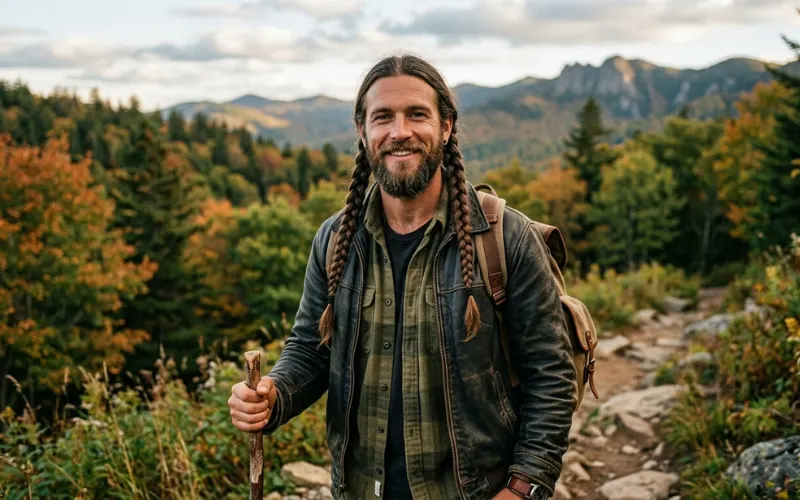
Medium hair (chin to shoulder length) is the sweet spot for viking braids. Almost every traditional Viking style works.
- Classic single side braid. The most authentic and most-photographed style. Single braid from temple back to behind the ear, rest of hair loose. Works for almost every face shape.
- Double Dutch braids running back. Two braids from the front hairline running back to the crown, ends tied together at the nape. The most documented Viking style based on archaeological and written evidence.
- Half-up warrior braid. Top half pulled into a single back braid, bottom half left loose. Often paired with shaved sides for the modern Viking look.
- Triple braid crown. Three small braids running across the top of the head from front to back, rest loose. More elaborate but historically plausible.
- Side braid plus loose top. One temple braid on each side, top hair loose and swept back. Simple but effective.
Fishtail side braid. A fishtail braid (which Vikings probably didn’t have but everyone wants) on one side of the head, rest loose.
Viking Braids for Long Hair (Men)
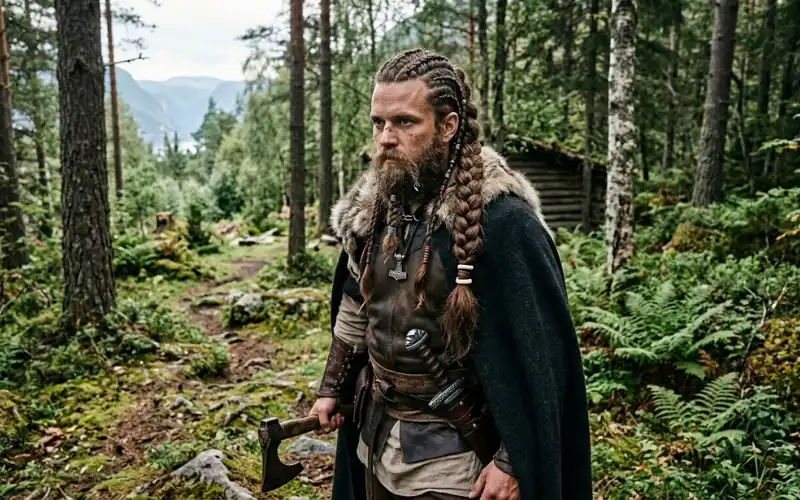
Long hair (shoulder length or longer) is where you get the full viking braid treatment. Every option is open.
Long single back braid (Floki style). One big braid running down the entire length of your hair, often starting from the crown.
- Multiple-section back braid. The hair sectioned into three to five separate braids that all hang down. Looks dramatic, holds up well in motion.
- Half-bun with loose braids. Top section pulled into a high bun, the rest left in loose braids hanging down. Combines warrior energy with practical styling.
- Front-to-back warrior braid. Single braid running from forehead all the way back, ending in a tail or tied bun.
Side-shaved with long braid. Shaved sides Reklam Halsi-style, top hair long and in one or two braids hanging down the back. - Knotted ladder braid. A vertical braid down the back with rope-style knots tied at intervals. Historically plausible for sailors, who would have known knot work.
- Braided ponytail (no shaved sides). All hair gathered back, formed into one large braided ponytail. Probably the simplest functional Viking style and likely the most common in actual Viking life.
- Crown braid with loose tail. A braid running across the crown like a headband, with the rest of the hair loose down the back.
- Full braided headband + loose hair. Smaller version of the above. Subtle and works under helmets.
Viking Braids with Beards: How to Pair Them
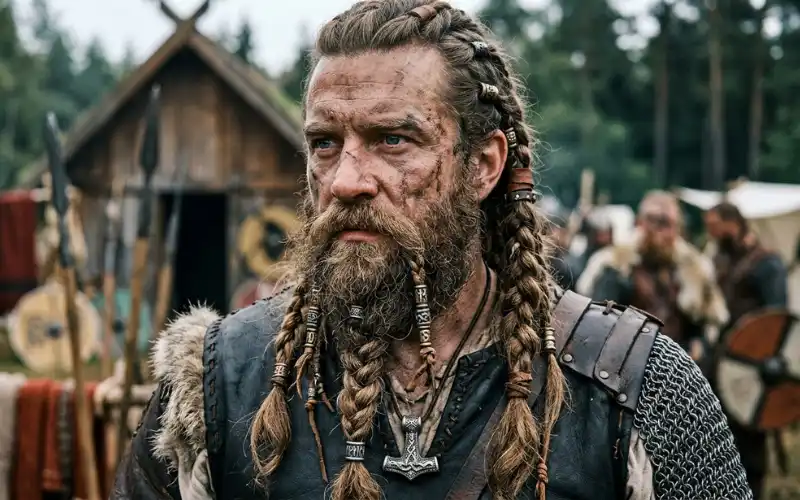
- Beard pairing is half the look. The best viking braids men styles work because the hair-and-beard combination feels deliberate.
- Single side braid + braided beard. One side hair braid balanced with one centered beard braid. Documented in Norse poetry references.
- Double crown braids + double-strand beard. Two crown braids and a beard split into two braided strands.
Long back braid + full long beard, no beard braid. The contrast of intricate hair and unstyled, full beard. Works best on men with very long beards. - Reklam Halsi (shaved back, long fringe) + medium braided beard. The mullet ancestor with a beard treatment that says “I groomed this on purpose.”
- Shaved head + beard with braids. No hair braids, all attention on a beard split into two or three braids. The most low-maintenance Viking braid look.
For beard styling generally (including how to grow, oil, and shape), the viking hairstyles guide has more on beard pairings across non-braid styles.
How to Do a Viking Braid (Step-by-Step)
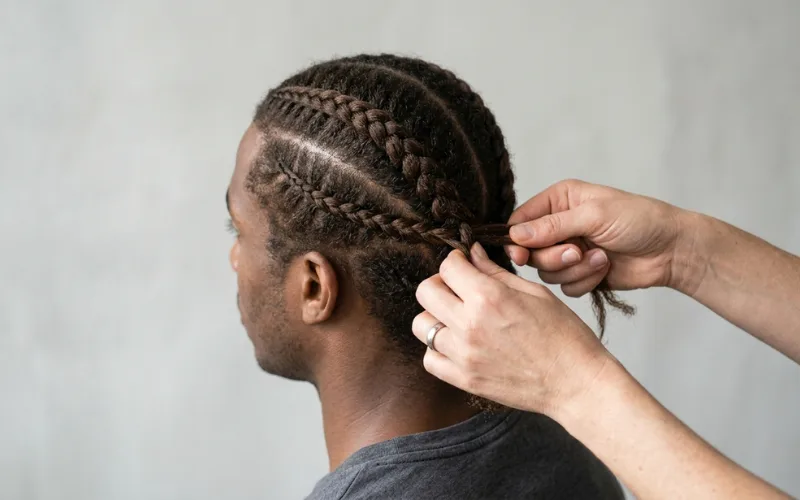
The five most-searched viking braids male how-to questions, answered.
Single Side Braid
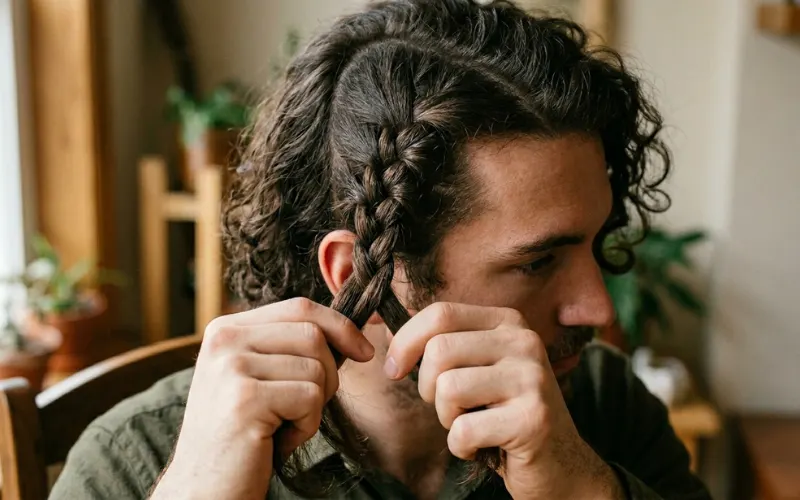
- Start with damp hair. Damp braids tighter and holds longer.
- Comb the section above your ear back from the temple to behind the ear, about a 2-inch wide section.
- Divide it into three equal strands.
- Begin a standard three-strand braid: right strand over center, left strand over center, repeat.
- Braid all the way down to the end and tie off with a small clear elastic. For an authentic look, a small leather cord works better than elastic.
- Optional: gently tug the loops of the braid to loosen and add the slightly-undone Viking look.
Double Crown Braid (the Most Historically Documented)
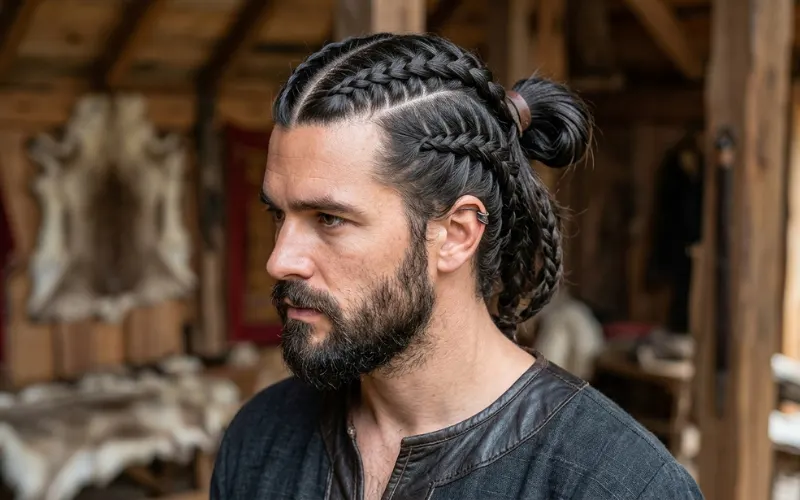
- Damp hair, parted down the center.
- Section the hair from the front hairline back, about 2 inches wide on each side of the part.
- Start each braid as a Dutch braid: instead of crossing strands over the center, cross them under (this makes the braid sit raised on top of the head, the way real Viking braids did).
- Braid each section back along the scalp until you reach the crown, then continue as a regular three-strand braid down the rest of the section.
- Gather the two ends together at the back of the head and tie off, or join them into a single braid that continues down.
Ladder Braid (Modern, Not Historical, but Searched a Lot)
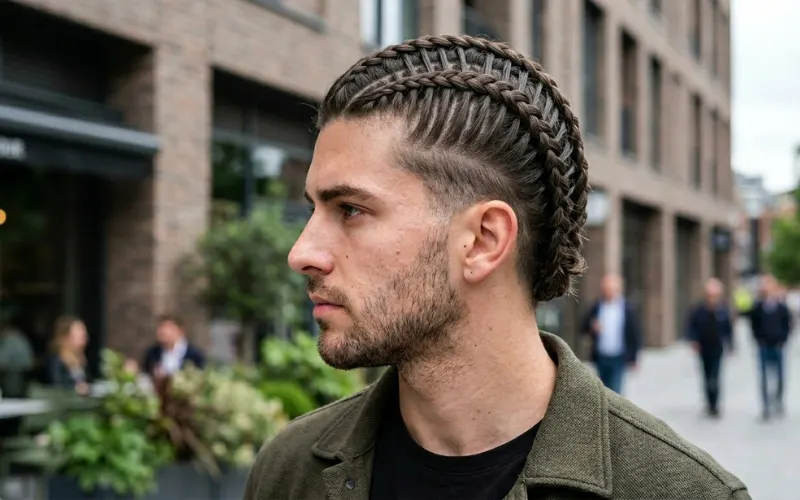
- Damp hair, sectioned along the side of the head where the ladder will run.
- Begin a regular three-strand braid.
- After each cross, take a small piece from the strand on the outside (the side facing away from the head) and add it to the braid before crossing.
- Don’t add hair from the inside strand. The result is “rungs” hanging out one side of the braid, like a horizontal ladder.
Fishtail Side Braid
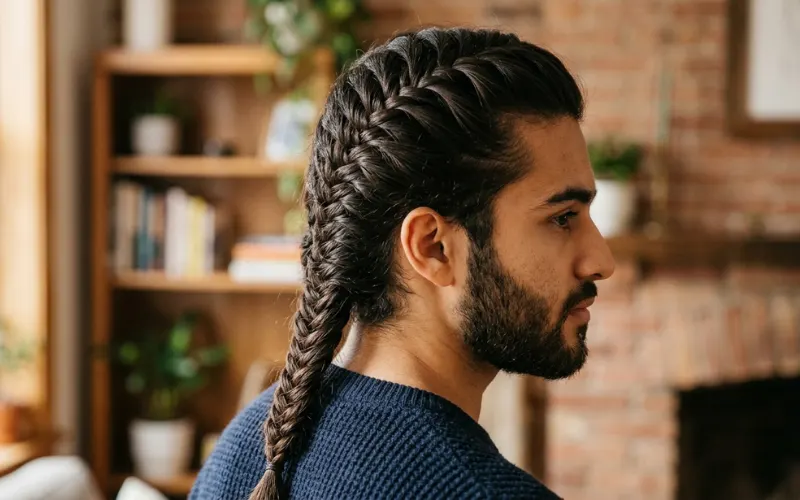
- Damp hair, sectioned at the temple.
- Divide the section into only two strands (not three).
- Take a small piece from the outer edge of the right strand, cross it over to join the left strand.
- Take a small piece from the outer edge of the left strand, cross it over to join the right strand.
- Repeat. The smaller the pieces, the tighter and more intricate the fishtail.
Mohawk Braid
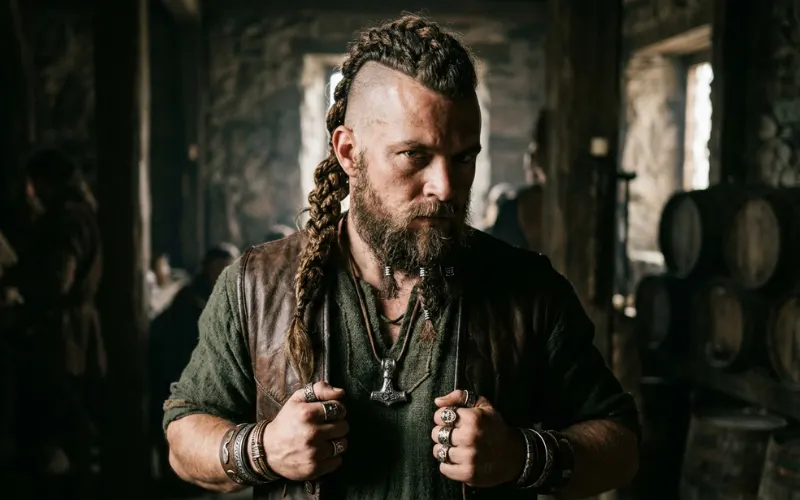
- Hair on the sides should already be shaved or faded short.
- Section the long top down the center of the head, front hairline to nape.
- Use a Dutch braid technique (under-cross, not over-cross) so the braid sits raised on top.
- Continue until you reach the back, then tie off or continue as a regular braid.
What Is a Viking Braid (Definitional Answer)
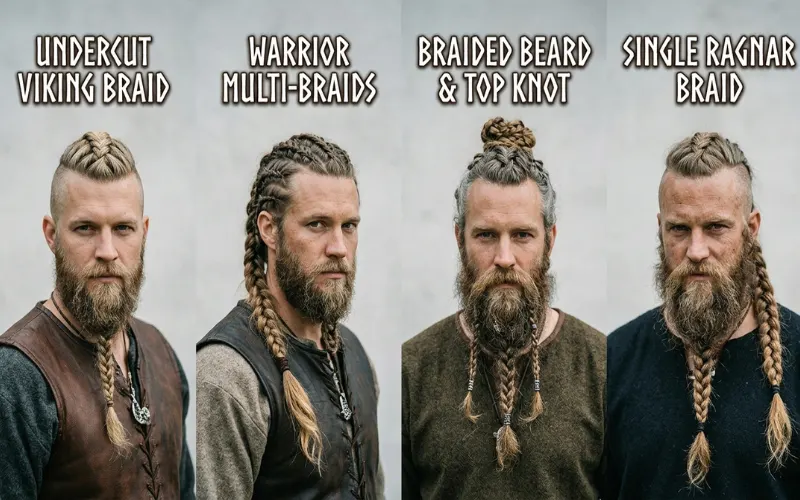
A viking braid is a hair plait associated with the Old Norse and Scandinavian peoples of roughly 793-1066 AD. The defining characteristics are: a tight, structured plait (most often a Dutch-style raised braid rather than a flat French braid), worn either on its own or in combination with shaved or undercut sides, and frequently paired with a braided or styled beard. Modern interpretations include any braided hairstyle inspired by these historical conventions, including styles popularized by the Vikings TV show that aren’t strictly historical.
Frequently Asked Questions
What were real Viking hairstyles?
Real Viking hairstyles included long hair styled in single side braids, double crown braids running from front to back, top knots, the Reklam Halsi (shaved back with long front fringe), shaved heads, and full beards often with their own braiding. Sources include Wulfstan of York’s letter (c. 1000 AD) and archaeological grooming kits from Oseberg and Birka.
What are the different types of Viking haircuts?
The main types are braided styles (covered in this article), the Reklam Halsi (Danish-style mullet with shaved back and long front fringe), undercuts and mohawks, top knots and buns, full shaved heads, and crew cuts paired with beards. For all 40 styles see the complete viking hairstyles guide.
Is a mullet a Viking haircut?
Functionally, yes. The Reklam Halsi style described in Wulfstan of York’s letter (c. 1000 AD) involved a shaved or short back of the head with a long fringe in front falling over the eyes. That’s a mullet, structurally. So while medieval Vikings didn’t call it a mullet, the historical record shows the Danish style was an early version of the same shape.
What kind of braids did Vikings wear?
Mostly single side braids, double crown braids running from the front hairline to the back, and braided ponytails. The historical evidence does not strongly support full-head cornrows, dreadlocks, or the elaborate multi-pattern braids shown on the Vikings TV show.
Did Vikings wear box braids?
Probably not in the modern sense. Box braids as we know them are a separate cultural tradition with origins in West and Central Africa. Vikings used simpler three-strand and Dutch-style plaits.
What color eyes did Vikings have?
Most Vikings had blue or grey eyes, based on genetic studies of Norse remains, though brown eyes were not uncommon, especially in the southern Norse populations who had more contact with continental Europe. Hair color ranged from blond to red to brown.
How long does it take to grow hair for Viking braids?
For minimum-viable Viking braids, you need about 4-6 inches of length, which takes most men 8-12 months from a buzz cut. For full long-hair Viking styles, plan on 18-24 months of growth.
Do Viking braids damage your hair?
Tightly pulled braids worn daily can cause traction alopecia over time. If you’re wearing viking braids regularly, vary the placement, don’t braid wet hair too tightly, and let your scalp rest by wearing your hair loose for at least one or two days a week.
Final Thoughts
The honest version of viking braids men is somewhere between the History Channel show and the academic record. Real Vikings braided their hair, but probably more simply than TV suggests. They cared about grooming. They paired braids with beards as a complete look. And the most documented style, the one written about by an actual contemporary observer, was a shaved back with a long front fringe that, technically, makes the mullet a Viking haircut.
If you want braids specifically, this is the guide. If you want the bigger picture across all 40 Viking style options including the non-braid mohawks, undercuts, buzz cuts, top knots, and fully shaved looks, head to the complete Viking hairstyles guide. Together the two articles cover both the historical depth and the full range of modern Viking-inspired styling.
I spent the last 7+ years helping people discover what truly works for them in fashion and beauty. After styling clients in boutique fashion houses and testing countless skincare products myself, I learned one simple truth: the best style is the one that makes you feel confident every single day. On my blog, I share the same honest tips I give my friends: simple, practical, and a little inspiring.