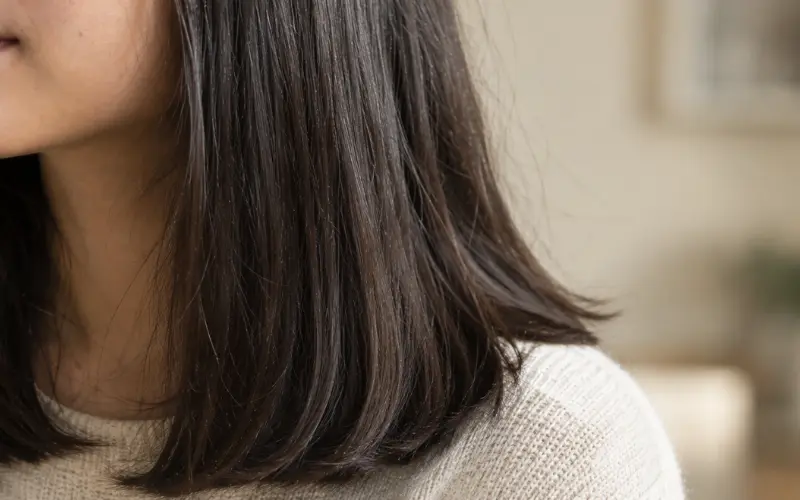
1C hair is straight hair with wide, coarse strands and enough natural bend to be mistaken for a wave. It lies flat at the crown, gains body from the ears down, and frizzes in humidity where the other straight types stay smooth.
It also sits on the most contested line in the whole typing chart. Search volume for people trying to work out whether they are 1C or 2A runs to about a thousand a month on its own, and the pages currently ranking for it barely address the question.
What Is Type 1C Hair?
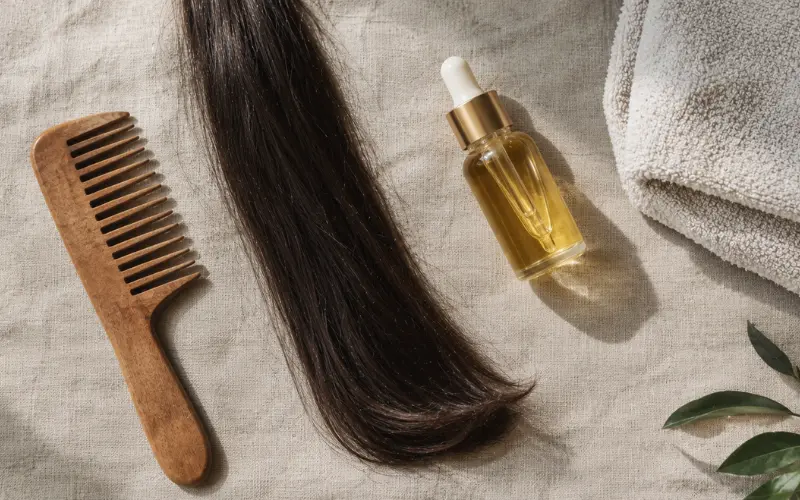
1C is the coarsest of the three straight types. The pattern reads as straight from root through mid-length, then loosens into one or two soft bends toward the ends, and the strands are wide enough to feel between finger and thumb.
Some guides describe 1C as fine and lacking volume. That is a straightforward error, and it has been copied into a few pages that currently rank. Fineness is the defining trait of 1A. 1C is its opposite along the same axis.
The Letter in Type 1 Means Width, Not Curl Tightness
Here is the source of most confusion on this topic. Two conventions for the A, B, C letter are circulating at once, and almost nobody says so.
In curly hair circles the letter describes how tight the pattern gets within its band, so 3A is a loose ringlet and 3C is a corkscrew. Inside type 1 the industry uses it differently. Hair.com and other major guides define the subtype as strand width and density, running low at A through high at C. Under that reading 1A is fine, 1B is medium, 1C is coarse, and the amount of bend is a side effect of the width rather than the thing being measured.
Both readings appear in the same search results, which is why one chart calls 1C the waviest straight type and another calls it the thickest. They are describing the same hair with different rulers. The hair type quiz reads pattern and strand width separately for this reason, since collapsing them into one letter is what breaks the system.
Is 1C Hair the Thickest?
Within type 1, yes, by definition. Across the full 1A to 4C chart, no. Type 4 hair carries wide strands too, and coarse hair appears at every curl pattern.
Thickness also gets used for two different measurements. Strand width is how wide a single fibre is. Density is how many fibres grow per square centimetre. 1C describes the first. Someone can have coarse 1C strands and thin coverage at the same time, which is a common and frustrating combination that no type code captures.
Hair fibres are not round either. A caliper and electron microscopy study of 270 hairs confirmed the shaft is elliptical, with a long and a short axis. That flattened cross-section is what produces bend, and it is why a wide strand can carry more visible wave than a fine one.
Am I 1B or 1C Hair?
Both are straight. The separation comes down to what happens on a humid day and how the strand feels.
| Type | Strand width | Bend | Humidity | Curl retention |
|---|---|---|---|---|
| 1B | Medium, felt faintly | Soft, at the ends only | Mostly holds | Most of a day |
| 1C | Wide, clearly felt | One or two bends from mid-length | Swells and frizzes | A full day or longer |
If a set survives overnight and the hair still looks finished, that is 1C. 1B hair gives out sooner. Anyone finding no bend at all should read the 1A hair guide instead, and the hair types chart covers all twelve codes.
1C or 2A? The One That Actually Trips People Up
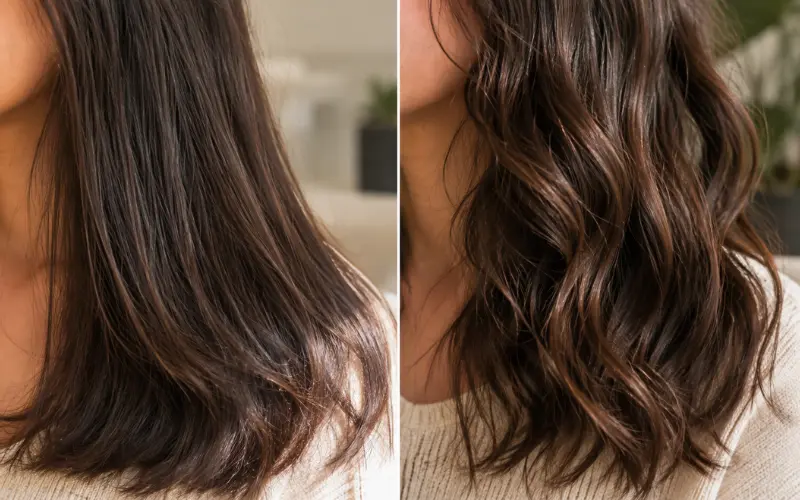
Is 1C hair wavy? It has waviness without having a wave pattern, and that distinction is the whole answer.
Two tests exist and they measure different things. The pattern test asks whether the bend repeats. A 2A wave forms an open S that recurs down the length of the strand. A 1C bend happens once or twice and then stops. The width test asks whether a single strand is thick enough to feel when rolled between finger and thumb, since 1C strands usually are and 2A strands usually are not.
Run both. When they disagree, trust the pattern test, because that is what the number in the code actually records. The disagreement itself is why this boundary generates so many Reddit threads: people are applying two different rulers and getting two different answers from the same head of hair.
Is 1C Hair Rare?
No count exists for any of the twelve codes, and 1C has a problem the others do not. It sits on a boundary that people cross in both directions depending on humidity, haircut length and which test they used, so self-reported prevalence would be unstable even if someone collected it.
The measured research uses a different system entirely. A L’Oreal Recherche team led by Roland de la Mettrie assessed hair from 1,442 people across 18 countries for Human Biology in 2007 and produced eight categories from curve diameter, curl index and wave count. A micro-CT review later found that two of those curl variables varied noticeably between trained assessors. If specialists disagree at the boundaries, rarity rankings passed between beauty sites are not evidence of anything.
Why 1C Hair Frizzes
The other straight types have the opposite problem. On 1A and 1B, scalp oil slides down an uninterrupted shaft and reaches the ends too quickly, which is why the roots go greasy. On 1C the bends interrupt that journey, so the ends stay dry while the roots still oil up.
Dry ends plus a wide, slightly flattened strand is the frizz recipe. In damp air the cuticle lifts and the fibre swells, and a coarse strand has more surface to lift. Anti-frizz work on this hair type is really moisture work at the ends, not smoothing at the surface.
A 1C Hair Routine That Works
Wash less often than 1A or 1B needs. Every second or third day suits most people with this type, and the American Academy of Dermatology ties frequency to how oily the scalp actually gets rather than to a fixed schedule in its healthy hair guidance.
Condition from the ears down and be generous about it. This is the one straight type where a weekly mask earns its place, because the ends genuinely are not receiving scalp oil.
Apply styling product to damp hair rather than soaking wet. Soaking hair dilutes the product and spreads it evenly, which is the opposite of what this type needs, since the goal is weight at the ends and lift at the roots. Air dry or diffuse on low. A blast of concentrated heat on a coarse bend sets frizz rather than smoothing it.
1C Hair Products
Think in categories rather than brands. A hydrating shampoo without heavy silicones, a lightweight leave-in for the mid-lengths and ends, a cream or light oil at the very ends, and a texturising spray if the goal is to bring the natural bend forward rather than flatten it.
Two things to skip. Volumising sprays sized for fine hair do nothing here, and heavy butters flatten the crown while the ends stay dry. The natural shampoo guide covers which formulas clean without stripping, which matters more on this type than on the finer two.
Haircuts and Styles for 1C Hair
Layers work on 1C in a way they never work on 1A. There is enough weight in the strand for long layers to release bulk and create movement instead of thinning the shape out.
A textured lob just past the shoulder is the reliable cut, since it keeps enough length for the bend to show while removing weight from the perimeter. A modern shag suits it too. Blunt one-length cuts fight this hair type rather than working with it, because the bulk collects at the ends with nowhere to go.
For shorter styles, ask for internal weight removal rather than surface layering. Coarse straight hair cut short without thinning tends to sit out from the head instead of falling.
1C Hair on Men
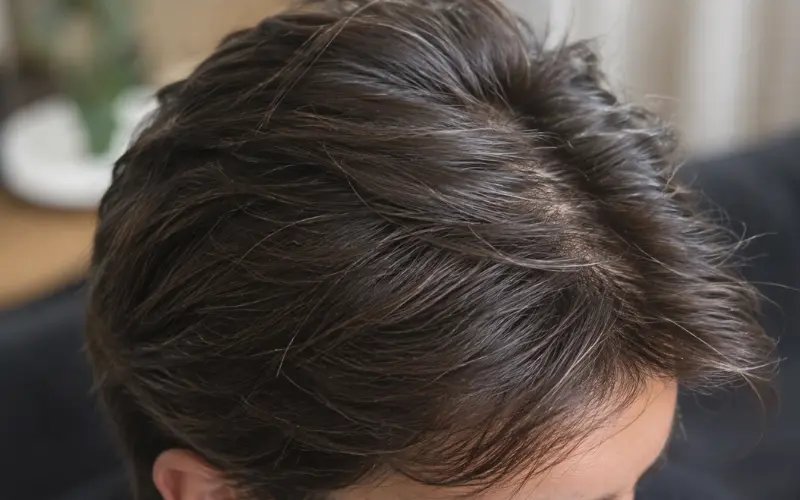
This is the most searched male hair type in the straight family, and the guides currently ranking give it a sentence at most.
Coarse straight hair on a short cut behaves predictably. It stands up rather than lying down, and the bend that reads as texture at four inches reads as a cowlick at one. Ask a barber for weight removed through the top rather than a uniform clipper length, and let the sides stay shorter to keep the shape balanced.
Product-wise, matte clay holds coarse hair where wax slides off it. Sea salt spray brings the natural bend forward on longer crops. Scalp hair sits in the growth phase for two to six years, with 85 to 90 percent of follicles growing at any one time, so a crown that suddenly looks sparse is worth reading against the thinning hair guide rather than blamed on texture.
1C Hair Colour
Coarse strands resist pigment. The cuticle is thicker and lies flatter, so colour takes longer to penetrate and lifts more slowly, which is why 1C often needs longer processing than a colourist would give fine hair for the same target shade.
The trade-off is that colour lasts once it is in. Anyone going lighter will find that coarse hair holds warmth stubbornly, so toning becomes routine maintenance rather than an occasional fix, which is where purple shampoo does its work.
Confirm the pattern first, then buy for strand width. On this hair type the width is doing more of the work than the code suggests.
BeautyLiesTruth publishes hair and personal color guidance built on primary research. Color claims are tested by draping under controlled daylight, and every figure is traced to a published source rather than to another blog.