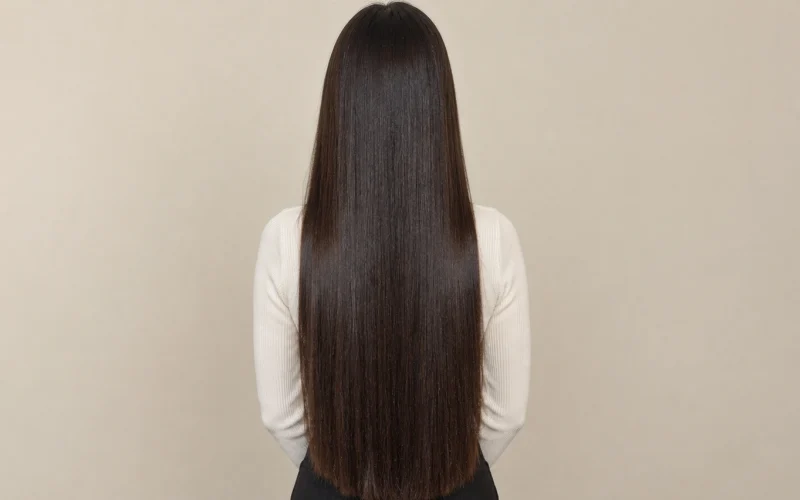
1A hair is the straightest code on the hair typing chart. It air dries flat from root to tip with no bend, no wave and no lift at the crown, and it stays flat when wet, which is the detail that separates it from everything else on the chart.
Most guides to this type repeat three claims: that it is the rarest hair type, that it is always fine, and that it goes greasy faster than anything else. Only the last one survives a check.
What Is 1A Hair?
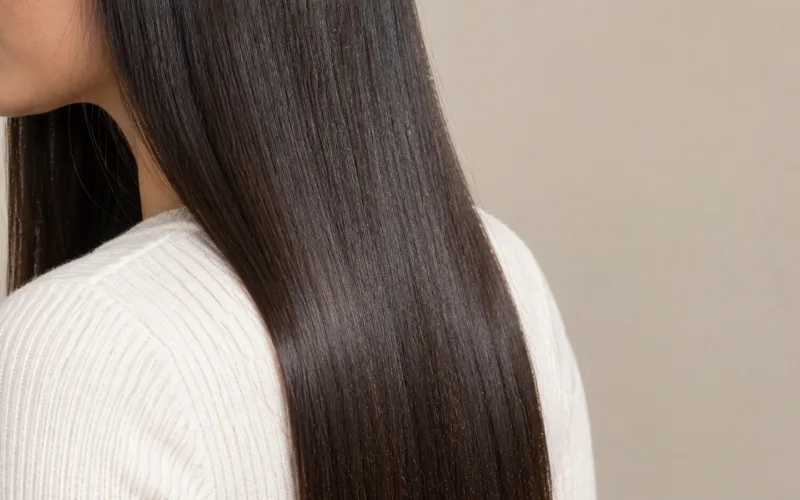
1A hair shows no visible curl or wave when it is clean, product free and air dried. It lies flat against the scalp, carries a high natural shine because a smooth cuticle reflects light evenly along the shaft, and drops a curl quickly after styling.
Water does not change it. Wave and curl patterns tighten when wet because the fiber is pulled by its own internal structure, and a 1A strand has nothing to pull against, so it hangs the same wet as dry.
The letter refers to curl pattern only. Andre Walker built the system in 1997 to help readers match products, not to describe hair biology, and nothing in it records strand thickness.
How Do I Know If I Have 1A Hair?
1A hair can only be confirmed on clean, product-free hair that has air dried untouched. No towel scrunching, no diffuser, no brushing while damp.
Take one strand from the back of the head, where it has been least disturbed, and read it from mid length to end. Straight with no bend anywhere is Type 1, and the back is where the letter shows, since the canopy gets flattened by brushing and parting long before the nape does.
One extra check: sleep in a loose braid and take it out in the morning. 1A holds nothing. Anything keeping a bend after that overnight pressure has more pattern than a 1A reading suggests.
1A, 1B or 1C? How to Tell Them Apart
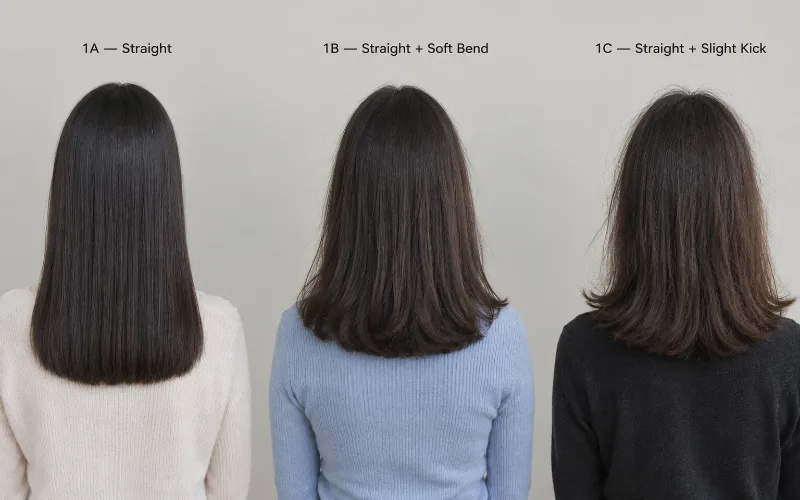
1A hair has no bend anywhere along the strand, and that is the whole difference between it and the other two straight codes.
| Air dried, no product | Behavior | Usual complaint | |
| 1A | Flat root to tip, no bend anywhere | Drops a set fastest of the three | Greasy roots, no volume |
| 1B | Straight with a soft bend at the ends | Holds a set noticeably longer | Flat crown |
| 1C | Straight with a visible kick and some body | Holds best, but frizzes | Frizz in humidity |
The line people cross most often is 1A to 1B. A single soft bend at the ends, still there after a wash, is 1B hair. No bend at all is 1A. 1C hair adds a wider strand and frizz that 1A almost never gets. The type 1 hair guide sets all three side by side, and the hair types chart covers the full twelve codes.
What Causes 1A Hair?
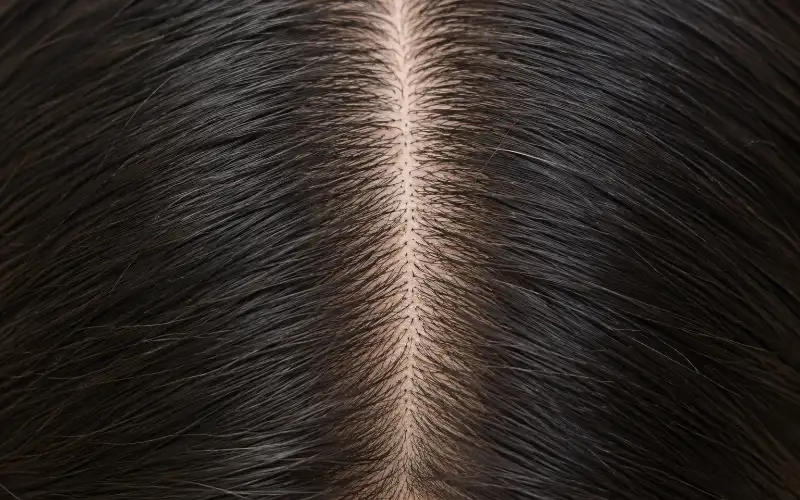
1A hair is caused by the shape of the follicle it grows from, and that shape is set below the skin before the hair is ever visible. Work on cultured human scalp follicles found that curvature is built into the follicle itself and is already present beneath the surface, so a straight follicle produces a straight fiber from the moment it forms. No product, brushing habit or treatment changes it.
Behind the follicle sits genetics, and straight hair arrived by two separate routes. In European populations, curl is shaped substantially by the trichohyalin gene: a genome-wide study of 4,845 people found TCHH variants account for around 6 percent of the variance in hair morphology, with the straight-hair variants at their highest frequency in Northern Europeans. A different variant, EDAR V370A, is carried by most people of East Asian descent, and researchers modeling its origin placed it in central China around 30,925 years ago, within a range of 13,175 to 39,575 years. It produces thicker, straighter hair.
Straight hair evolved twice, through different genes, in different parts of the world. That is the most useful fact about this hair type and it is missing from every consumer guide to it.
Is 1A Hair Always Fine?
1A hair is usually fine but not always, because curl pattern and strand width are separate measurements that get treated as one.
Fine describes the width of a strand; 1A describes its shape. The EDAR variant above is the counterexample, since it is associated with straight hair and thicker strands at the same time.
Density is a third measurement again. Someone can have 1A strands, fine ones, and a great many of them, which reads as a thick head of hair that will not hold a style. The guide to fine hair covers how to test width against density.
How Rare Is 1A Hair?
1A hair is not rare. No published dataset ranks the twelve consumer codes by prevalence at all, and the rarity claim circulates across beauty sites and Reddit threads without tracing back to a count.
The measured work points the other way. A L’Oreal Recherche team led by Roland de la Mettrie assessed hair from 1,442 people across 18 countries for Human Biology in 2007, sorting it into eight categories from curve diameter, curl index and wave count. Straight hair was common in that sample, not scarce, and straight or wavy hair leads globally, as the most common hair type data shows.
What is genuinely uncommon is a head reading as pure 1A everywhere, since most straight hair carries a bend somewhere. That is a long way from rarest. The rarest hair type page traces where the claim came from.
Is 1A an Asian Hair Type?
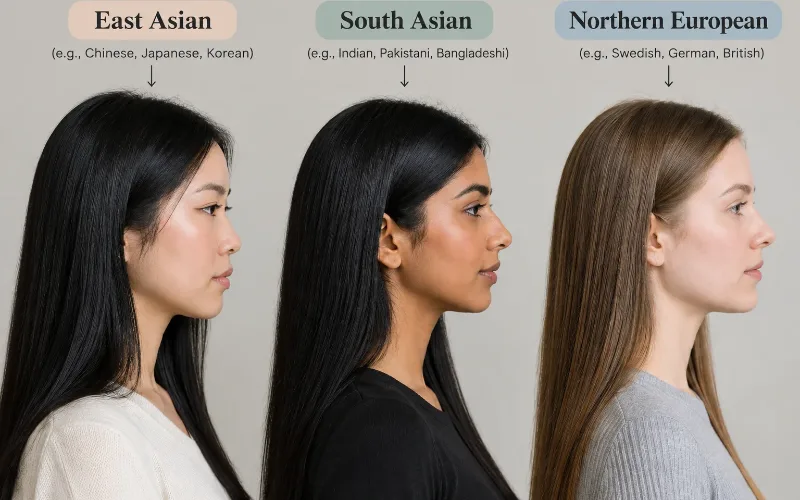
1A hair is not an Asian hair type. Very straight hair is common across East Asian populations and equally common across Northern Europe, South Asia, the Middle East and plenty of mixed-heritage backgrounds, and the two genetic routes above land in different regions entirely.
Demonstrating that was the point of the de la Mettrie work, which classified hair by measurable geometry precisely because the older African, Asian and European groupings failed to describe the variation inside each one. The code describes a strand, not an origin.
Why 1A Hair Goes Greasy and Flat
1A hair goes greasy quickly because sebum travels down a hair shaft by contact, and on a straight fiber nothing interrupts the journey. Scalp oil reaches the mid lengths while a tightly coiled strand of the same age still has dry ends. That is the mechanism, and it is the one common claim about this type that holds up.
Flatness has a separate cause: weight. A fine straight strand carries very little before the root gives way, and a leave-in cream built for wavy hair flattens a 1A head within hours. The problem is almost never dryness, which is what most products sold for it assume.
How Often Should You Wash 1A Hair?
1A hair usually needs washing more often than any other type, and the trigger should be scalp oil rather than a fixed schedule. The American Academy of Dermatology ties frequency to how oily the scalp gets rather than to a set number of days, which for this hair type tends to mean daily or close to it. A gentle, sulfate-free formula makes that sustainable.
Conditioner still belongs in the routine, on mid lengths and ends only. Anything applied near the roots shows up as flatness the same day. Lightweight liquid conditioners work; rinse-out masks and butters do not. The natural shampoo guide flags which formulas stay light enough for fine straight hair.
Dry shampoo buys time between washes, applied at the roots the night before rather than in the morning so it has time to absorb. Left to build up it causes the flatness it was meant to fix.
Products to Avoid on 1A Hair
1A hair is weighed down by heavy oils, thick creams, rich leave-ins and anything sold as a deep moisture treatment. Weight is the problem here rather than dryness.
Use mousse worked into damp hair before drying, root-lift spray at the crown, and texture powder at the roots for grip. Applied before heat these hold; applied afterwards they sit on the surface and slide out. Porosity decides product choice more reliably than the curl code does, and the two are unrelated, which the guide to hair porosity covers.
Can 1A Hair Hold a Curl?
1A hair holds a curl poorly, because a curl in straight hair is a temporary reshaping of hydrogen bonds and a smooth fine fiber has little surface friction to keep neighboring strands in place once those bonds relax.
Three things extend it. Curl hair that is completely dry rather than damp, since residual water releases the set. Let each curl cool fully in a clip before touching it, because the shape fixes as it cools. Add grip with texture spray before curling rather than hairspray after. Setting on rollers while damp and drying fully outlasts an iron.
Is 1A Hair Prone to Breakage or Heat Damage?
1A hair is more vulnerable to heat and breakage than it looks, though not because the fiber is weaker material. A fine strand has a smaller cross-section, so the same heat and the same tension are concentrated in less keratin, and there is less cortex to lose before the damage shows.
The bigger factor is frequency. This hair type gets washed and heat styled more often than any other, because it goes greasy and drops its shape fastest. Cumulative exposure is high even when each session is gentle, which is why heat protection matters more here than on the types that look more fragile.
Best Haircuts for 1A Hair, Short and Long
1A hair suits blunt, weighty cuts, because a clean line at the ends creates an impression of density that layering removes. The blunt bob and the one-length lob lead every list for fine straight hair, and short textured crops work for the same reason in reverse, since less length means less weight pulling the roots down.
Long is workable provided the perimeter stays heavy. Long layers cut high and sparingly add movement; heavy internal layering takes weight out of hair that had none spare and leaves the ends see-through. Face-framing pieces and curtain bangs give shape without thinning the length, which is the usual answer for long hairstyles on 1A hair.
1A Hair on Men
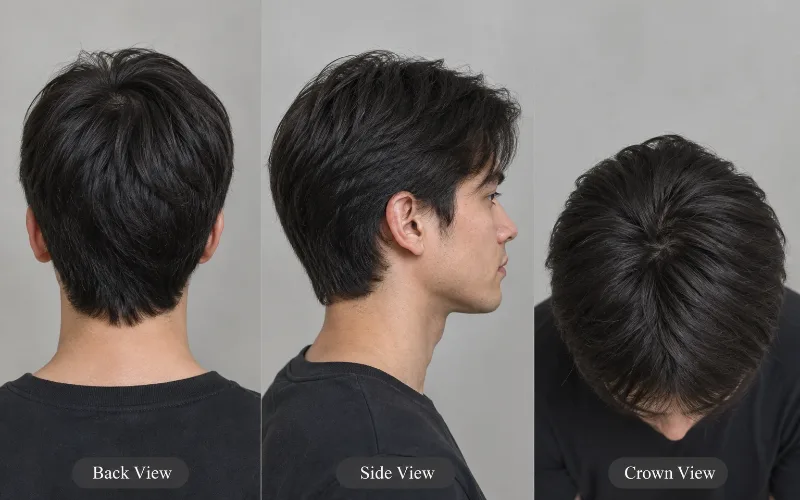
1A hair is hard to identify on short hair, because a wave needs length to complete a bend and a cropped 1B or even 2A head will read as straight. Judge from the crown or the back where hair sits longest, or grow it out for a month or two before deciding.
Product weight is the same trap. Clay and paste over wax and pomade, applied to towel-dried hair. Anyone seeing scalp through the crown will get more from the thinning hair guide than from any typing chart, since fine straight hair and early thinning look alike and are not the same problem. The men’s hair types guide covers the rest of the chart.
1A Hair Color and 1A Hair Type
1A hair color and 1A hair type are two unrelated things sharing a label. As a hair type, 1A means curl pattern. In colorist shorthand a number plus a letter describes level and tone, so 1A there means a very dark level with an ash direction, and it has nothing to do with the chart.
Fine straight hair does behave differently under color. It takes pigment fast and loses it fast, and blonde on fine hair needs toning sooner than the box suggests, which is where purple shampoo earns its place.
Is 1A the Worst Hair Type?
1A hair is not the worst hair type. It trades volume for shine and frizz resistance, a good trade in humid weather and a frustrating one when a set drops out early. No code on the chart is a defect.
The honest limitation is that the code answers less than people expect. Strand width and porosity predict which products work far better than curl pattern does, and neither is visible on a chart. Texture also shifts with hormones, medication and age. Confirm the code once, then buy for width and porosity. The hair type quiz reads all four together, which is what actually decides a routine.
BeautyLiesTruth publishes hair and personal color guidance built on primary research. Color claims are tested by draping under controlled daylight, and every figure is traced to a published source rather than to another blog.