Seven years. That’s how long I’ve been doing this. And in seven years, I’ve burned through more moisturizers than I’d like to admit, some of them genuinely embarrassing purchases in hindsight.
Here’s what I’ve learned: most of them are packaging. The jar looks expensive, the copy sounds convincing, and then you use it for three weeks and your skin is exactly the same as before. Or worse, it’s drier. I had a particularly rough winter two years ago where I went through four different “deeply nourishing” creams back to back and ended every night with tight, flaky skin. Not ideal.
The seven on this list are the ones I actually go back to. When I run out, I reorder. That’s the real test for me, not whether something feels nice the first morning, but whether I notice its absence when it’s gone.
Natural here means something specific. Plant-derived base ingredients, no synthetic fragrance, no petroleum fillers, no ingredient list that requires a chemistry degree just to flag the red flags. I’ve organized everything by skin type so you can get straight to what matters for you. And if you want to understand where moisturizer fits into a bigger picture, I’d start with how to properly care for your face before diving into individual products.
The Short Version If You’re in a Hurry
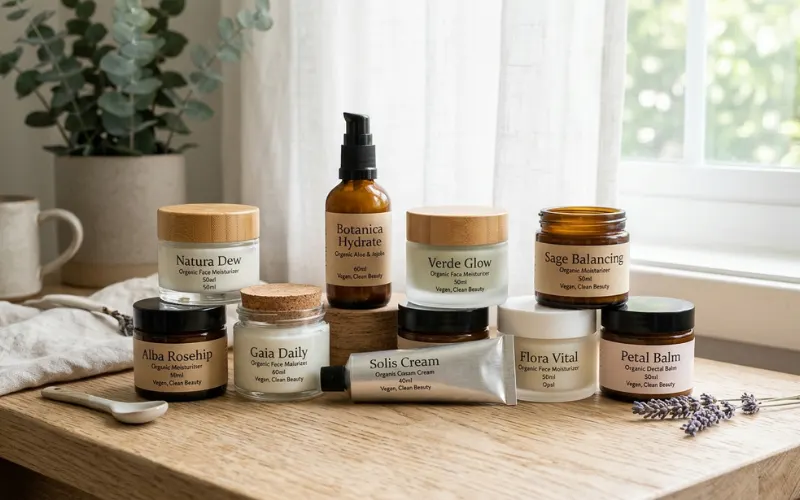
Oily or combination skin? Earth Harbor Mermaid Milk at $24 is where I’d start you. Dry or mature skin, the answer is FARMACY Honey Halo at $48 and I’d back that recommendation without hesitation. If budget is tight, The Ordinary Natural Moisturizing Factors + HA at $12.50 is genuinely hard to argue with. Sensitive skin that reacts to everything? Beekman 1802 Bloom Cream at $28 is the calmest formula I’ve found in years of looking.
What “Natural” Actually Means on a Skincare Label
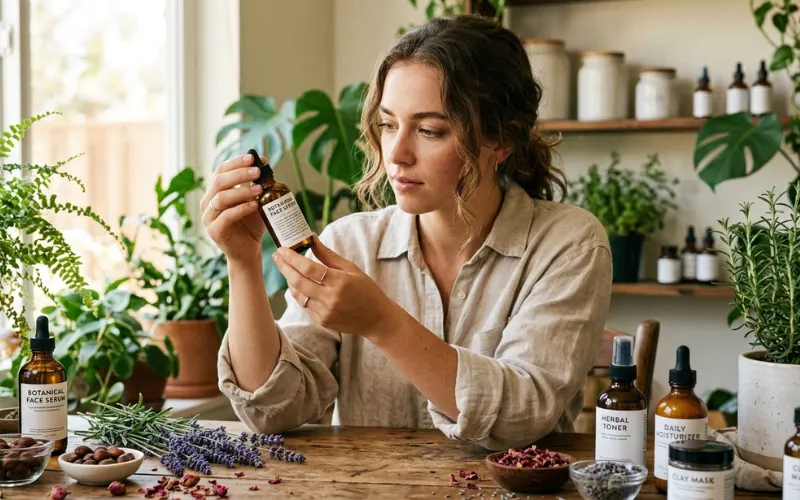
Nobody regulates this word. Not the FDA, not the EU, not anyone with actual authority. A brand can put “natural” on the front of a bottle that’s 70% synthetic filler and there’s nothing stopping them. I find this deeply annoying and it’s part of why I learned to read labels properly rather than trust front-of-pack claims.
When I call something natural in this article, I mean the formula does its work through plant-derived ingredients: aloe vera, jojoba oil, shea butter, botanical extracts, that sort of thing. And I mean it’s formulated without synthetic fragrance, parabens, mineral oil, petroleum derivatives, or silicones.
I also mean it has to actually work. A clean ingredient list on a moisturizer that sits on top of your skin and does nothing is not a win. The bar is: hydrate the skin, hold that hydration in, support the skin barrier. If it can’t do those three things consistently, it doesn’t matter how green the branding is. A lot of the common skincare mistakes I see come from people trusting front-of-pack claims without checking what’s actually inside.
What I Look For Before Buying
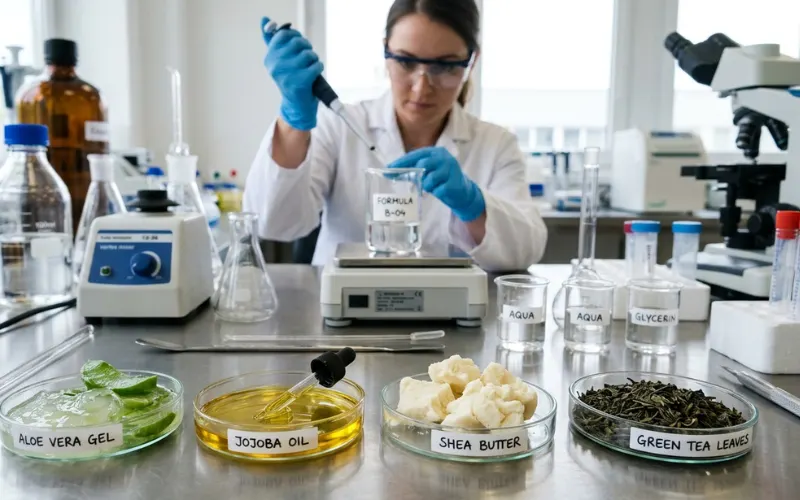
I’ve been reading ingredient labels long enough that I do it automatically now, at counters, in shops, sometimes for fun at friends’ houses when I’m waiting for them to get ready. These are the things I’m actually scanning for.
Ingredients that earn their place:
Plant-derived hyaluronic acid draws moisture into the skin and holds it there. Plant-sourced ceramides repair and reinforce the skin barrier at a structural level, not just cosmetically. Aloe vera is a genuine multi-tasker:
hydrates, soothes, calms redness, and is one of those ingredients that works better than its reputation suggests. Jojoba oil mimics skin’s own sebum closely enough that it rarely causes breakouts even on oily skin. Shea butter is one of the most effective natural occlusives I know.
Squalane from olives or sugarcane absorbs fast and suits almost every skin type I’ve tested it on. Niacinamide, which is vitamin B3, balances oil production, shrinks the look of pores over time, and fades uneven tone. Green tea extract fights free radical damage and reduces visible redness without irritating anything. You can cross-check any of these against the EWG Skin Deep database if you want a second opinion on safety ratings before you buy.
Things I put the product back for:
Mineral oil and petrolatum are petroleum derivatives, not plant-based, not natural. Synthetic fragrance is the single most common cause of skincare reactions I’ve come across in this job. Parabens and formaldehyde releasers, obvious ones. Silicones like dimethicone create a surface film that feels like hydration but doesn’t deliver it. PEGs processed with ethylene oxide. A lot of these same ingredients show up in products that people assume are fine because the brand uses green packaging, which is exactly the problem I wrote about when covering organic beauty products separately.
The 7 Moisturizers I Actually Keep Buying
Lightest to richest. Start where your skin type lands.
1. Earth Harbor Mermaid Milk: For Oily and Combination Skin ($24)
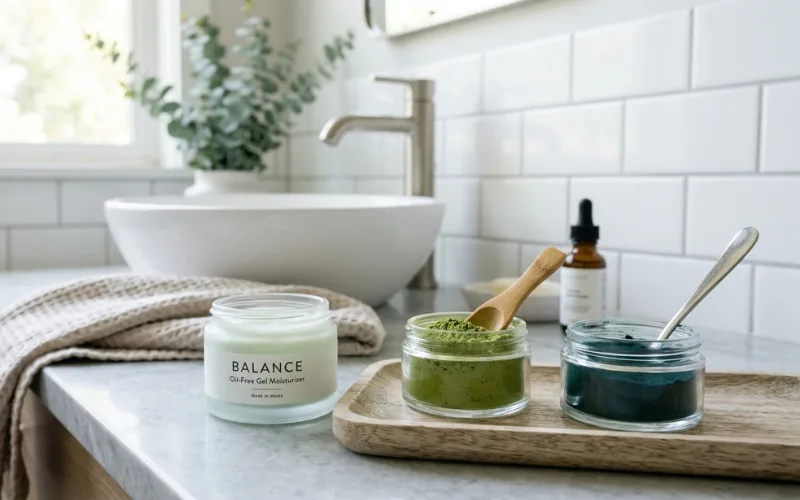
Oily skin gets a rough deal with moisturizers. Most of them, even the ones marketed for oily skin, leave a layer of something on the skin that by 10am looks like you skipped washing your face. I’ve tried a lot of them. This one genuinely behaves differently.
It’s built around spirulina, matcha, and vegan hyaluronic acid. No silicones, which is usually where the fake-matte trick happens with other formulas. The finish is actually balanced, not just on the surface. I wore it under SPF every morning for about six weeks and my T-zone didn’t do what it usually does. That surprised me, honestly, at $24 I wasn’t expecting much.
It absorbs quickly too, which matters when you’re layering products in the morning and you’re already running slightly late. For oily and combination skin, this is the first thing I recommend. I’ve sent at least a dozen people toward it over the past year. If oiliness is something you’re actively managing, the broader tips for clear skin I’ve put together cover moisturizer choice as part of a wider approach that actually works.
- Best for: Oily, combination, and acne-prone skin
- Price: $24, available at Earth Harbor website and Credo Beauty
- Key ingredients: Spirulina, matcha, vegan hyaluronic acid, aloe vera, green tea extract
2. The Ordinary Natural Moisturizing Factors + HA: Best Budget Option ($12.50)
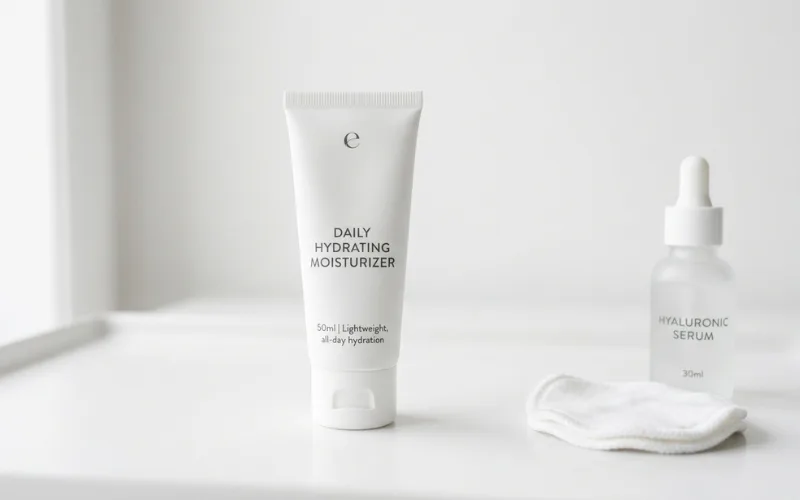
I have a complicated relationship with this one because it is so boring and yet I cannot stop recommending it. There’s nothing exciting about the packaging. The texture is just a texture. It does not smell like anything interesting. And it works.
The formula uses amino acids, phospholipids, fatty acids, and hyaluronic acid, all things that already exist in skin naturally. Because there are no heavy butters or oils, it manages to suit pretty much every skin type without needing a separate version for oily versus dry. Sensitive skin handles it. Reactive skin, the kind that throws a tantrum at most new products, usually tolerates it. It’s boring in the way that quiet reliability is boring.
At $12.50 it’s the most accessible starting point in natural skincare I’ve found. If someone tells me they want to try a cleaner routine but they’re not ready to spend real money to experiment, this is what I tell them to buy first. Pair it with the right morning beauty routine and even a $12.50 moisturizer punches well above its weight.
- Best for: All skin types, especially those with sensitivities or a limited budget
- Price: $12.50, available at DECIEM stores and the DECIEM website
- Key ingredients: Amino acids, phospholipids, hyaluronic acid, ceramide precursors
3. Cocokind Texture Smoothing Cream: For Normal to Combination Skin ($23)
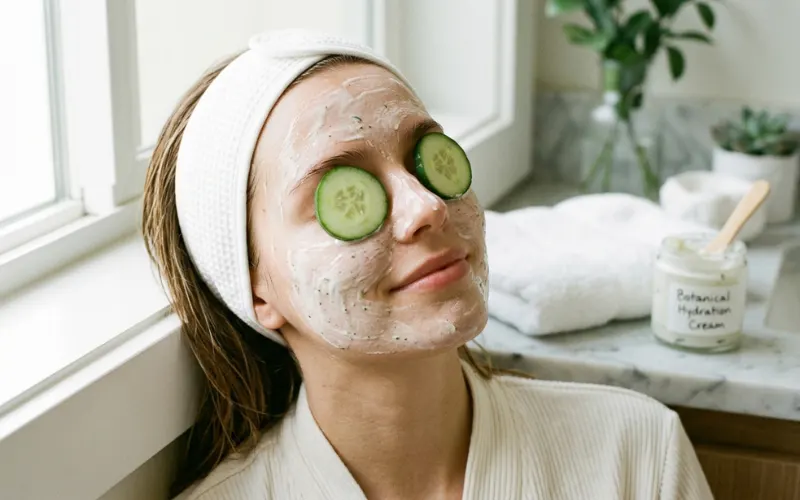
The first week I used this I kept second-guessing whether I’d actually applied enough. It spreads so easily and disappears so fast that it feels like it’s not there, and then you realize your skin is just soft and hydrated and the product did exactly what it was supposed to without making a fuss about it.
The base is cucumber extract, which plumps and softens skin gradually rather than giving you an immediate dramatic difference. The scent is naturally light, faintly cucumber, nothing artificial. Where this one really stands out for me is how it sits under makeup.
A lot of natural creams either pill slightly or leave enough of a film that foundation moves around on top of them. This doesn’t do either. If you want your base to actually stay put, reading up on tips for long-lasting makeup alongside choosing the right moisturizer makes a noticeable difference. On normal skin days, when I’m not dealing with any particular issue and I just want to maintain what I’ve got, this is usually what I reach for.
- Best for: Normal, combination, and balanced skin
- Price: $23, available at Target, Whole Foods, and the Cocokind website
- Key ingredients: Cucumber extract, sodium PCA, plant squalane, centella asiatica
4. Beekman 1802 Bloom Cream: For Sensitive Skin ($28)
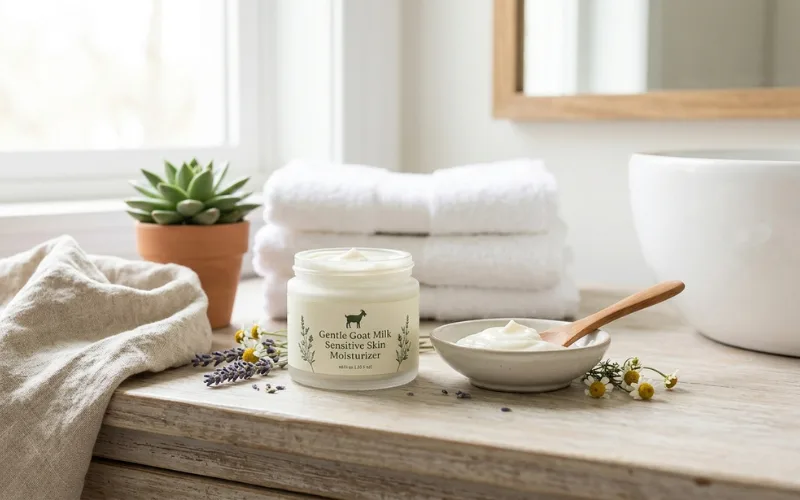
Sensitive skin is the hardest to buy for because the failure modes are so varied. Too much fragrance and it’s red within the hour. Too heavy and it congests. Too many actives and the barrier gets angrier than it started. I’ve seen clients go through genuinely disheartening cycles of trying things and having them not work.
Beekman built this one around goat milk postbiotics, which is an unusual choice that actually makes sense once you look at it. Goat milk has a lipid profile that’s fairly close to the skin’s own natural barrier composition. The postbiotics support the microbiome on the skin’s surface rather than stripping or disrupting it. That’s the opposite of what most moisturizers do even when they’re trying to be gentle.
It absorbs cleanly, no residue, no redness on application, and it sits under other products without issue. I’ve recommended this to clients dealing with perioral dermatitis, eczema-prone patches, rosacea flares, and general reactivity, and the responses have been more consistently positive than with anything else I’ve tried in this category. For clients managing eczema specifically, I usually pair this recommendation with a look at targeted products for eczema because a moisturizer alone rarely covers everything that condition needs.
- Best for: Sensitive, reactive, rosacea-prone, and barrier-compromised skin
- Price: $28, available at Ulta Beauty and the Beekman 1802 website
- Key ingredients: Goat milk, postbiotic complex, niacinamide, aloe vera
5. FARMACY Honey Halo: For Dry Skin ($48)
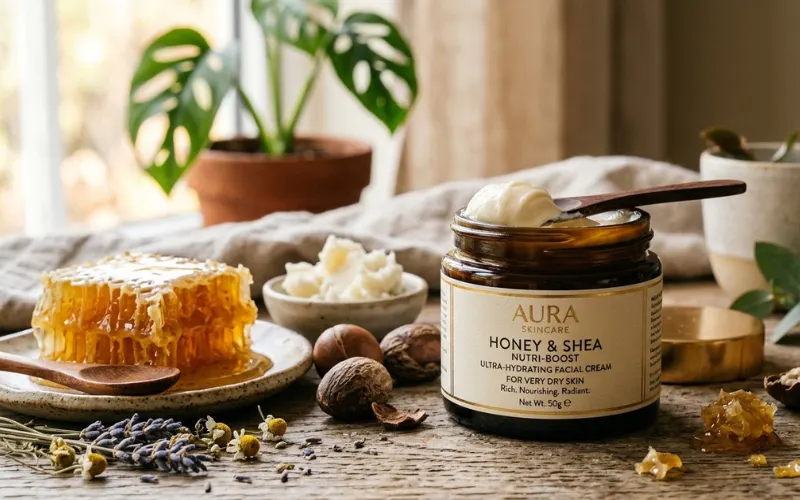
Genuinely dry skin needs three things happening at once: something to pull moisture in, something to seal it there, and something to soften the surface so the skin doesn’t just feel tight and papery underneath whatever you’ve put on it. Most moisturizers, even good ones, handle one of those jobs well and the other two adequately. This one does all three properly.
Buckwheat honey is the lead ingredient and it’s doing two jobs: humectant drawing water into the skin, and antioxidant protecting against environmental damage. Shea butter provides the occlusive layer on top. The ceramide complex covers six different ceramide types, which matters because ceramide levels in skin naturally drop as we age, and just replacing them changes how the skin actually functions rather than just how it looks temporarily.
I felt a real difference in plumpness within the first few days. Not a dramatic before-and-after, just skin that felt more like itself. For anyone navigating the skin changes that come with menopause symptoms, this is the moisturizer I’d recommend first because the ceramide support directly addresses what hormonal shifts do to the barrier.
- Best for: Dry, dehydrated, mature, and aging skin
- Price: $48, available at Sephora, Ulta, and the FARMACY website
- Key ingredients: Buckwheat honey, shea butter, vitamin E, six-ceramide complex
6. Osmia Purely Simple Face Cream: Lightweight Luxury ($62)
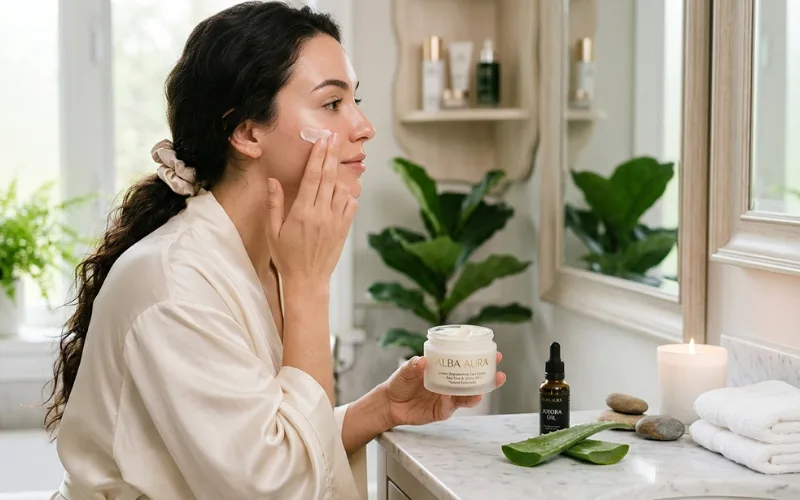
Dr. Sarah Villafranco trained as an emergency room physician before founding Osmia, and it shows in the way she approaches formulation. She’s interested in how skin actually works biologically, not what’s trending in beauty right now. The products she makes feel considered in a way that most luxury skincare doesn’t quite manage.
The base of this cream is aloe vera rather than water, so even the carrier is doing active hydrating work. Organic jojoba, apricot kernel oil, sweet almond oil, and vitamin E make up the rest. There are essential oils in here: rose, chamomile, neroli.
I usually flag that immediately for sensitive skin clients, but the concentrations are low enough that I’ve had people with fairly reactive skin use this without any issue. Still worth a patch test if you’re cautious. For anyone interested in how inflamed skin responds to different formulas, this one consistently performs better than expected in that category.
The formula was recently updated to hold moisture more effectively, and it still layers under SPF without pilling. For anyone who wants something natural that also feels beautiful to use in the morning, not just functional, this is it.
- Best for: Sensitive, reactive, normal, and perioral dermatitis-prone skin
- Price: $62, available at the Osmia Organics website and Amazon
- Key ingredients: Aloe vera, organic jojoba oil, apricot kernel oil, vitamin E, chamomile extract, neroli
7. True Botanicals Chebula Extreme Cream: For Mature and Aging Skin ($110)
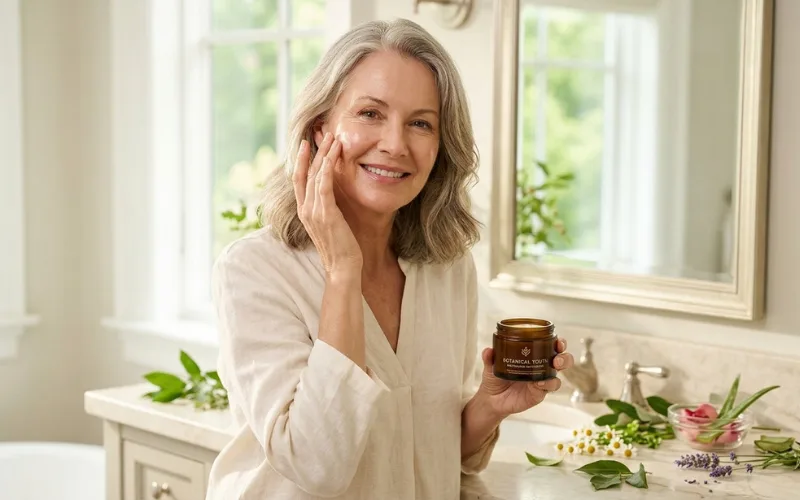
The most expensive thing on this list by some distance. For mature skin dealing with fine lines, dullness, and the kind of dryness that doesn’t respond to lighter formulas anymore, it’s the one I’d spend the money on.
Green tea extract is first on the ingredient list.
Aloe vera is second. Both are clinically recognized for hydration and calming, and both earn their position near the top. The ingredient that makes this formula different from others in the category is chebula, a fruit from South and Southeast Asia that has one of the highest antioxidant concentrations measured in any plant. It’s not a trending ingredient. You won’t see it on influencer recommendation lists. It just works quietly and the formula is built around it rather than using it as a label claim.
The texture is rich but not heavy. It takes its time absorbing, which I actually like because you can feel it doing something. Skin looks more plump and rested in the morning after using this at night. For dryness, fine lines, and visible fatigue in the skin, it addresses all three together. If you’re also weighing up anti-aging cosmetic procedures alongside your skincare routine, starting with something like this often changes what you feel you actually need.
- Best for: Dry, mature, aging, reactive, and winter-stressed skin
- Price: $110, available at the True Botanicals website and Credo Beauty
- Key ingredients: Green tea extract, aloe vera, chebula fruit extract, plant-based lipids, squalane
Quick Comparison Table
| Product | Best For | Price | Key Ingredients |
| Earth Harbor Mermaid Milk | Oily / Combination | $24 | Spirulina, matcha, HA |
| The Ordinary NMF + HA | All skin types / Budget | $12.50 | Amino acids, HA, fatty acids |
| Cocokind Texture Smoothing Cream | Normal / Combination | $23 | Cucumber, squalane, centella |
| Beekman 1802 Bloom Cream | Sensitive / Reactive | $28 | Goat milk, postbiotics, niacinamide |
| FARMACY Honey Halo | Dry / Aging | $48 | Honey, ceramides, shea butter |
| Osmia Purely Simple | Sensitive / Lightweight luxury | $62 | Aloe vera, jojoba, vitamin E |
| True Botanicals Chebula Extreme | Mature / Anti-aging | $110 | Chebula, green tea, squalane |
How to Actually Moisturize Your Face Naturally
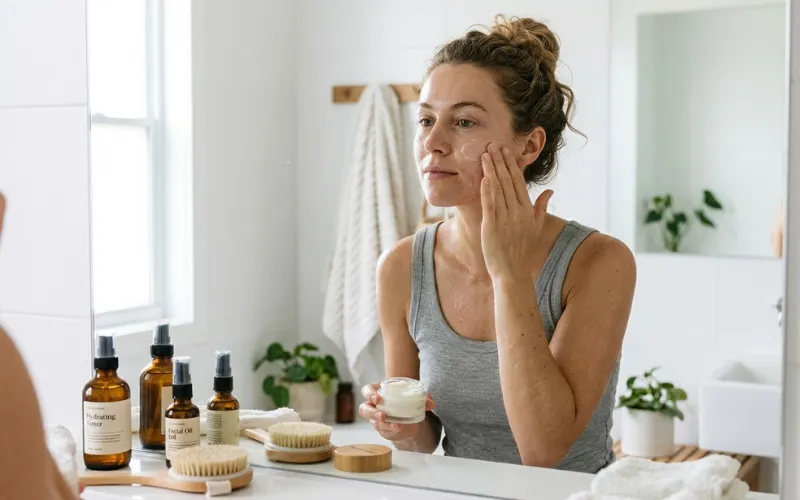
Everything starts with the skin barrier. It’s the thin protective layer sitting on the skin’s surface. When it functions properly, it keeps moisture in and keeps irritants out. When it’s damaged, which happens more often than people realize, no moisturizer can fully compensate for what’s missing underneath it. Understanding holistic skin health as a whole system is more useful than chasing individual products.
The things that actually make a difference, based on what I’ve seen over seven years:
Use a gentle, sulphate-free cleanser. Harsh face washes strip the barrier before your moisturizer even gets a chance. Protecting what’s already there is more effective than trying to rebuild from scratch every day.
Apply your moisturizer while your skin is still slightly damp from washing. Not soaking wet, just not completely dry. That small window lets humectant ingredients pull moisture from the environment rather than drawing it up from deeper skin layers, which can worsen dryness. Pairing this habit with solid hydration tips from the inside out makes a compounding difference over time.
Consider a plant oil as a finishing step. Rosehip, jojoba, sea buckthorn: used after your cream, not instead of it, these lock in the hydration the moisturizer delivered. The order matters. If you want to understand oils more broadly, the best body oil guide covers how plant oils behave on skin in more detail, and the same principles apply to the face.
Look at what you’re eating. Omega-3 fatty acids from flaxseed, walnuts, and oily fish genuinely influence how the skin holds moisture. Beauty-enhancing supplements can also fill gaps that diet alone doesn’t cover, particularly for dry or mature skin. Water intake helps too, but the fats are often the missing piece that people don’t think about.
Keep showers shorter and cooler. Hot water strips natural oils from the skin. Lukewarm water and a shorter wash time protect what your moisturizer is working to maintain.
Simple version: gentle cleanser, moisturizer on damp skin, SPF in the morning. At night, add a face oil on top of your cream if dryness is a genuine concern.
Face Oils and Moisturizers: Do You Need Both?
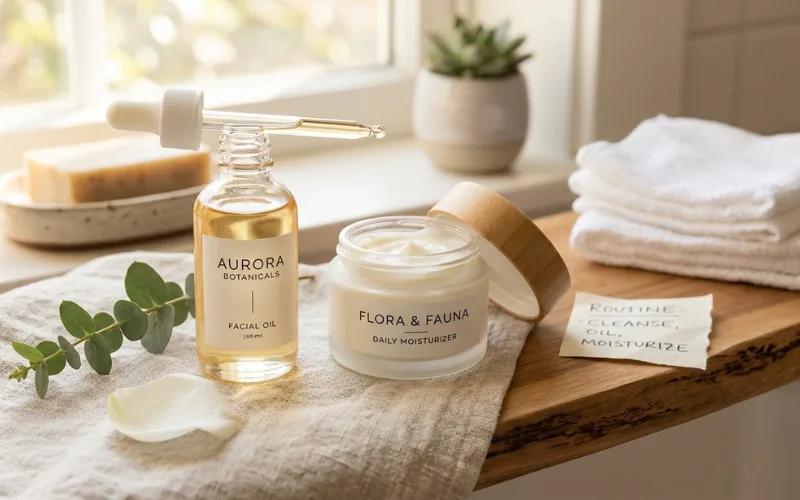
This question comes up in almost every skincare conversation I have. If you’re trying to build a future-proof skincare routine, understanding the difference between these two is actually one of the most useful foundations you can have.
A natural face moisturizer is an emulsion: oil and water blended together. That emulsified formula can penetrate the skin and restore moisture at a cellular level. That’s what the barrier actually needs.
A pure plant oil is not an emulsion. It cannot penetrate the barrier in the same way. What it does instead is sit on the surface and slow down water loss significantly, which is genuinely useful but is a completely different function.
Used together, moisturizer first then oil to seal, they outperform either one alone. If you’re keeping the routine minimal, a well-formulated natural cream used consistently every day is sufficient on its own. But if you’re dealing with dryness that a cream alone isn’t resolving, adding a few drops of oil on top is usually the next step worth trying.
The Best Natural Moisturizer to Use With Tretinoin
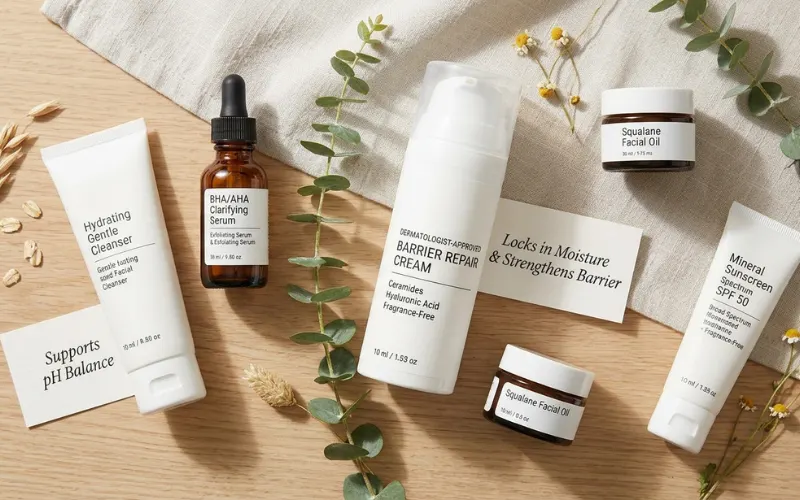
Tretinoin, prescription retinoic acid, is one of the most research-backed ingredients in skincare for both acne and aging. It also causes significant dryness and irritation, especially in the first few weeks of use. Choosing the right moisturizer during this period isn’t optional. It’s what determines whether you can actually stick with tretinoin long enough for it to work.
What the moisturizer needs to be: fragrance-free, because sensitized skin and fragrance together are genuinely miserable. Ceramide-rich, because tretinoin actively depletes ceramides and you need to replace them. Free from alcohol, AHAs, and BHAs, so nothing is adding to the dryness. Rich enough to buffer what tretinoin is doing to the surface.
From this list, FARMACY Honey Halo at $48 is what I’d use. The six-ceramide complex directly replaces what tretinoin breaks down, and the buckwheat honey gives sustained hydration rather than a quick-fix surface feel. Beekman 1802 Bloom Cream at $28 is worth knowing about too, especially if your skin is reactive on top of being dry from the tretinoin. The secrets of ageless beauty are rarely one ingredient working alone, and tretinoin with the right moisturizer is a good example of that.
The moisturizer sandwich method, applying moisturizer before tretinoin to reduce irritation, is one approach. Waiting 20 minutes after tretinoin to apply is another. Your dermatologist will know which suits your skin and your dosage better than I do.
Best Natural Moisturizer for Rosacea
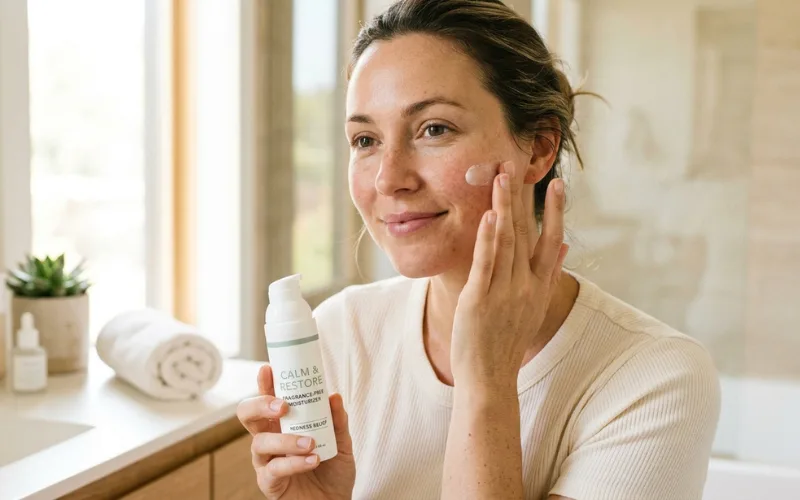
Rosacea means chronic redness, heightened sensitivity, and a skin barrier that’s already compromised. The wrong moisturizer makes symptoms worse within the hour. Getting the basics right around inflamed skin care matters as much as the product choice itself.
What you’re looking for: nothing with fragrance, including essential oils if your skin is very reactive. Ingredients that actively calm redness, niacinamide, green tea extract, azelaic acid are the main ones I look for. A short ingredient list overall. Something mild enough to use morning and evening without building up or congesting skin over time.
The Ordinary Natural Moisturizing Factors + HA at $12.50 is where I’d start. The ingredient list is minimal, there are no known triggers in the formula, and reactive skin almost always accepts it. Beekman 1802 Bloom Cream at $28 is a strong follow-up choice because the postbiotic formula does something useful for the microbiome disruption that tends to run alongside rosacea.
Osmia Purely Simple at $62 is worth considering but needs a patch test first given the essential oils. For highly reactive rosacea, go fully fragrance-free until things stabilize.
One thing to keep in mind: moisturizer is part of rosacea management, not the whole of it. Heat, alcohol, spicy food, wind, and over-exfoliating are common triggers, and identifying which ones apply to your specific skin matters alongside whatever you’re putting on it. Skin environment and hygiene habits play a bigger role in rosacea than most people expect.
What About Accutane?
Isotretinoin dries out the skin in a way that most people aren’t fully prepared for. Not just the face. The lips crack, the inside of the nose gets uncomfortably dry, sometimes the eyes too. The skin barrier weakens throughout treatment. A good moisturizer stops being optional.
What dermatologists typically recommend: a rich, fragrance-free formula applied multiple times throughout the day, not just twice. Ceramide-based, to actively repair the barrier rather than just coating it. No AHAs, BHAs, or any additional retinoids. A separate lip balm or healing ointment kept on lips constantly.
FARMACY Honey Halo at $48 is the strongest natural option on this list for Accutane skin. The shea butter richness and the depth of the ceramide complex match what the skin needs at this level of dryness. Osmia Purely Simple at $62 is a second option, particularly if sensitivity is running alongside the dryness. For longer-term skin support after a course of Accutane, looking at a holistic beauty guide helps frame what rebuilding the skin barrier properly actually involves.
Follow your dermatologist’s guidance before anything I say here. These are general natural options, not medical advice for your specific dosage.
How to Apply It Properly
Application method genuinely changes how a moisturizer performs.
Cleanse with something gentle and sulphate-free. Pat skin dry but leave it slightly damp, not bone dry. If you use a serum or toner, apply that first and let it settle. Take a small amount of moisturizer, pea-sized for lighter ones, slightly more for richer formulas. Warm it briefly between your palms. Press it into the skin rather than rubbing it in. Rubbing drags and can cause irritation over time. Pressing encourages absorption.
In the morning, follow with SPF. Every morning. Moisturizer does not replace sun protection regardless of what the bottle suggests. If your whole morning routine feels like too much, the beauty secrets for busy mornings piece I put together covers how to keep it quick without cutting the things that actually matter.
The habit that changed my skin most noticeably: getting the moisturizer on within 60 seconds of patting my face dry. That narrow window while the skin is still slightly damp makes humectant ingredients perform significantly better. It sounds minor. Over a few weeks of consistent use, you’ll see the difference.
Final Thoughts
The best moisturizer is the one you use every day without having to think about it. Right texture, right price, right ingredients for what your skin actually needs.
Use one from this list for at least four weeks before forming an opinion. Natural skincare builds gradually. You won’t see a transformation overnight, but you’ll notice things quietly improving: skin that holds its hydration better, fewer tight mornings, fewer reactive moments. That’s how this works.
For most people starting out: Earth Harbor Mermaid Milk for oily skin, The Ordinary NMF + HA for everything else. Both are low-commitment entry points, and both will show you what a good natural face moisturizer actually does before you decide how much further you want to take it.
These are among the skincare products I actually use and come back to, not things I tested once and put away. And if you want to build everything around a proper system, the women’s self-care routine framework is a good place to see how moisturizer fits alongside everything else you’re doing for your skin.
Read Next: Best Dry Shampoo: 10 I’ve Actually Tested and Would Buy Again
BeautyLiesTruth publishes hair and personal color guidance built on primary research. Color claims are tested by draping under controlled daylight, and every figure is traced to a published source rather than to another blog.