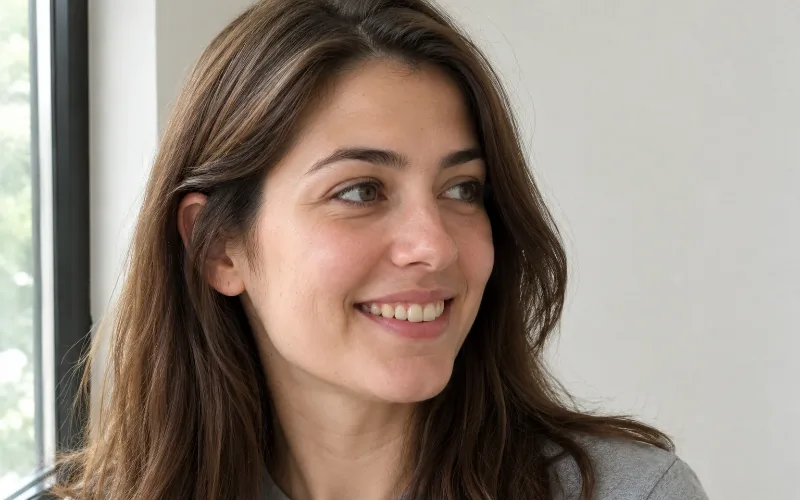
A color analysis reads skin, hair and eyes. Teeth belong on that list too. They sit at the center of the face, they are among the lightest things on it, and they help set your contrast. Change them and you change the thing your palette was measured against.
Nobody mentions this, because the two subjects never meet. Color analysis writing stops at eye color. Dental writing never mentions a palette at all.
A color analysis counts four variables, and teeth touch two
The color season analysis quiz sorts you on undertone, value and chroma. It then treats contrast as its own variable. Teeth feed into the last two. They are a light area with a hue of their own, sitting in the middle of everything else.
They are also small. That matters, and it is why this is a refinement rather than a rewrite. Skin and hair are large fields and they dominate. Teeth adjust the reading at the margin, which is exactly where most people are already unsure.
Teeth set the top of your value range
Value is how light or deep your coloring runs. On most faces the lightest points are the whites of the eyes and the teeth. Everything else sits below them. So the distance between those points and your hair is your contrast level. The skin tone chart covers the depth half of this.
High contrast coloring already runs on big gaps. Dark hair, light skin, defined eyes. A bright smile is one strong element among several and it blends in.
Soft coloring works the other way. Everything sits close together in value. The smile is then often the single lightest point on the whole face. That is not a flaw. It does mean a bright smile carries more weight there, and what colors look good on me is answered with that in mind.
Your coloring
| Your coloring | How the smile reads in it | What that means for your palette |
|---|---|---|
| High contrast | One bright area among several strong ones. | Crisp color combinations work. A brighter smile integrates easily. |
| Soft, low contrast | Often the single lightest point on the face. | Muted combinations work. Brightening the smile pulls focus hard. |
| Deep and warm | Reads warmer and softer against deeper skin. | Rich colors hold up. Cool bleach shades fight the warmth. |
| Light and cool | Close in value to the skin around it. | Small shade changes show quickly. Less is genuinely more. |
Whitening raises your contrast, which changes your palette
Tooth color changes your contrast, and that is the part nobody writes down. It explains a complaint stylists hear constantly. People whiten, then say their makeup looks wrong. Nothing happened to the makeup.
What changed was the value range of the face. Lifting the lightest point several steps widens the gap between it and your hair. That raises your overall contrast. Contrast is what decides whether crisp or muted combinations suit you.
The effect is biggest on soft coloring. The proportional change is largest there. A lip shade that looked balanced before can read weak against a brighter smile. The usual fix is more definition elsewhere, not a different color family. Metals behave the same way, so jewelry metals for skin undertones is worth re-reading after a significant change rather than before.
So the practical sequence is simple. Whiten first if you are going to. Then redo the palette work. Doing it the other way round means fitting a palette to a face you are about to alter.
Enamel has an undertone, and it need not match yours
Warm and cool enamel is not a beauty invention. Dentists have sorted shades that way for decades, and shade references report that most untreated adult teeth sit in the warmer part of the range.
Your enamel undertone does not have to agree with your skin undertone. Cool skin with warm enamel is common. When the two disagree, the larger field wins. Skin and hair cover far more area, so they set the palette. The smile gets read against it. If you are unsure how to name your own depth and undertone, skin color names is the vocabulary for it.
Judge it in the same light you judge fabric
Tooth color has to be judged in the same light as fabric. The drape test rule applies without modification. Daylight, near a window, no lipstick, a plain white or grey top. Bathroom bulbs run yellow. They distort enamel and skin at once, in the same direction, which hides the thing you are trying to see.
Then run one comparison. Hold a warm coral, a cool berry and a neutral rose near your mouth in turn. Watch whether the teeth read brighter, creamier or slightly grey beside each. The enamel is not changing. Your reading of it is, and that is the point.
Eye whites move faster than enamel does
The other light point on your face is less stable than your teeth. Eye whites shift with sleep, allergies, screen time and irritation. Enamel changes over years. Eyes change over a week.
That has a practical consequence. Judging your contrast on a bad night gives you a different answer from a normal one. The lightest point has dropped. The gap to your hair has narrowed, and your face reads softer than it usually does.
So pick an ordinary day for it. Not the morning after a late one, and not the day you are testing a new palette because you finally have time. Average conditions give you the reading you will live with.
If you are changing it permanently
Tooth color is the one input here you can permanently alter. Most of the rest is reversible. Whitening is slower to undo. Veneers are not reversible at all, so that end deserves a different standard of care. The American Dental Association says to talk to a dentist first, and notes that whitening does not work on crowns, veneers or fillings, and that gray-toned teeth may not bleach at all.
If something permanent is on the table, ask an expert dentist to assess shade and translucency against your own features. Take daylight photographs with you rather than relying on the chair light. Day to day, teeth protection tips do more for how a smile reads than any shade decision.
Questions people ask
Do teeth affect your color season?
Not your season itself, which is set by skin, hair and eyes. They affect your contrast level. That is the variable deciding whether crisp or muted combinations suit you. So teeth change how you apply the season, rather than which one you are.
Does whitening change what lipstick suits me?
It can. Lifting the lightest point on your face raises overall contrast, and a shade balanced against the old value range can read weak against the new one. The effect is largest on soft coloring. Recheck your lip shades after any significant change, not before.
Should my teeth match my skin undertone?
No, and they often do not. Cool skin with warm enamel is common. Skin and hair cover much more area, so they set the palette and the smile gets read against it. Treat a mismatch as normal rather than as something to correct.
Does whitening work on crowns and veneers?
No. The ADA states that whitening does not work on caps, veneers, crowns or fillings. Natural teeth lighten around them. The dental work stays exactly as it was. That is why permanent work gets matched after whitening, never before it.
What to check this week
Start by measuring your contrast properly. Photograph your face in daylight, plain grey top, no makeup. Look at where the lightest point sits and how far your hair is from it. That gap is your contrast. It is the single most useful thing to know about your own coloring.
Then look at whether your smile sits inside that range or jumps out. If it sits inside, your palette is already working. If it jumps, you have a lead worth following. A plan built around your own coloring will get you further than any shade chart.
How this was checked. The two dental claims, that whitening does not work on crowns, veneers or fillings and that gray-toned teeth may not bleach at all, come from the American Dental Association, as does the advice to consult a dentist first. The point that shade guides sort enamel by undertone comes from a shade guide reference, and clinic sources vary on where the natural range sits. Everything about contrast, value and palette application reflects standard color practice rather than clinical research, and seasonal color analysis is a styling convention rather than a tested system. Nothing here is dental advice.
BeautyLiesTruth publishes hair and personal color guidance built on primary research. Color claims are tested by draping under controlled daylight, and every figure is traced to a published source rather than to another blog.