If you’re booking laser hair removal on your face, an IPL photofacial for freckles or sun spots, or laser removal of an old brow tattoo, IPL eye protection is the one safety step worth checking before anything else. These treatments send intense light toward some of the most sensitive tissue in the body, and the right goggles or eye shields are what keep a beauty appointment from becoming an eye problem. This guide explains what protection you should expect, how it changes for treatments close to the eyes and for teens, and what to ask your clinic before you book.
Do you need eye protection for IPL and laser hair removal?
Yes. Everyone needs eye protection during an IPL or laser treatment, and the client needs it most. The American Academy of Dermatology states that everyone in the room must wear protective eyewear during laser hair removal. The type of protection depends on the device’s wavelength and how close the treatment area sits to your eyes.
The risk is real. A review of published cases in Dermatologic Surgery found 60 cases of direct eye injury linked to dermatologic laser treatment. In 73% of those cases, improper eye protection was used, 87% of the injured were patients rather than staff, and the most common procedure behind them was laser hair removal of the face. The authors concluded that most of these injuries were potentially preventable.
Which beauty treatments need the most eye protection?
IPL eye protection matters most for treatments on the face, and especially anything above the cheekbones. Facial laser hair removal, including the upper lip, chin, sideburns and brow shaping, is the procedure most often linked to eye injury. If you’re comparing clinics, the guide to how much laser hair removal costs is a useful starting point, but a clinic’s safety habits deserve as much attention as its price.
IPL photofacials for sun spots and freckle removal work across the whole face, often close to the lower eyelids. Laser removal of microbladed or tattooed brows targets pigment that sits directly above the eye. Laser resurfacing, one of the stronger options people consider when they want to fight the signs of aging on the face, can involve the eyelid skin itself. Each of these calls for a deliberate protection plan rather than a pair of goggles handed over at the last second.
Why you need more protection than the person treating you
Clients and practitioners face different levels of risk during a laser session. The practitioner controls the handpiece and can look away from the beam, but you usually lie still with your eyes closed and can’t react to a sudden flash or a reflection. That makes clients more vulnerable to stray or reflected light, especially when the device works close to the eye area.
A careful clinic gives clients their own eyewear, designed for full coverage, rather than lending out a spare pair of staff glasses. Client goggles should block light even if you blink or move slightly, and someone should check that they sit snugly before the first pulse.
Laser goggles or eye shields: what you’ll wear
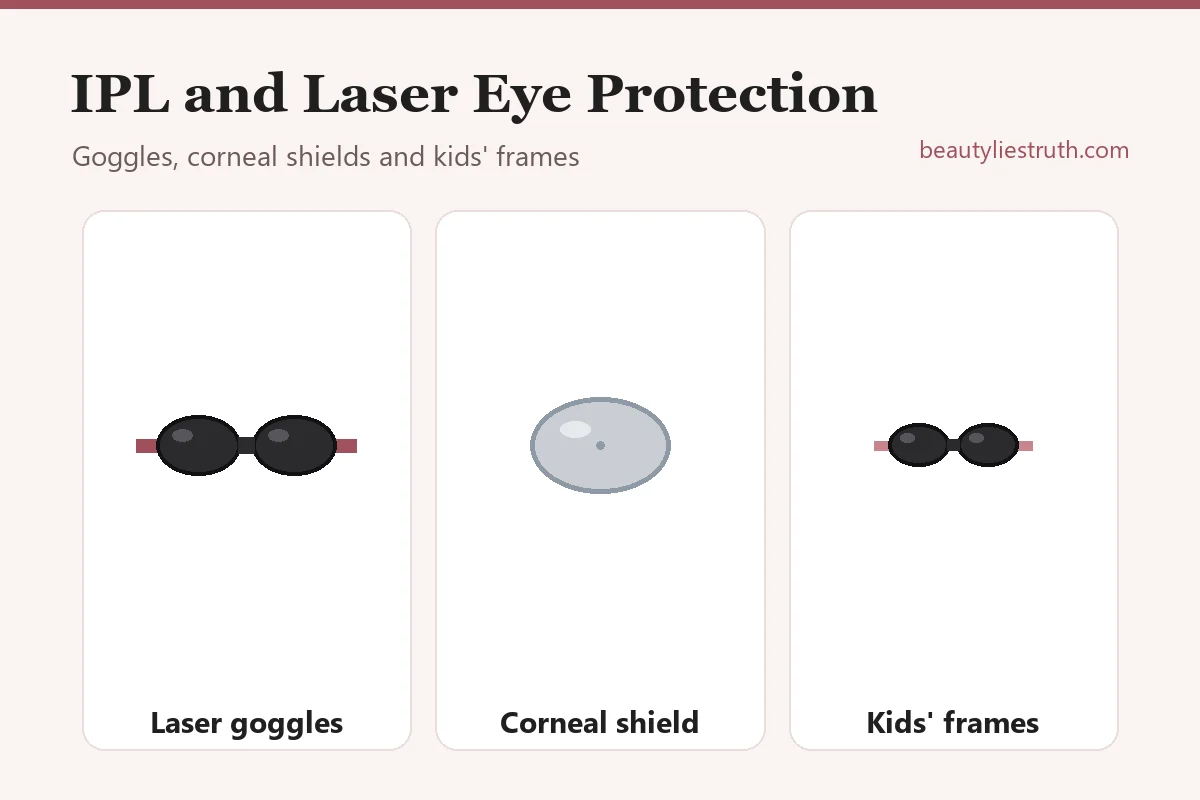
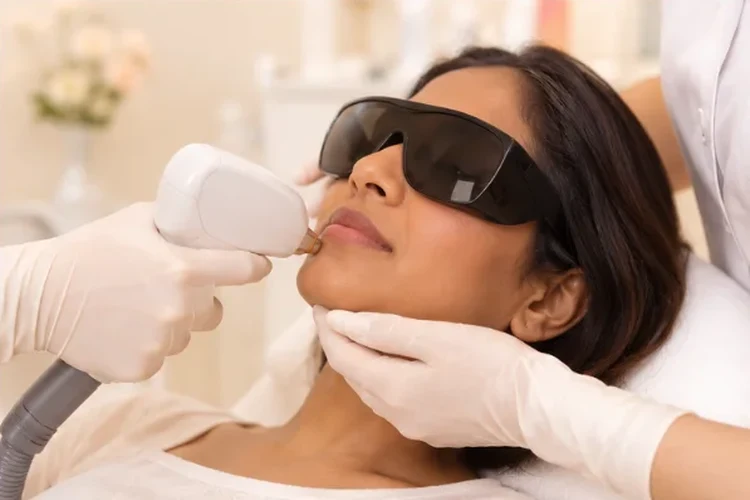
The eye protection you wear depends on how close the treatment comes to your eyelids. For most facial laser hair removal and IPL treatments near, but not right next to, the eyes, you’ll wear opaque external goggles. They should fit securely around the eye area and block scattered light from every side.
When treatment happens very close to or on the eyelids, as with some resurfacing and brow-area work, the provider may use corneal eye shields instead. These are smooth metal or plastic shields placed gently beneath the eyelids after numbing eye drops. They let the provider treat skin that goggles would cover. A good provider explains which option you’ll get and why. The effectiveness of patient laser eye protection relies not only on the gear itself but also on choosing the right type and keeping it in place for the whole session.
Why the goggles must match the device
Laser goggles are not one-size-fits-all. Each lens is rated to block specific wavelengths, so goggles made for one machine may not protect against another. A clinical safety audit in Lasers in Medical Science found that wavelength-specific laser goggles met or exceeded their labeled protection, and the authors advise checking wavelength-specific performance rather than relying on labeling alone. IPL devices emit a broad band of light, so IPL needs eyewear rated for the full range the device produces.
How to protect your eyes during IPL at home
Protecting your eyes during at-home IPL starts with the device’s own instructions. Home IPL hair removal devices are lower powered than clinic machines, but they still emit bright pulses of light. Wear any eye protection supplied with the device, never treat the area around your eyes or brows, and never look directly at the flash window while it fires.
Many home IPL manuals limit use to the body and the lower face, below the cheekbones, for exactly this reason. If you want hair removed close to your eyes, or you have an eye condition, book a professional treatment where proper goggles or shields can be fitted instead.
Laser treatments near the brows and for teens
Treatments near the brows, temples or upper cheeks need the strictest care. Before you start, your provider should explain the risks, show you which areas they will avoid, and ask about past treatments, eye conditions and skin sensitivities. They should also confirm that your eyewear is rated for the device being used on that area.
Your skin type is part of that conversation too. Laser settings depend on how your skin reacts to light, which is what the Fitzpatrick skin type quiz helps you understand before your appointment, and a careful provider will ask about it.
Teens and younger clients need extra attention, because they may find it hard to keep still. Clinics that treat them should have smaller pediatric frames that stay in place even if the client moves. A practitioner might tell a parent, “We use pediatric frames for younger clients so the goggles don’t slip, even with sudden movement.” Comfort matters as much as fit: goggles that pinch or press get pushed around, so speak up if yours feel wrong.
Is IPL safe for your eyes?
IPL is safe for your eyes when the right eye protection is worn and the light never reaches the eye directly. The light used in IPL and laser treatments can damage the retina, iris or cornea if it enters the eye. With fitted goggles or corneal shields and a trained provider, the risk is low.
If you notice blurred vision, a dark spot, light sensitivity or eye pain after a laser or IPL treatment, see an eye doctor promptly and tell them which device was used. For skin concerns after treatment, a board-certified dermatologist is the right person to ask.
What a safety-focused clinic does
A good clinic treats eye protection as part of the service, not an afterthought. Staff check that your goggles fit and feel comfortable, add foam padding if something presses, and remind you to keep them on until every pulse is finished. Your consent form should note which eye protection was used and any special steps taken for you.
Your notes should also cover aftercare. Treated skin is often red and sensitive for a day or two, so ask about gentle face moisturizers and how to calm inflamed skin before you go home.
Questions to ask before your laser or IPL appointment
A short conversation before treatment tells you a lot about a clinic. Ask what eye protection you will wear and whether it is rated for that specific device. If the treatment is on or near your eyelids, ask whether corneal shields will be used. If you’re booking for a teenager, ask whether the clinic has pediatric frames that fit smaller faces. A provider who answers clearly, and writes the plan into your consent form, takes your eyes as seriously as your skin.

Beauty Lies Truth publishes hair and personal color guides for readers in the US. Updated guides are checked against published sources, such as the American Academy of Dermatology, and those sources are linked in the text.