
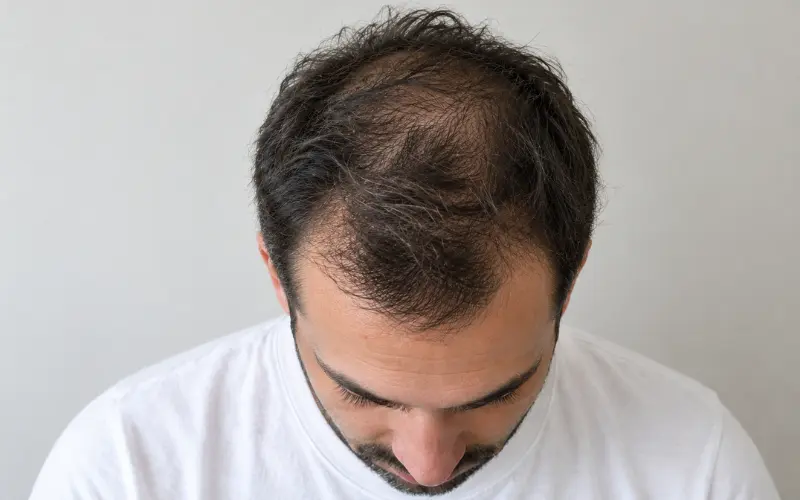
Two questions decide most of it. Who physically makes the incisions in your scalp, and whether the facility is accredited. Everything else on a clinic question list is comfortable by comparison. Ask the uncomfortable two first, while you still have the nerve.
Search for hair transplant questions and you get a dozen lists. Nearly all of them are published by clinics that sell the surgery. That does not make the lists wrong. It does mean the questions that would cost someone a booking are missing from them.
The question nobody asks is who makes the incisions
A hair transplant is a team procedure. That part is normal and worth knowing. The American Academy of Dermatology describes technicians preparing the hairs, with two or three team members helping place them. Nobody is hiding that. The line sits somewhere else.
The ISHRS runs a campaign about where that line gets crossed. It launched in 2019 and is called Fight the FIGHT, for Fraudulent, Illicit and Global Hair Transplants. It describes a turn-key model in the United States and Canada. A physician buys the device. Technicians are then hired by the day. Those technicians end up doing graft removal, hairline design and the scalp incisions themselves.
The legal position is not vague. In California, hair restoration surgery is the practice of medicine. It cannot be delegated to medical assistants. No unlicensed person may make holes or slits in a scalp, whatever their job title says. Not assistants. Not technicians.
The ISHRS notes the penalty: up to ten thousand dollars, up to a year in county jail, or both. Two state boards have said the same about FUE. The Medical Board of California and the Florida Board of Medicine both hold that it should not go to unlicensed practitioners.
So ask it narrowly. Not “who does the surgery”. Ask who makes the incisions, who harvests the grafts, and whether anyone unlicensed does either. Then ask whether everyone involved carries malpractice insurance. Those four come from the ISHRS. A clinic that resents them has told you something.
A hair transplant happens in a surgical facility
A hair transplant is surgery, and office-based surgical suites are not all equal. Accreditation is how you tell. QUAD A, the American Association for Accreditation of Ambulatory Surgery Facilities, accredits office-based practices and ambulatory surgery centers. Its standards cover facility directors, staff credentials and equipment, and it publishes a searchable directory.
Search it yourself rather than trusting a logo on a wall. Accreditation can be terminated at any time. A certificate framed in reception proves it was granted once, not that it is current.
Some hair transplant questions get answered at home
A few hair transplant questions cannot be put to the clinic, because the clinic is the subject. Search the practice name with words no marketing team would pick. Complaint. Lawsuit. Discipline. Settlement. Then search the surgeon by name.
Silence is not a clean record, and neither is a wall of five-star reviews. You are looking for how a practice behaves when something goes wrong. That is the real signal. Some publish their own account of a dispute.
Some questions can’t be put to the clinic itself, so a little independent research goes a long way. Look up the practice and the surgeon by name, and see what’s publicly available. Some clinics make this easy. The Toronto Cosmetic Surgery Institute, for example, shares information openly on its page about Dr Martin Jugenburg. Read it, and bring any questions to your consultation.
The hair transplant timeline gets worse before it gets better
Most people walk into a hair transplant without knowing this part. The AAD puts the surgery at four to eight hours. It is a long day. Large cases may need a return visit the next day. You stay awake for it, under numbing anesthesia, sometimes with a mild sedative. Afterwards the scalp is bandaged and you go home with aftercare instructions to follow.
Then the transplanted hair falls out. That happens between two and eight weeks and it is normal. By the third month your hair may look thinner than it did before the surgery. Also normal. Results arrive at six to nine months for most people, and twelve for some. Any clinic promising a visible result by week six is selling something.
A hair transplant assumes your loss has stopped
The question skipped most often is whether a hair transplant is premature. The answer is frequently yes. The AAD says men in their twenties are sometimes asked to hold off and try a hair loss medicine first. Loss can also continue after a transplant, which is why a dermatologist may put you on medicine anyway.
Surgery does not stop the clock. Their framing is worth quoting: a full head of hair may be unrealistic, but a fuller head of hair can be the goal. If you are weighing this against simply letting it go, that is a legitimate option too.
Your own hair decides a lot of the plan. Caliber and density set how much coverage a given number of grafts buys. So knowing what your hair actually is helps you read the estimate properly. Type changes the arithmetic.
Fine straight hair needs more grafts for the same visual density. Tightly coiled hair has curved follicles under the skin, which makes extraction harder and makes operator skill matter more. The hair types chart covers the range. Donor scarring also shows differently by your skin tone. Ask to see healed donor areas on patients who look like you.
| Ask this | A solid answer | Walk away from |
|---|---|---|
| Who makes the incisions? | A named licensed physician. Said without hesitation. | “Our team.” “Our technicians are better than doctors at this.” |
| Who harvests the grafts? | The same named physician, or a licensed clinician they name. | A role title instead of a license. “Our specialists.” |
| Is the facility accredited? | The body is named and you can search it yourself. | A logo on the wall and no detail. |
| How many of these do you do a year? | A number, plus how many were cases like yours. | A total that counts every procedure in the clinic. |
| What would you talk me out of? | Something specific. Often waiting. | Nothing. Everyone is a candidate. |
| Who do I call at week three? | A person, a number, and a response time. | A form, or a clinic in another country. |
Going abroad changes which questions matter
Price is what sends people abroad for a hair transplant. The risk there is specific. The ISHRS says the vast majority of patients in Turkey, Iran and several European countries have the procedure done by technicians. No medical license, no surgical training. It lists what goes wrong. Scarring, unnatural hairlines, poor growth, hair pointing the wrong way, a depleted donor area, infections.
A depleted donor area is the one to understand. Donor hair is finite. Spend it badly and a repair is harder than the original job. Sometimes it is impossible. Ask who operates. Ask for their license. Then ask who treats you at week three, when you are home and they are not.
Questions people ask about hair transplants
Who is legally allowed to perform a hair transplant?
A licensed physician makes the incisions and harvests the grafts. Technicians have a real role preparing and placing hairs, and the AAD calls that standard. The line sits at the incision. The ISHRS position is that incisions and harvesting cannot go to unlicensed staff, and several state boards agree.
How long does a hair transplant take to look normal?
Longer than most people expect. Transplanted hair sheds between two and eight weeks. Month three can look thinner than before you started. The AAD puts visible results at six to nine months, and twelve for some patients. Plan around that rather than an event.
Is a hair transplant abroad safe?
It depends entirely on who operates, and that is harder to check from another country. Distance is the problem. The ISHRS reports that in several popular destinations the vast majority of procedures are done by unlicensed technicians. Ask for the operating physician by name and license before you book.
Can anyone get a hair transplant?
No. You need enough healthy donor hair, and the ability to grow hair where it is going. The AAD says men and women of all races can be candidates. A dermatologist checks both at consultation. Some patients need a blood test or a scalp biopsy first.
What to take to the consultation
Write your hair transplant questions down before you go. Put the uncomfortable ones at the top. Nerve runs out quickly in a bright room with a confident person in it. Ask for any answer involving numbers in writing.
Take photographs of your own hairline from a year ago and five years ago. Stability is the thing being assessed and you hold the evidence. Nobody else has those photos. If you are unsure what your hair is doing, the hair type quiz is a quick start, and a plan built around your own hair beats one built around a gallery.
How this was checked. Candidacy, the four to eight hour surgery, the shedding window, the six to nine month timeline and the role of technicians: American Academy of Dermatology. The turn-key model, the licensing position, the state board statements, the California penalty and the overseas figures: the ISHRS Fight the FIGHT campaign. Facility accreditation: QUAD A. Nothing here is medical advice, and a consultation with a dermatologist is the step this article is meant to prepare you for, not replace.

Beauty Lies Truth publishes hair and personal color guides for readers in the US. Updated guides are checked against published sources, such as the American Academy of Dermatology, and those sources are linked in the text.